Rue Grande, Le Mans, France — History & Facts
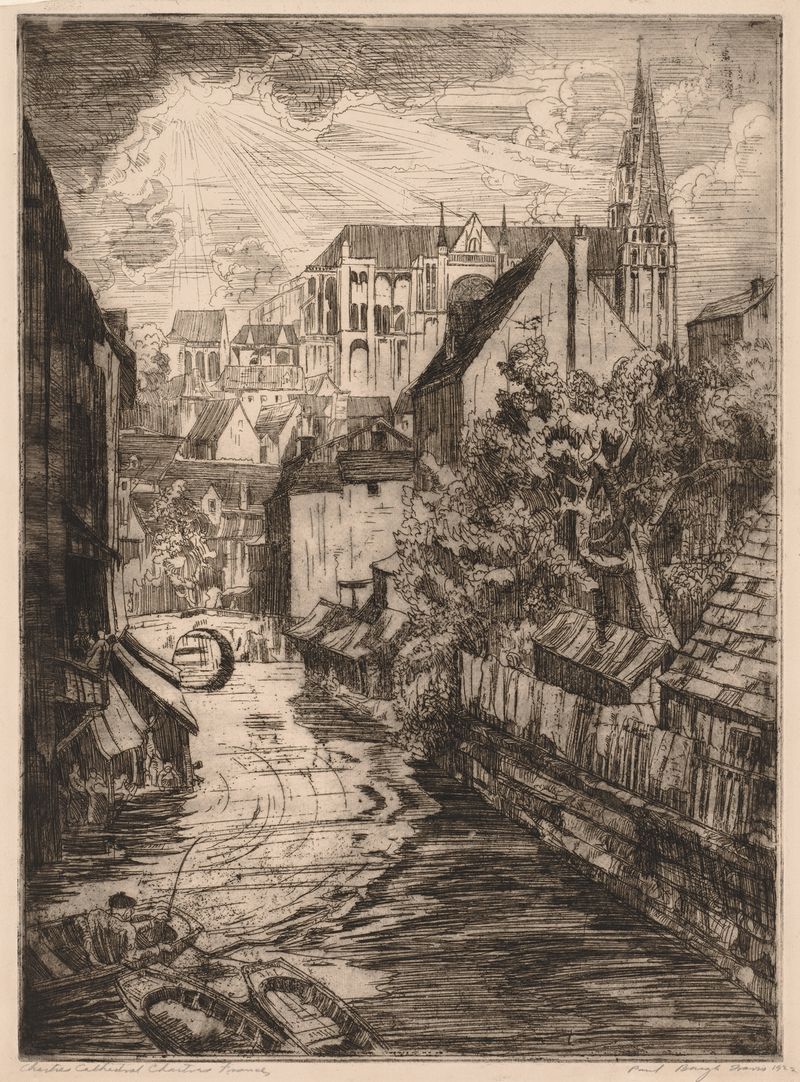
Could beauty survive in a century of chaos? In a world marked by turmoil and transformation, some moments remain still, capturing the essence of life with each brushstroke. Look closely at the vibrant interplay of light and shadow that dances across the cobblestones in this enchanting scene. The artist uses a warm palette of ochres and soft blues, creating a harmonious blend that invites the viewer to wander down the tranquil street. Notice how the gentle strokes of paint suggest the movement of pedestrians and the rustling leaves, instilling a sense of life within the stillness of the setting.
The architecture, poised and steady, stands as a silent witness to the rhythmic pulse of the world beyond its walls. Beneath the surface, a tension emerges—a juxtaposition of stability in the buildings against the ephemeral quality of the market life. The figures are painted with a sense of motion, their postures suggesting hurried conversations and bustling activity, hinting at stories and lives intertwined. This lively essence contrasts with the rootedness of Le Mans, where history whispers from every stone, inviting reflection on the passage of time amid the chaos of change. In 1922, Paul B.
Travis created this work during a significant era for both his career and the art world. Living in the aftermath of World War I, artists sought new ways to convey the complexities of modern life. Travis, a member of the American Scene movement, embraced regionalism, capturing the beauty of everyday life while also reflecting the tensions of an evolving society.
His focus on light, movement, and composition in Rue Grande, Le Mans, France speaks to a yearning for hope amid uncertainty.