
Okitsu — History & Facts
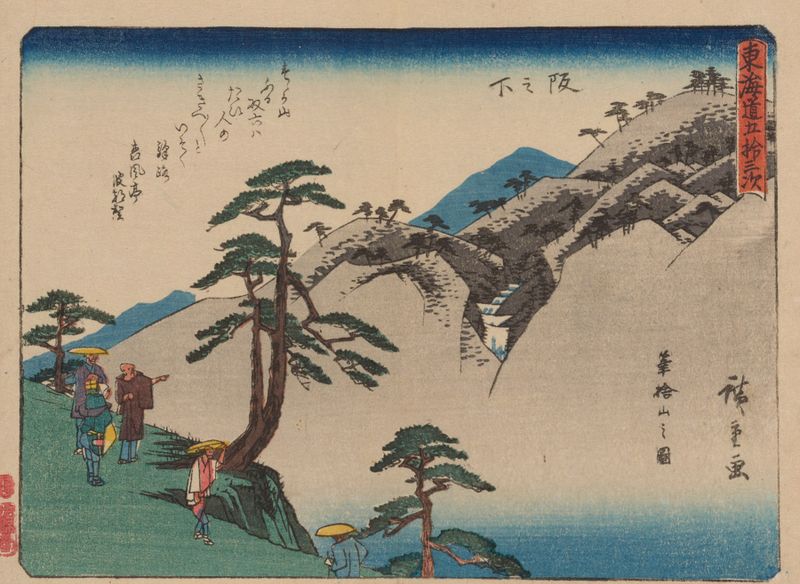
Could beauty survive in a century of chaos? In Okitsu, Utagawa Hiroshige invites us into a world where the tranquility of nature stands strong against the tumult of human experience, existing as a quiet testament to the resilience of beauty amidst strife. Look closely at the delicate brushstrokes that create the serene landscape, guiding your eye from the gentle curves of the river to the calming silhouette of the mountains in the background. Notice how the muted palette, composed of soft blues and earthy greens, enhances the sense of serene stillness, while the expertly rendered clouds hover silently, balancing the composition. Every detail, from the small boats gliding on the water to the swaying trees, beckons a sense of peace, as if each element is harmonizing with the stillness of the moment. Yet, beneath this serene surface lies a complex interplay of contrasts.
The beauty of nature, encapsulated in the stillness of the scene, stands in stark relief to the noise and chaos of the human world outside the frame. The tranquil river reflects not just the surrounding beauty but also serves as a metaphor for the fleeting nature of peace in an era marked by change and uncertainty. This work urges contemplation on the fragility of beauty, inviting viewers to consider what remains untouched by the chaos around them. Utagawa Hiroshige created Okitsu between 1841 and 1842 during the Edo period, a time when Japan was experiencing increasing internal strife and societal pressures.
This period was characterized by the tension between tradition and modernization, and Hiroshige was at the forefront of the ukiyo-e movement, capturing the ephemeral beauty of landscapes and everyday life. His work reflected not only his artistic vision but also the broader currents of change happening in Japan during this transformative era.
More Artworks by Utagawa Hiroshige
Browse all →
Sudden Shower over Shin Ohashi Bridge and Atake (Ohashi Atake no yudachi), from the series "One Hundred Famous Views of Edo (Meisho Edo hyakkei)"
Utagawa Hiroshige
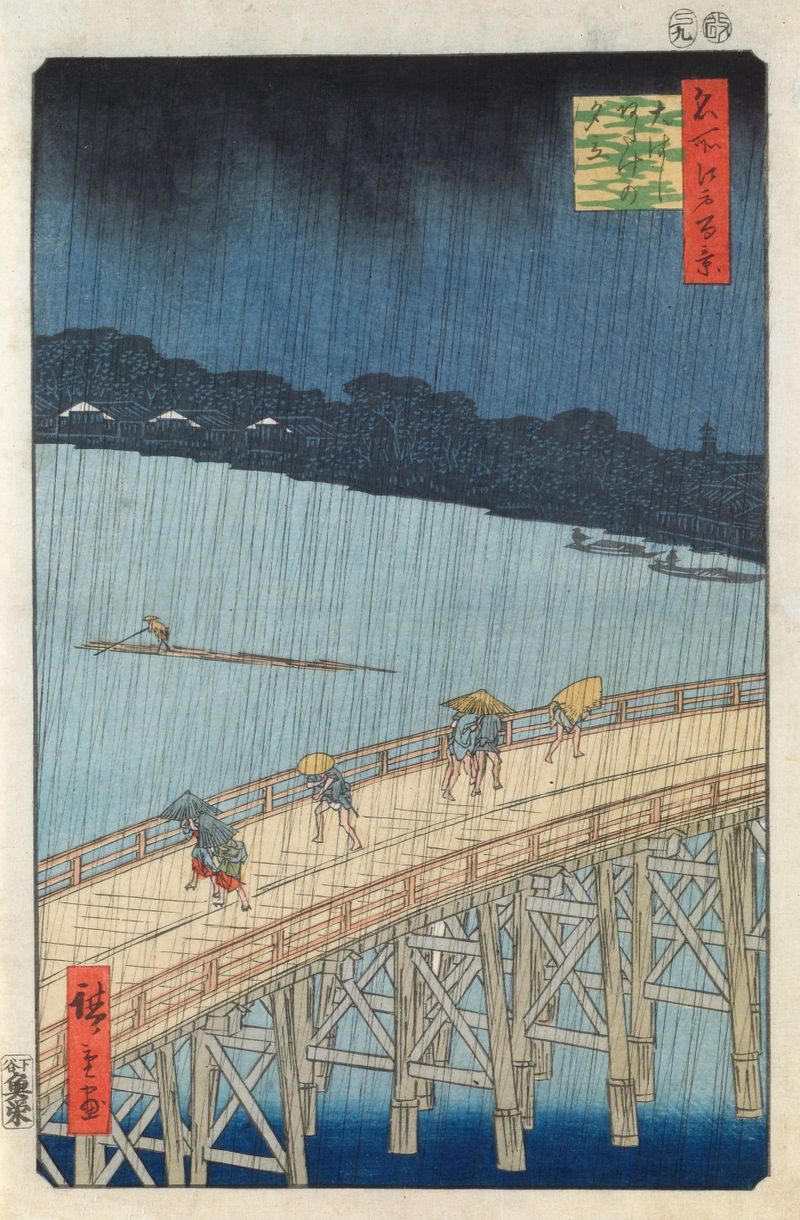
Sudden Shower Over Ohashi Bridge and Atake
Utagawa Hiroshige
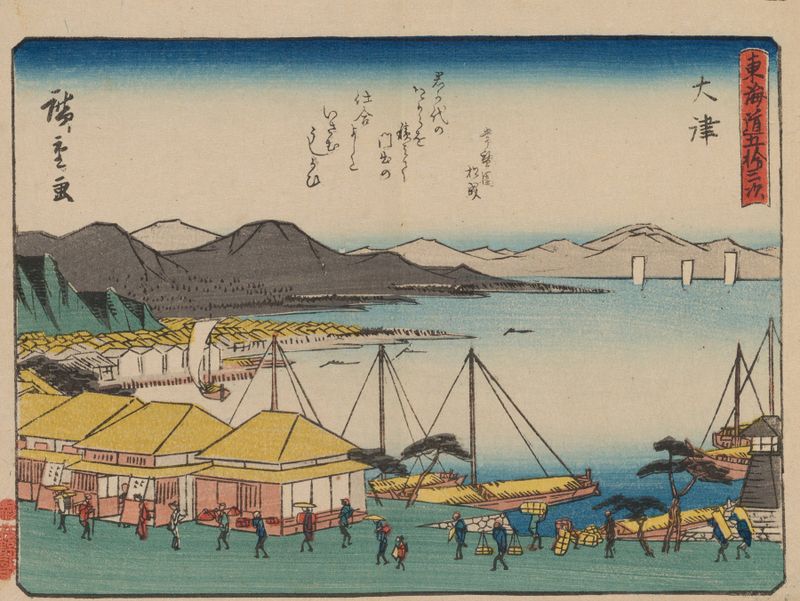
Tokaido gojusantsugi, Pl.54
Utagawa Hiroshige
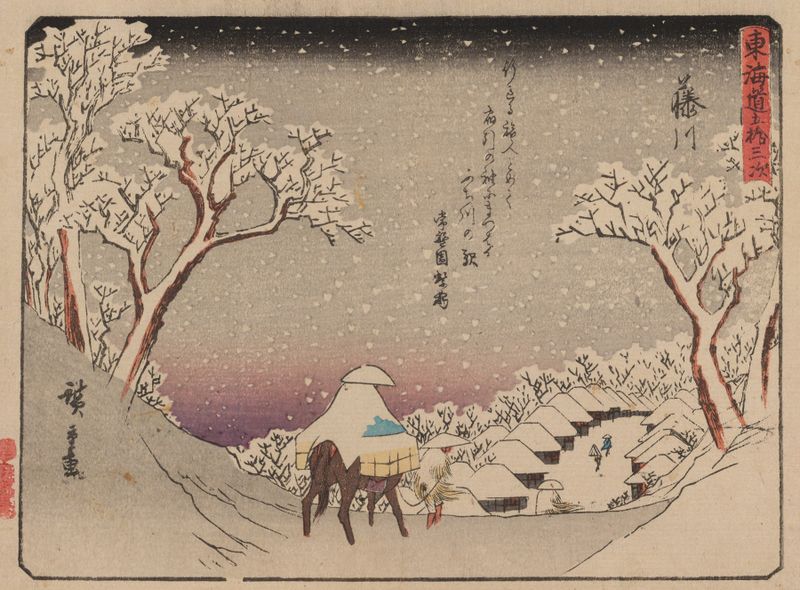
Tokaido gojusantsugi, Pl.38
Utagawa Hiroshige
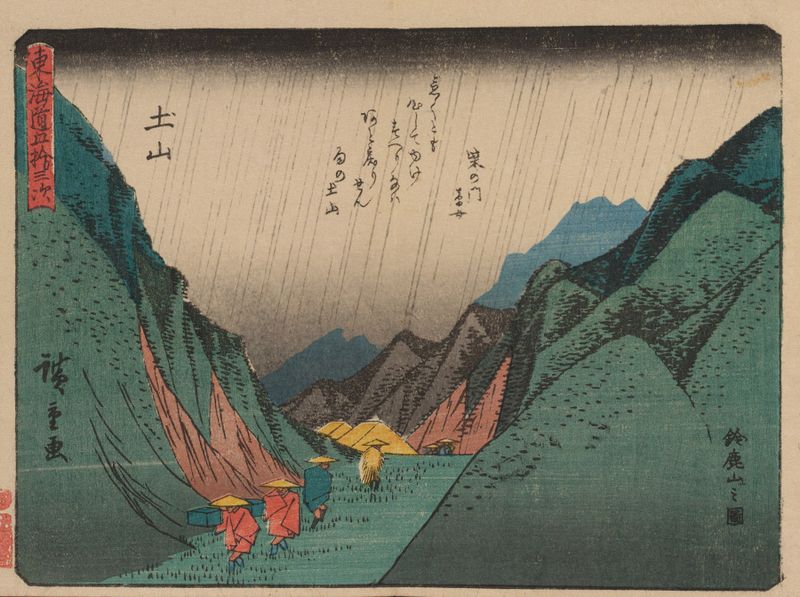
Tokaido gojusantsugi, Pl.50
Utagawa Hiroshige
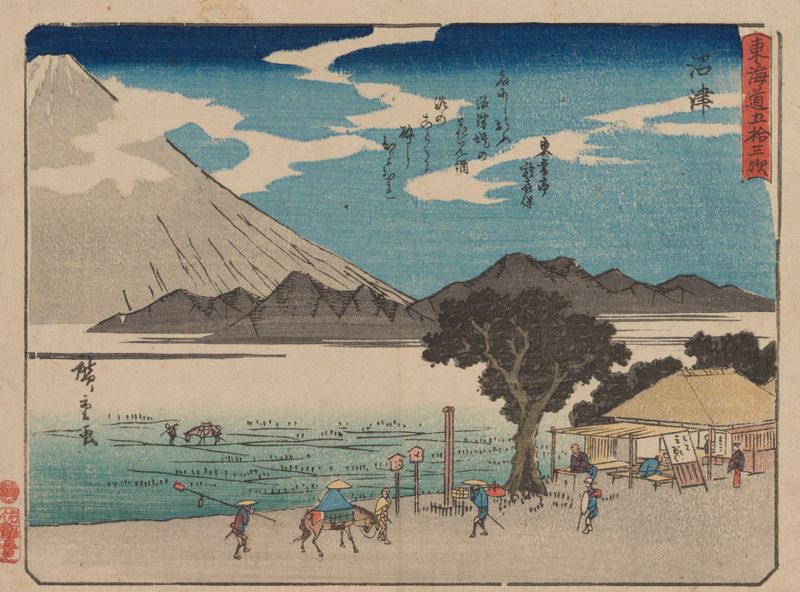
Tokaido gojusantsugi, Pl.13
Utagawa Hiroshige
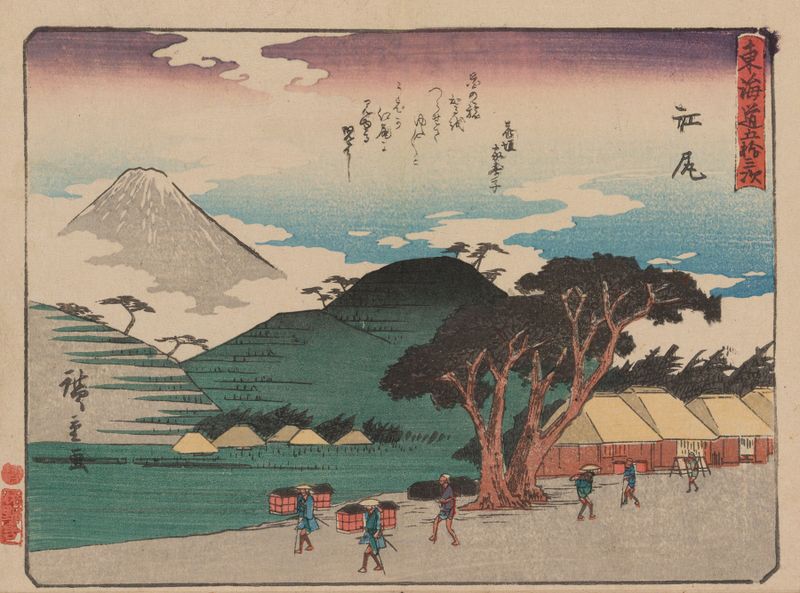
Tokaido gojusantsugi, Pl.19
Utagawa Hiroshige
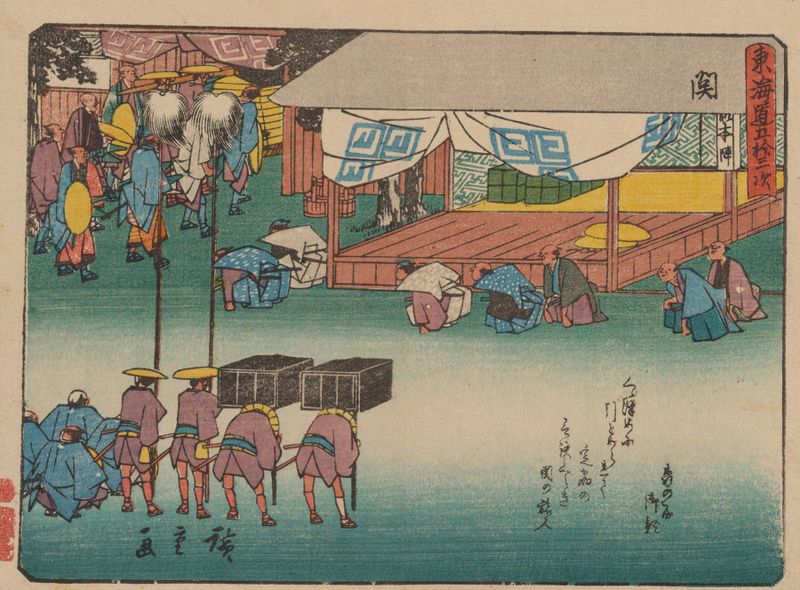
Tokaido gojusantsugi, Pl.48
Utagawa Hiroshige
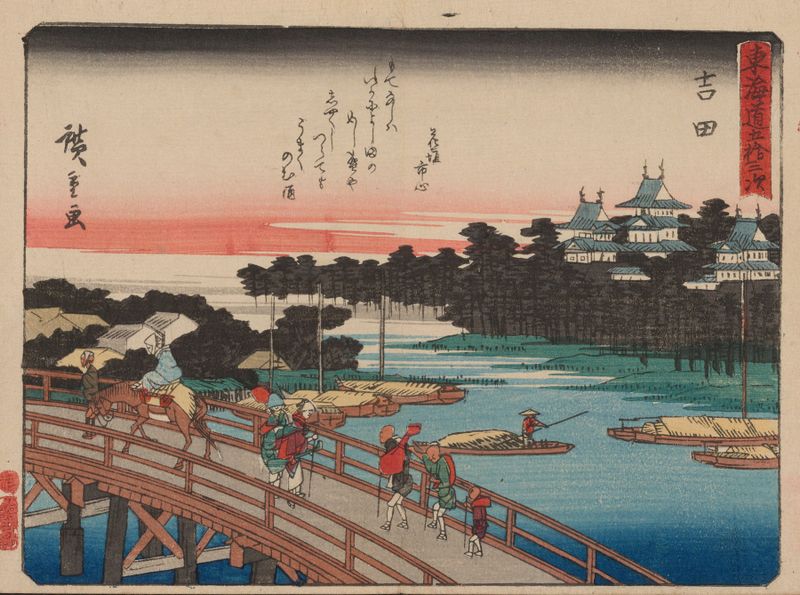
Tokaido gojusantsugi, Pl.35
Utagawa Hiroshige
Tokaido gojusantsugi, Pl.49
Utagawa Hiroshige





