
Old Church Square — History & Facts
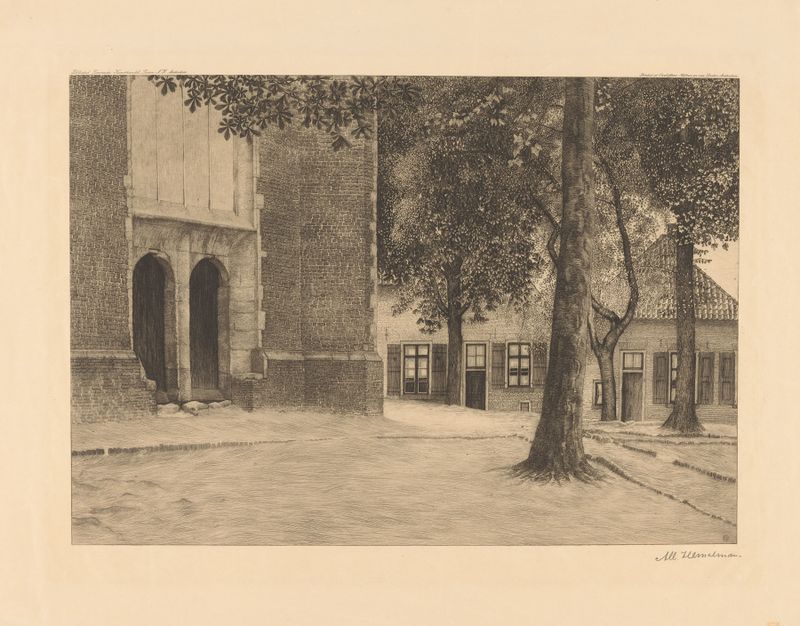
In the quiet embrace of decay, we confront the remnants of what once was, a haunting reminder of time’s unyielding passage. Look to the left at the crumbling stone facade, where worn bricks tell stories of ages past, their surfaces softened by the relentless touch of weather. The muted palette of grays and browns evokes a somber mood, while dappled light filters through with a gentle melancholy, illuminating patches of life that still cling to the edges of decay. Notice how the desaturated colors blend seamlessly, drawing the eye deeper into the scene, compelling the viewer to ponder the interplay of memory and history. Amidst the stillness, there lies an emotional tension starkly contrasted by the vibrant green of overgrown grass creeping through the cracks.
This sprightly intrusion signals nature’s resilience, yet its presence also highlights the neglect cloaked in silence. The juxtaposition of decay and life invites contemplation about the impermanence of human endeavors and the inevitability of time—an echo of both loss and rebirth. Old Church Square was created during a period in which Albert Hemelman focused on themes of architecture and the passage of time, likely influenced by the socio-political changes around him. Little is known about the exact date or circumstances of this piece, but it emerged from a world where industrialization and urban growth often overshadowed historical reverence, prompting a reflective examination of what remains when the noise of progress fades away.
More Artworks by Albert Hemelman
Browse all →



More Architecture Art
Browse all →
The statue of Liberty
Frédéric Auguste Bartholdi

View of Houses in Delft, Known as ‘The Little Street’
Johannes Vermeer

View of Houses in Delft, Known as ‘The Little Street’
Johannes Vermeer

The Cathedral in Rouen. The portal, Grey Weather
Claude Monet

The yellow house
Vincent van Gogh

The Church in Auvers-sur-Oise, View from the Chevet
Vincent van Gogh