Kerkplein in Neede — History & Facts
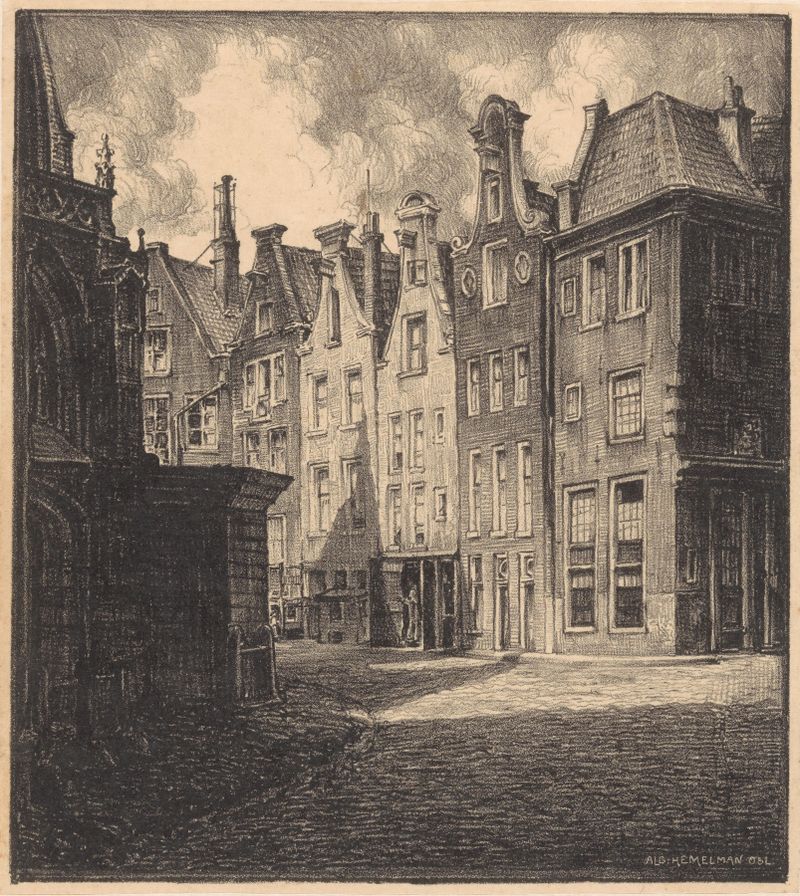
This sentiment resonates within a world where chaos dances at the edges, inviting contemplation in its wake. Look to the center of the canvas, where the town square pulses with life. Vivid strokes of color depict the bustling crowd, their movement captured in a flurry of arms and hats. Notice how the artist uses a rich palette of ochres and greens to evoke a sense of warmth amid the frenzied activity, while scattered shadows hint at fleeting moments of quiet introspection.
The way light breaks through the trees creates an interplay of brightness and depth, drawing our eyes into the heart of the scene. Yet, beneath the surface, the painting reveals a delicate balance of joy and tension. The figures, though animated, carry an undercurrent of chaos, as if the harmony of the square is fragile and easily disrupted. Each brushstroke seems to pulse with the heartbeat of a community caught in the throes of everyday existence.
The unevenness of the architecture around them echoes the unpredictability of life, reminding us that even in jubilant moments, disorder lurks just beneath the skin of routine. In the years from 1893 to 1913, Hemelman painted this piece during a period of personal exploration and artistic development. Living in the Netherlands, he sought to capture the nuances of daily life while responding to the broader movements of Impressionism. This era was marked by a shift towards capturing the fleeting nature of time, as artists began to embrace the vibrancy and complexity of modern life — a sentiment palpable in this lively depiction of a town square.