
On the Shores of Loing — History & Facts
When did color learn to lie? The harmony of the blues and greens captures an essence of solitude that seeps into the viewer’s soul, echoing the quiet anguish of isolation. To appreciate this artwork, focus on the gentle brushstrokes that define the water's surface, shimmering with dappled light. Look to the foreground where a solitary figure lingers by the riverbank, their presence both delicate and heavy, a poignant reminder of the experience of loneliness. Notice how the soft pastels blend seamlessly into the landscape, evoking a serene yet melancholic atmosphere, while the distant trees stand in silent witness, their forms blurred by the haze of a fading afternoon. The interplay between light and shadow reveals deeper emotional truths hidden in the scene.
The figure’s smallness against the vastness of the water suggests human vulnerability in the face of nature’s expanse. Sisley’s choice of muted colors conveys a subtle sense of longing, as if the landscape itself yearns for connection. This emptiness is contrasted by the vibrant hues of the foliage, creating a tension between the richness of life and the solitude of the central figure. In 1896, Sisley painted this piece while living in France, amidst a burgeoning Impressionist movement that sought to capture fleeting moments of light and atmosphere.
His work often reflected his personal struggles with financial instability and a search for artistic identity, which resonated deeply in On the Shores of Loing. The painting stands as a testament to both his mastery of color and his profound understanding of human emotion.
More Artworks by Alfred Sisley
Browse all →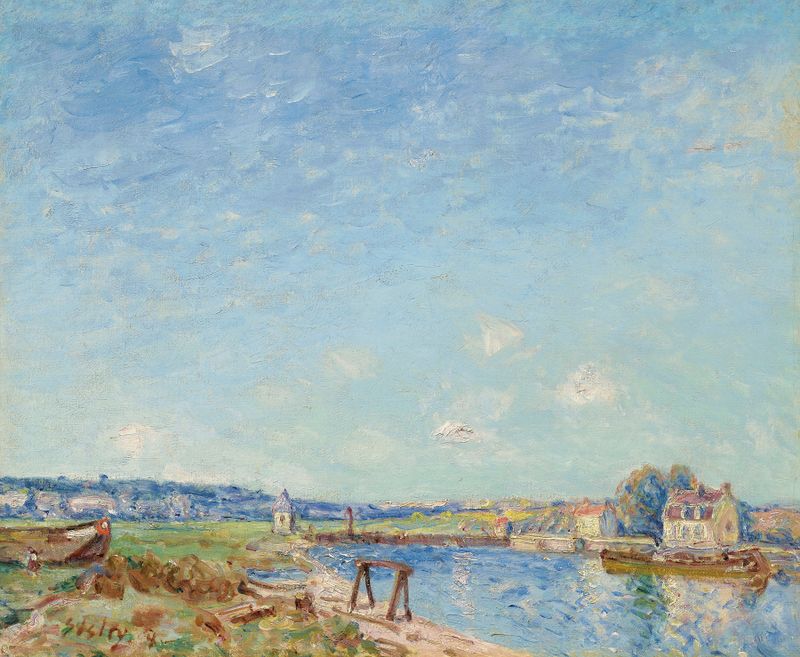
Le Loing à Saint-Mammès
Alfred Sisley
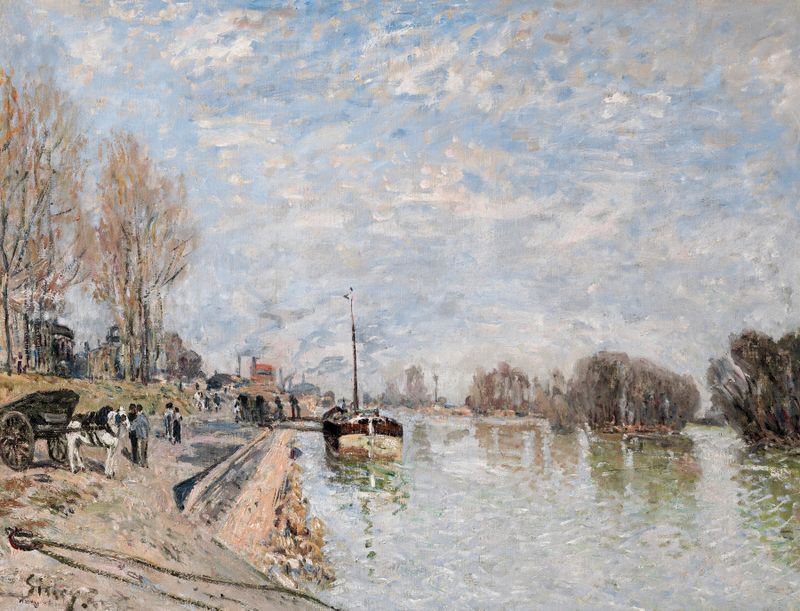
La Seine à Suresnes
Alfred Sisley
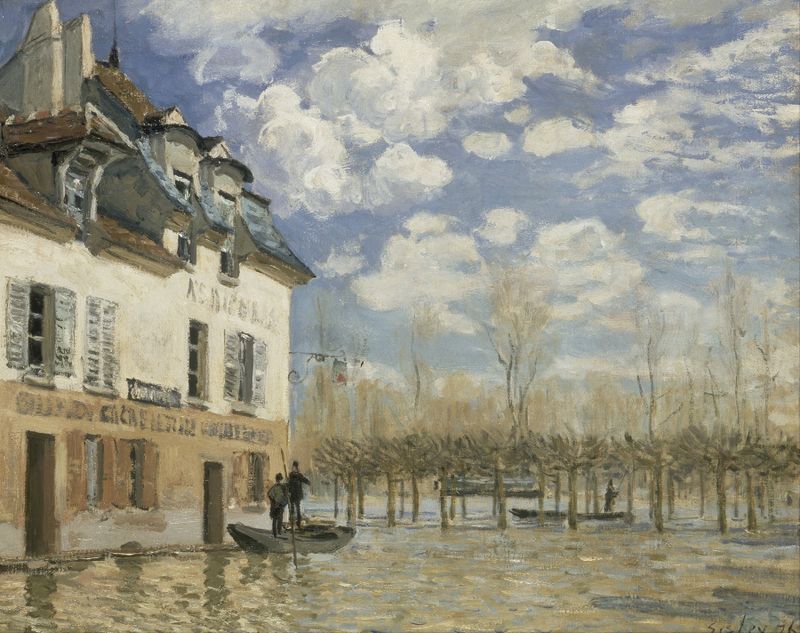
Boat in the Flood at Port Marly
Alfred Sisley
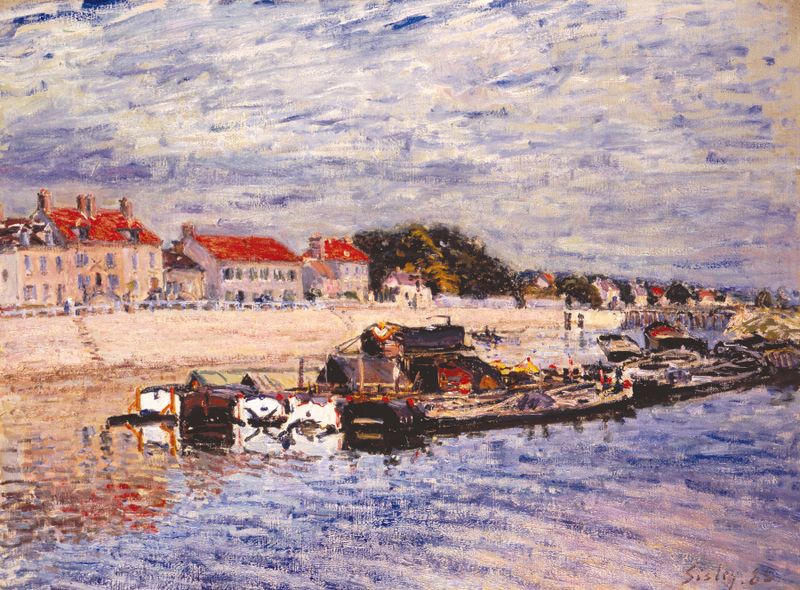
Barges on the Loing at Saint-Mammès
Alfred Sisley

L’allée des peupliers au bord du Loing
Alfred Sisley

Molesey Weir, Hampton Court
Alfred Sisley
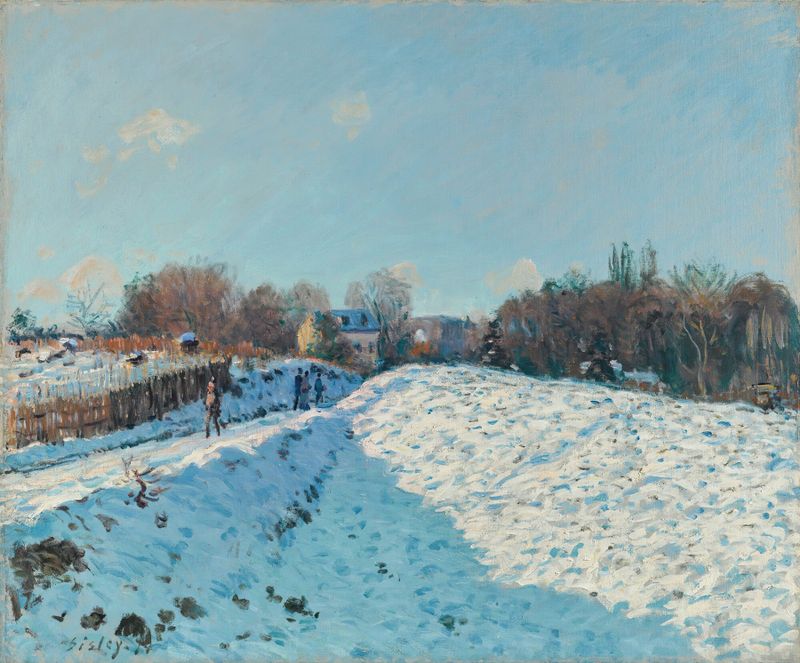
Effet De Neige À Louveciennes
Alfred Sisley
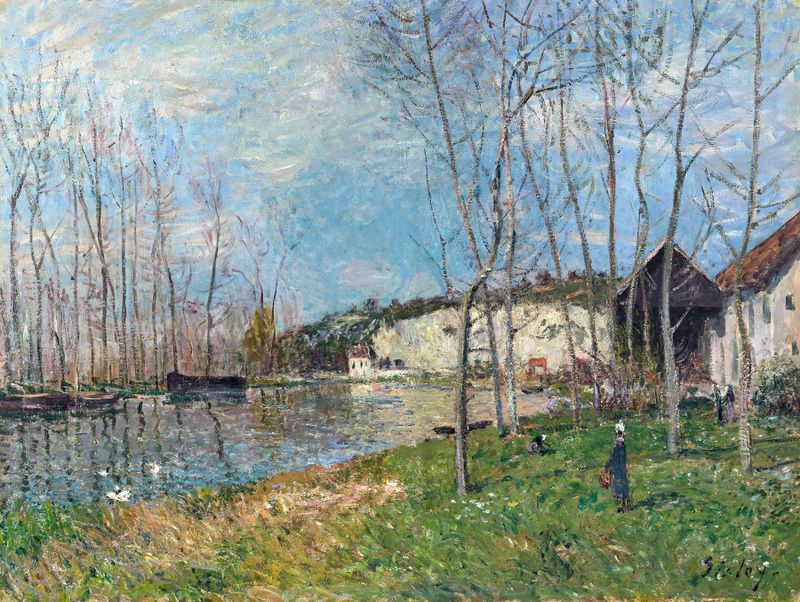
Printemps au bord du Loing
Alfred Sisley
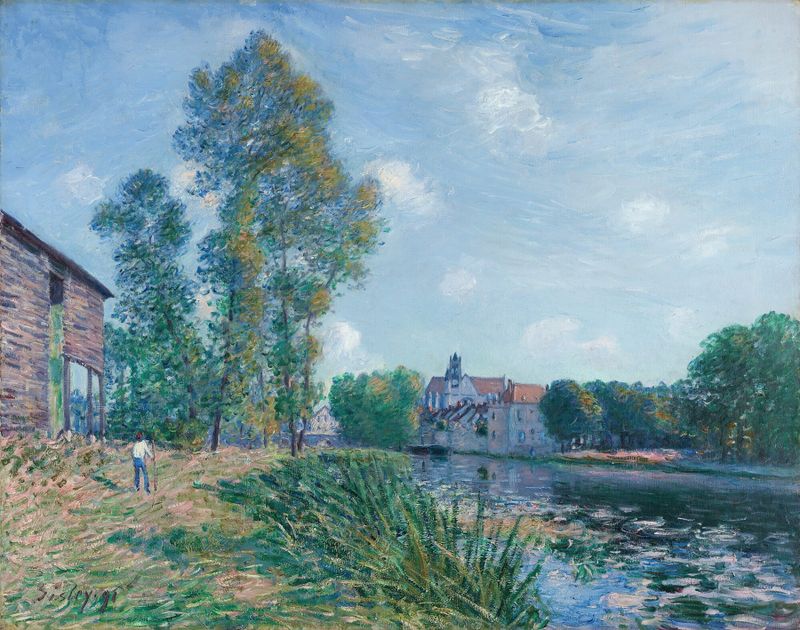
Le Loing À Moret, En Été
Alfred Sisley
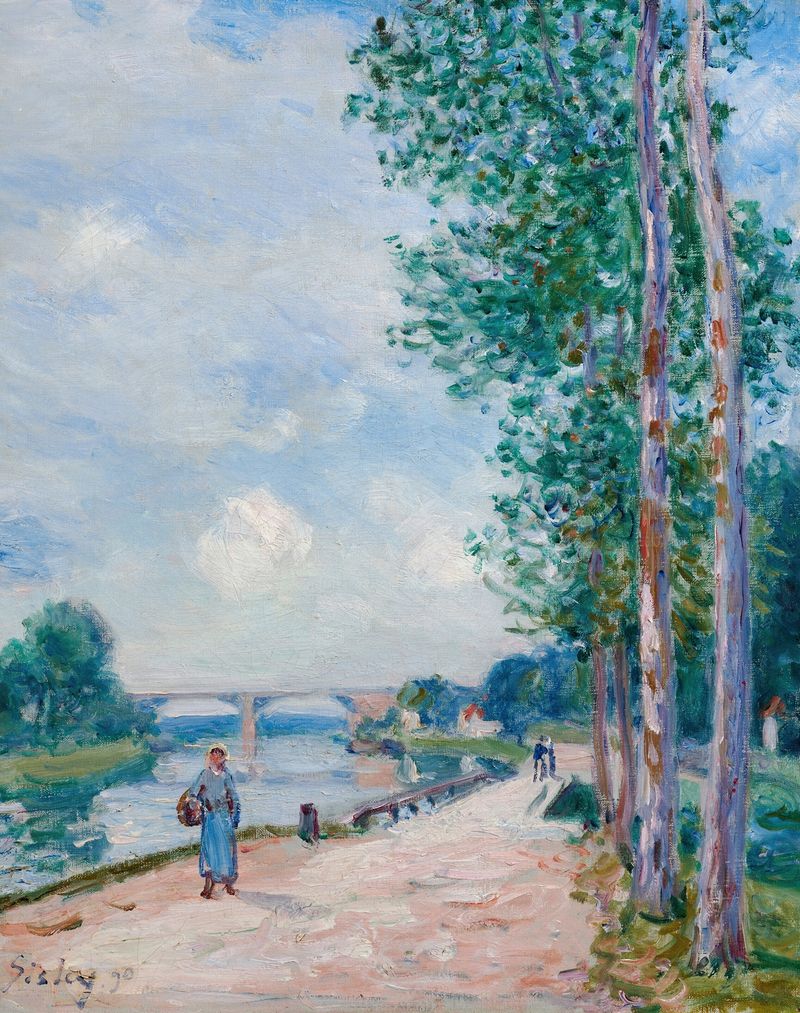
Les bords du Loing près de Moret
Alfred Sisley





