
Orientalischer Reiter vor einer Stadt — History & Facts
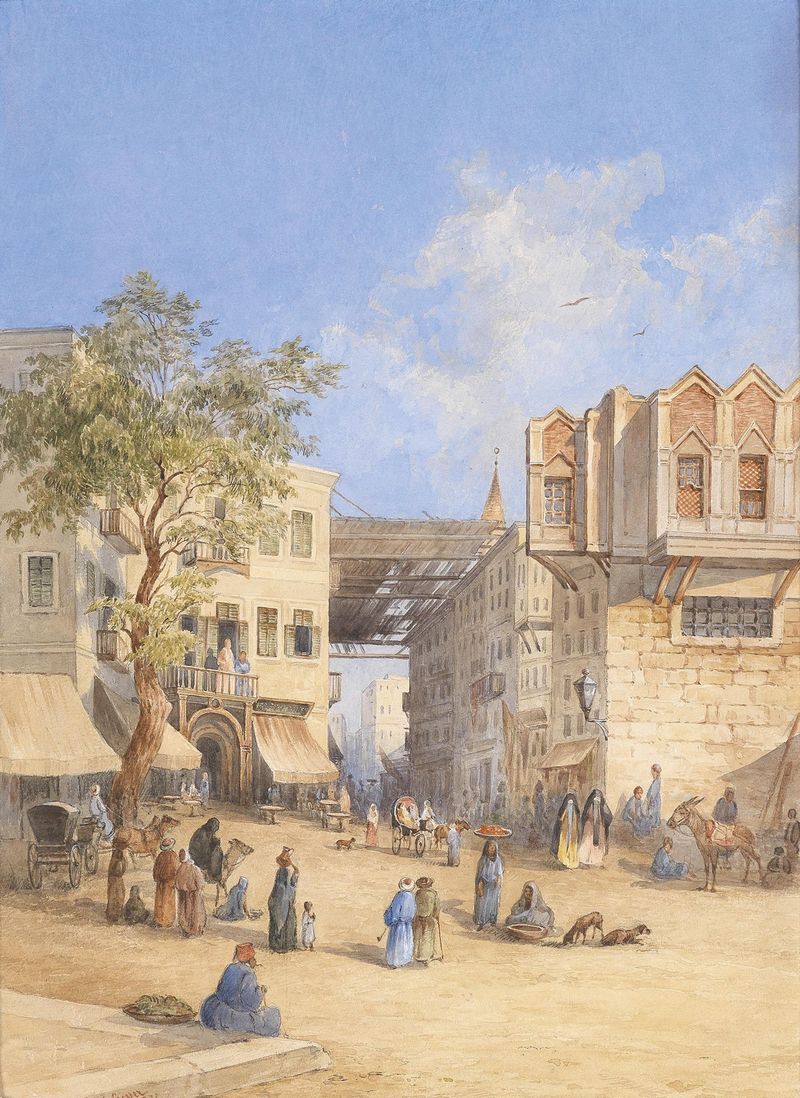
In the intricate dance of brush and canvas, divinity and humanity often converge, illuminating the ephemeral nature of existence. Focus first on the noble figure of the rider, poised confidently atop his steed. The vivid hues of the garment drape gracefully, each fold telling a story of culture and history. The background reveals a city skyline that seems to pulse with life, the architectural details glimmering in gentle sunlight.
Notice how the warm tones of the foreground contrast starkly with the cooler, muted colors of the distant city, creating a palpable sense of depth and distance. Delve deeper into the emotional layers of the painting. The rider's gaze, both proud and contemplative, suggests a moment of introspection amidst the bustling life of the city. Consider the symbolic significance of the steed—representative of strength and freedom—juxtaposed against the urban landscape's rigid structures, evoking the tension between nature and civilization.
Light plays a crucial role here, casting gentle shadows and emphasizing the rider's commanding presence, almost divine in its serenity. In 1873, while creating this work, the artist found himself immersed in the cultural currents of Europe, where Orientalism was capturing the imagination of many. Living in a period marked by rapid industrialization and exploration, Geyer engaged with themes of exoticism and identity, reflecting the anxieties and fascinations of his time. Through this artwork, he encapsulates not just a scene but a profound exploration of the intersection between the familiar and the unknown.
More Artworks by Georg Geyer
Browse all →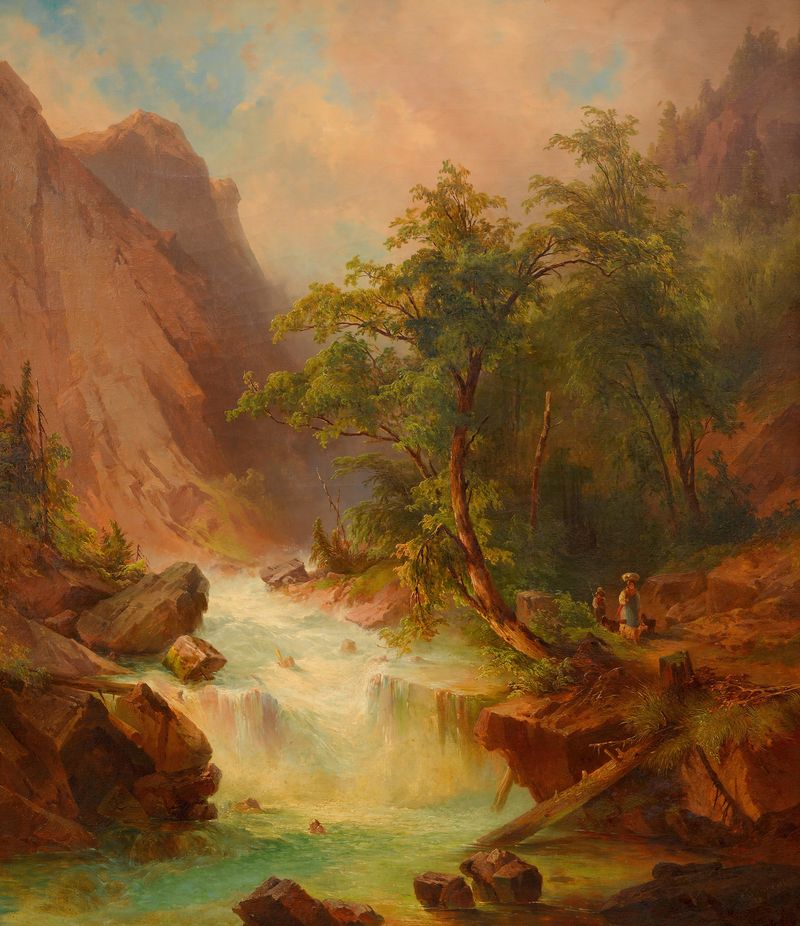
Wildbach in Gebirgslandschaft (Giessbach, CH)
Georg Geyer
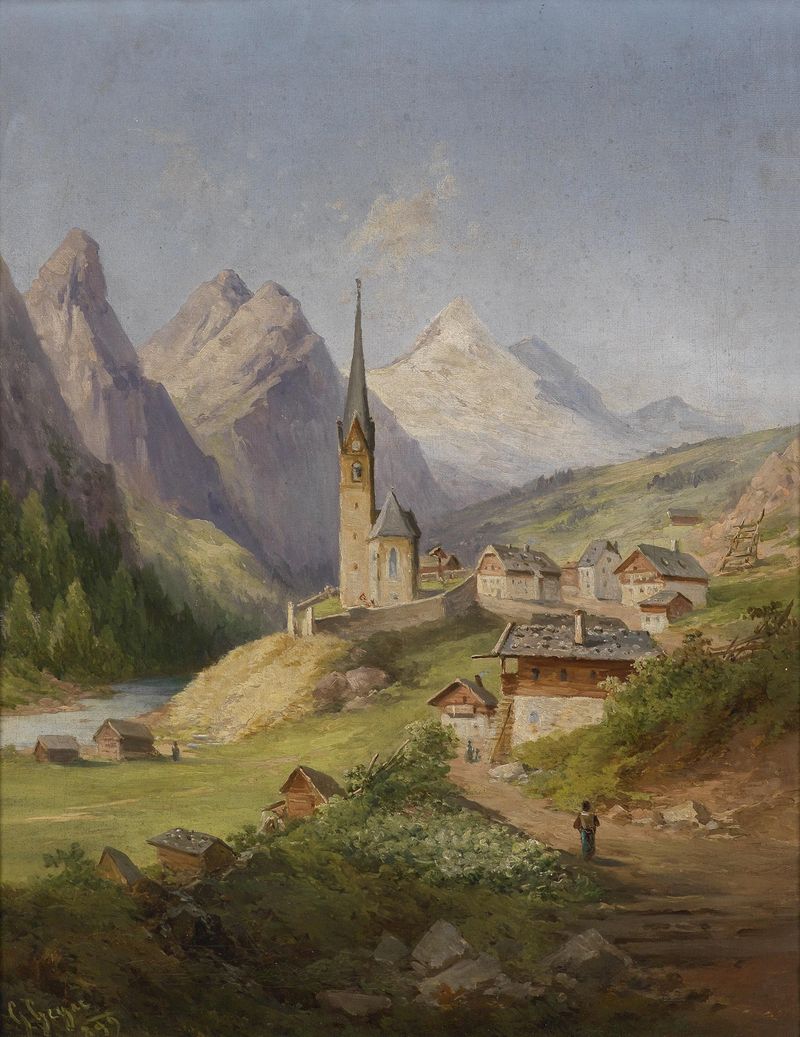
Blick auf Heiligenblut
Georg Geyer
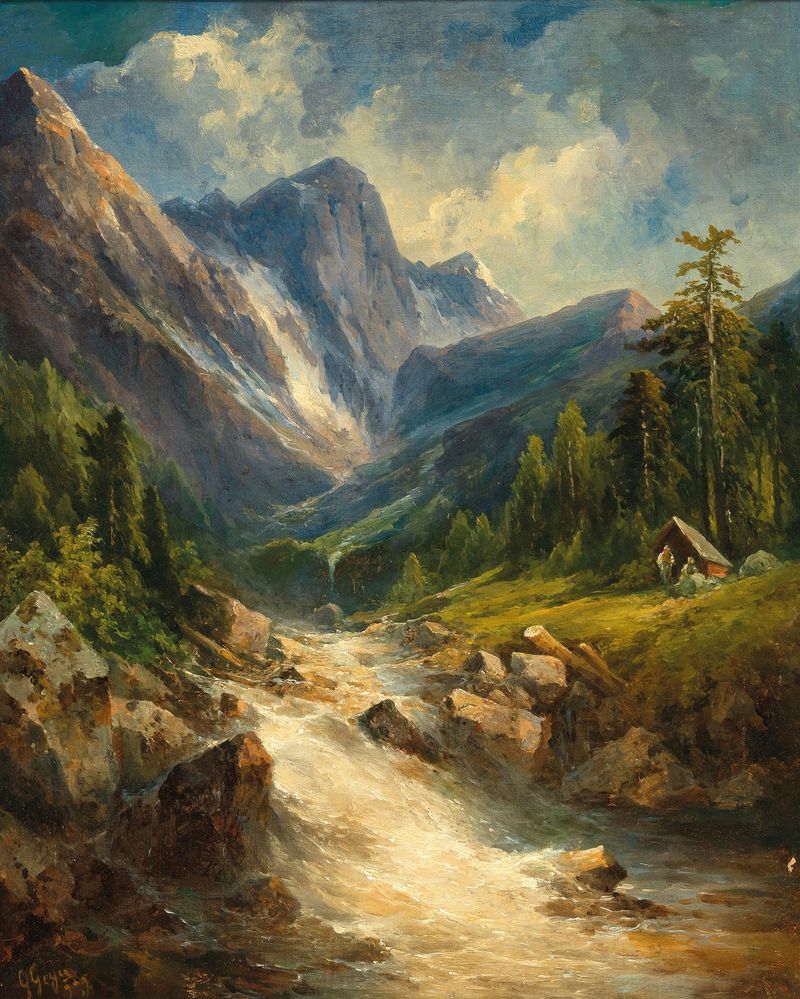
A Mountain Landscape with River
Georg Geyer

Pilger an der Küste
Georg Geyer

The Stappitzersee near Mallnitz, Carinthia; Sauleck, Kölberspitze and Seebachalpe
Georg Geyer

A Small Church in the Mountains
Georg Geyer

Stalbachfall am Grundlsee
Georg Geyer
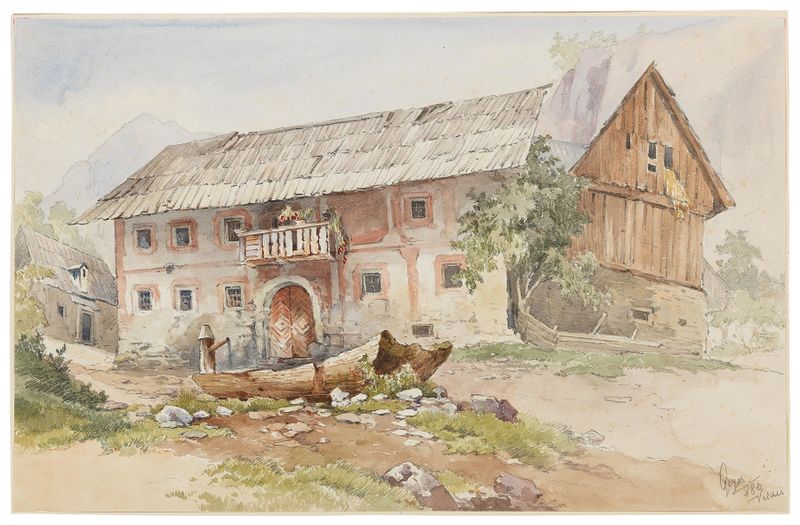
A motif from the region of Veldes
Georg Geyer
Nordafrikanische Stadt
Georg Geyer





