
Pilger an der Küste — History & Facts
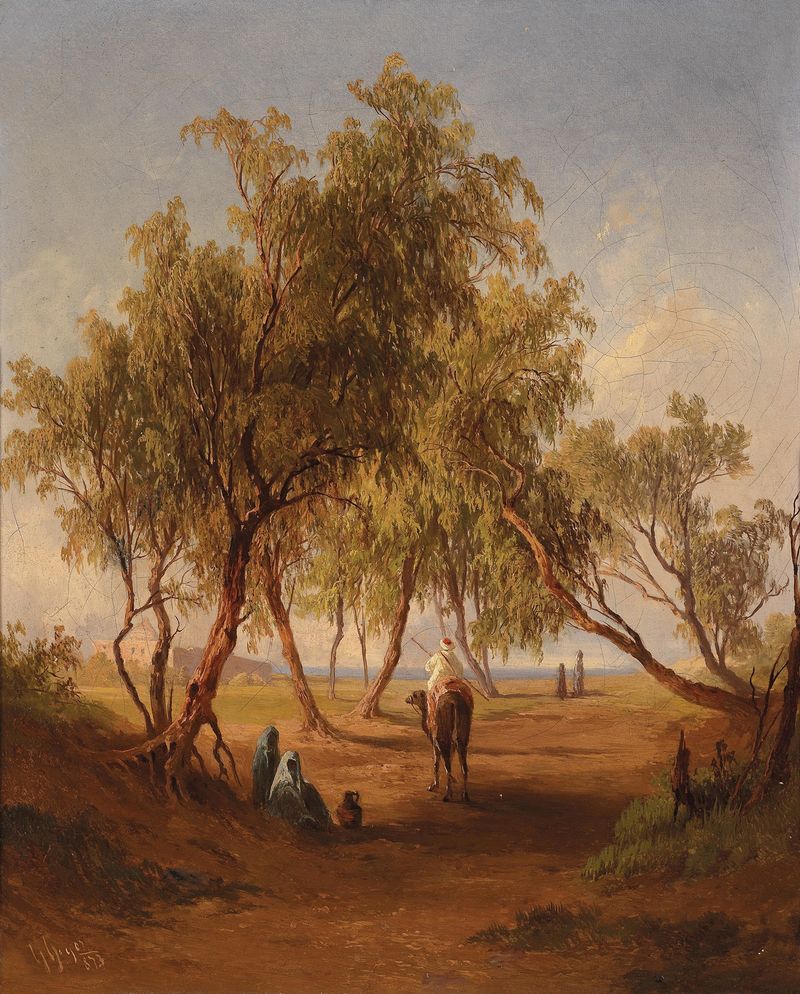
When did color learn to lie? Beneath the surface, every hue whispers secrets of time — the promise of vibrant life overshadowed by the inevitability of decay. Look to the center of Pilger an der Küste, where weary figures make their pilgrimage along the muted shoreline. The soft, muted earth tones of browns and grays blend seamlessly with the pale blues of a distant sky, creating a haunting yet serene atmosphere. Notice how the brushwork captures the gentle undulation of waves, their movement echoing the journey of the pilgrims themselves.
Each stroke reveals an intentional layering of texture, reminiscent of both the sand beneath their feet and the burdens they carry, inviting one to explore the weight of their pilgrimage. Within this scene lies a powerful contrast between the pilgrims’ steadfastness and the encroaching decay represented by the desolate coastline. The figures, though small against the vast expanse of nature, convey a resolute purpose that underscores human resilience. The muted colors evoke a somber nostalgia, suggesting that every step taken along the coast is a tribute to the past, yet also a confrontation with the relentless passage of time.
The distant merging of sea and sky signifies an elusive horizon, hinting at the unknown future that awaits them. Georg Geyer painted this piece in 1873, during a time of personal and artistic transition. Living in Germany, he grappled with the shifting tides of the art world, navigating between realism and the emerging modernist impulses. As Europe faced profound changes, both politically and socially, the themes of pilgrimage and decay in this work reflect a deeper inquiry into the nature of existence and the ephemeral beauty of life.
More Artworks by Georg Geyer
Browse all →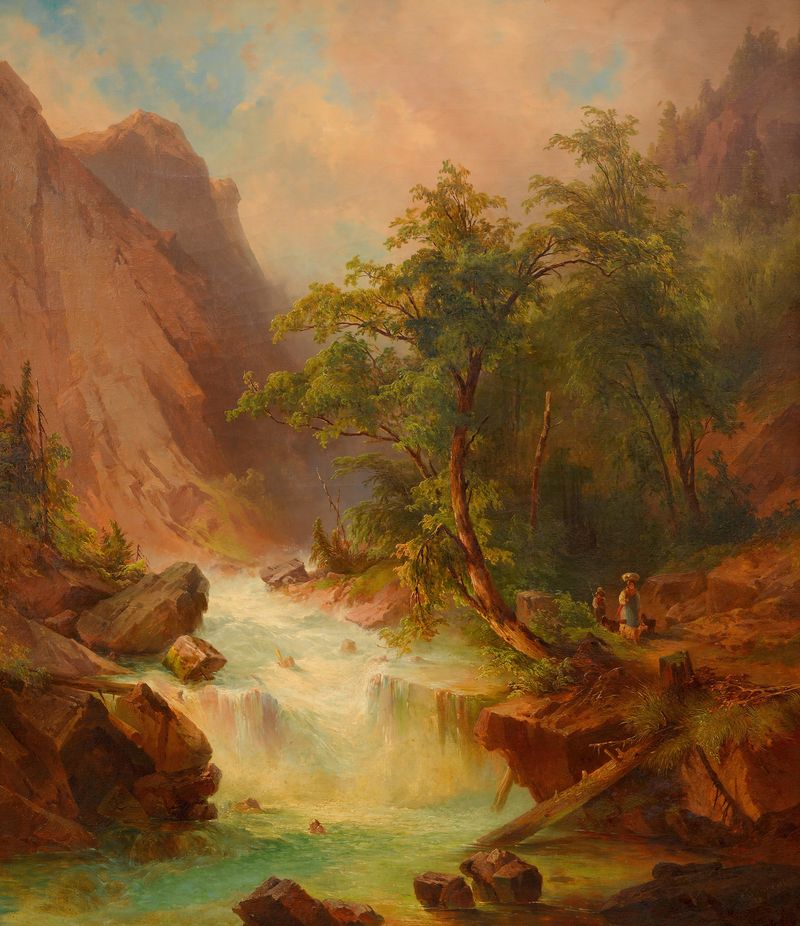
Wildbach in Gebirgslandschaft (Giessbach, CH)
Georg Geyer
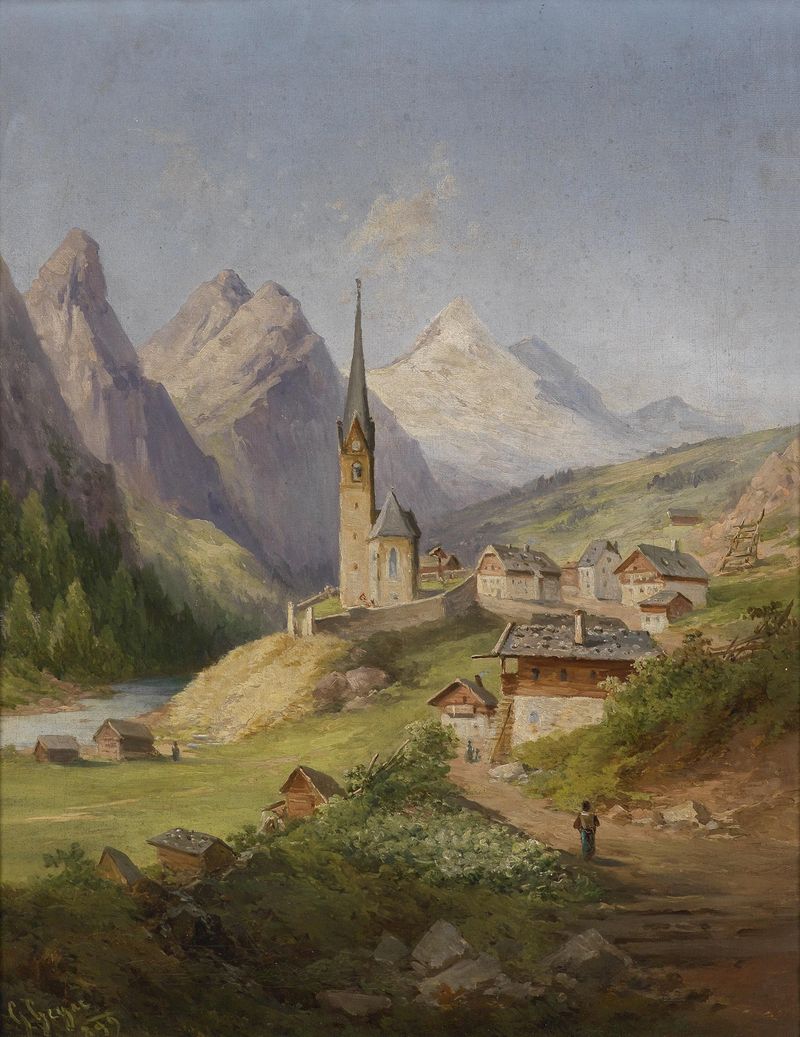
Blick auf Heiligenblut
Georg Geyer
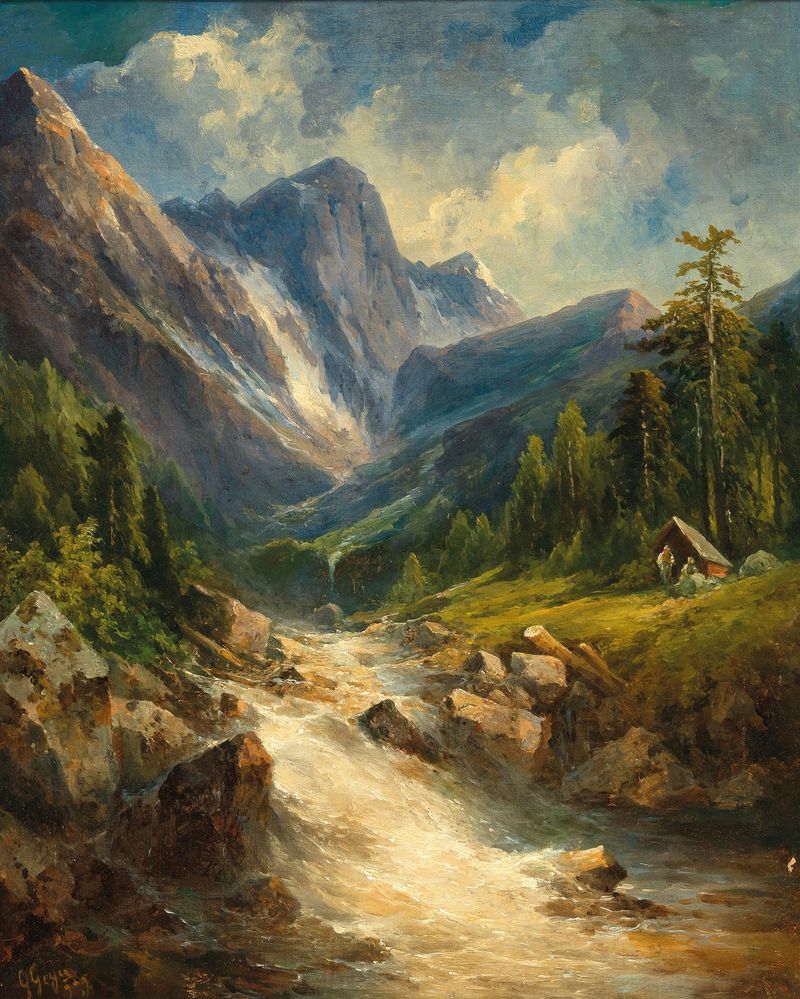
A Mountain Landscape with River
Georg Geyer

The Stappitzersee near Mallnitz, Carinthia; Sauleck, Kölberspitze and Seebachalpe
Georg Geyer

A Small Church in the Mountains
Georg Geyer

Stalbachfall am Grundlsee
Georg Geyer
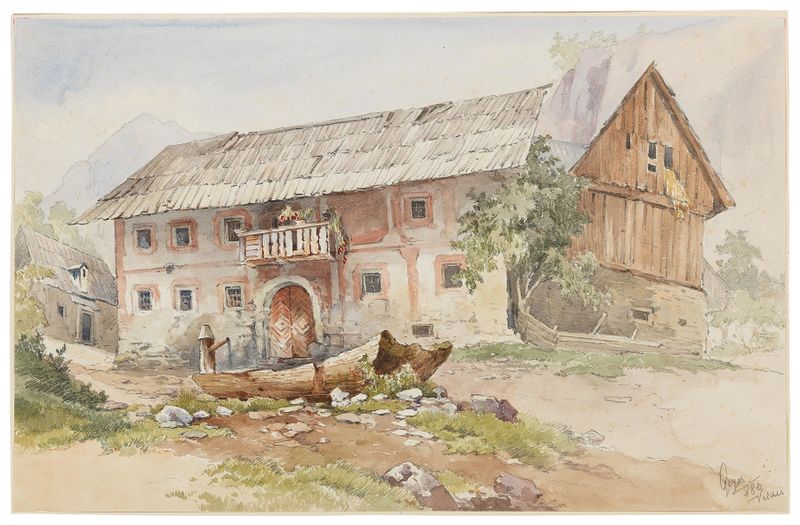
A motif from the region of Veldes
Georg Geyer
Orientalischer Reiter vor einer Stadt
Georg Geyer
Nordafrikanische Stadt
Georg Geyer





