
Over the Horseshoe Fall, Niagara — History & Facts
What secret hides in the quiet of the canvas? The vibrant blues and greens intertwine with soft whites, whispering tales of nature's fierce beauty and serene power. Look to the upper left at the cascading water that tumbles over the precipice, a dance of movement captured in a moment. The artist's brushstrokes create a sense of urgency and motion, while the palette shifts from serene to turbulent as you follow the flow. Notice how the sunlight filters through the mist, imbuing the scene with ethereal light, illuminating the depths of the river below and casting a subtle glow upon the rocks. Amidst the vibrant hues lies an emotional contrast—the overwhelming force of the waterfall juxtaposed with the tranquil landscape surrounding it.
This interplay of chaos and calm reveals the duality of nature; it speaks of power yet embodies stillness. Hidden beneath the surface, the clouds seem to echo the tumult of the fall, a reminder that even in beauty, there can be turbulence. Created in 1912, during a time of burgeoning modernism, Goodwin painted this piece while he was in England, reflecting the shifting tides of artistic expression. In an era where traditional perspectives were being challenged, the artist found inspiration in the raw, unfiltered beauty of the natural world, embracing color and light to capture its essence.
More Artworks by Albert Goodwin
Browse all →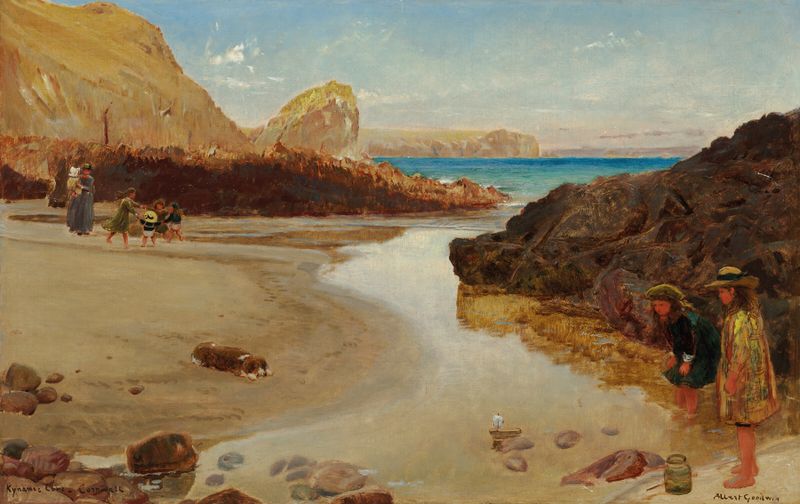
Kynance Cove, Cornwall
Albert Goodwin

Evening, St Hilda’s Abbey, Whitby, Yorkshire
Albert Goodwin

Sunset, Venice
Albert Goodwin
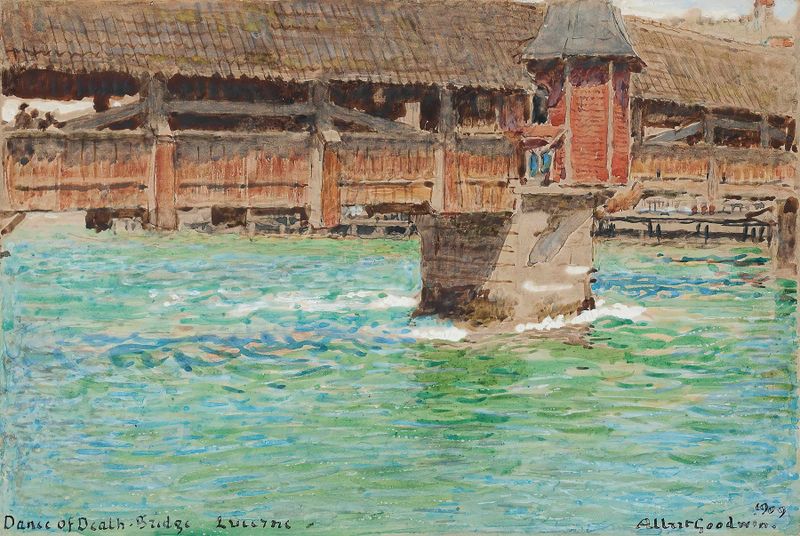
Dance Of Death Bridge, Lucerne
Albert Goodwin
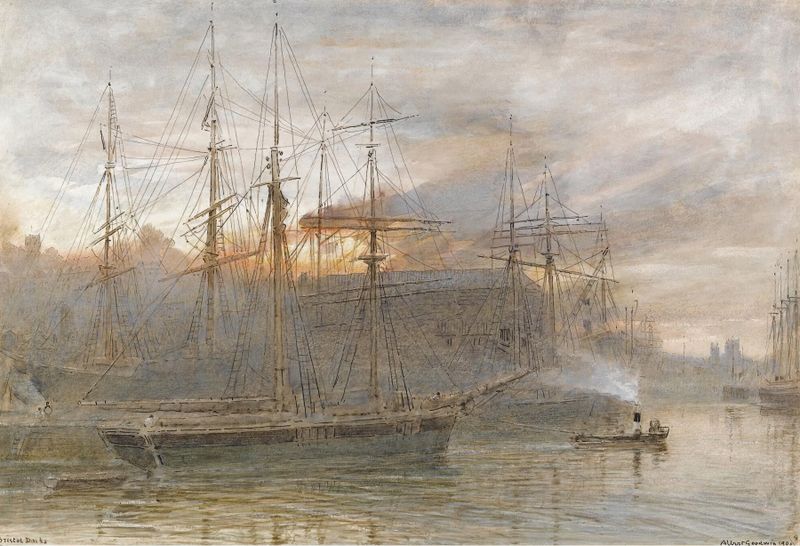
Bristol docks
Albert Goodwin

A view over Lake Lucerne
Albert Goodwin

Rockstone, Demerara, Guyana
Albert Goodwin

Autumn at Braunston, North Devon
Albert Goodwin

Night – faithful unto death
Albert Goodwin

Cabbage palms, Demerara, Guyana
Albert Goodwin





