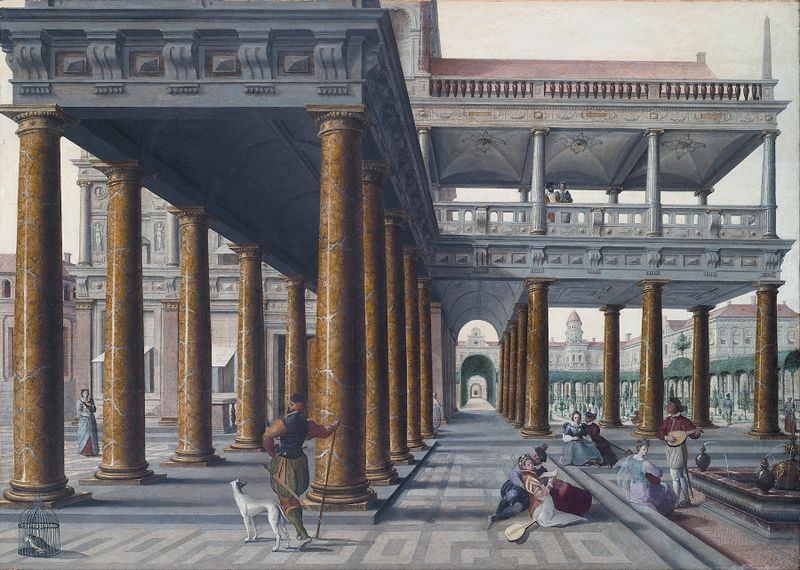
Palace Gardens with Poor Lazarus in the foreground — History & Facts
In the lush expanse of a grand palace garden, sunlight dapples the meticulously tended flora, illuminating the vibrant colors of blooming flowers. Amidst this serene beauty, a figure lies desolate on the ground—Poor Lazarus, his tattered robes stark against the opulence surrounding him. Silence envelops the scene, broken only by the faint rustle of leaves as light dances through the branches, casting a poignant contrast between wealth and despair. Look to the foreground, where Lazarus reclines, a poignant symbol amidst the lavish setting.
His gaunt form, rendered with sensitive strokes, draws the viewer’s eye, the deep blues of his clothing clashing with the lavish reds and greens of the garden. Notice how the light falls upon the lavish blooms and the crisp stone path, illustrating both the vibrancy of life and the starkness of suffering. The exquisite details in the surrounding foliage highlight a meticulous technique that invites exploration, revealing layers of sadness intertwined with beauty. The emotional tension unravels upon closer inspection, as the rich foliage grows denser around Lazarus, creating an almost suffocating intimacy.
His closed eyes evoke a sense of weariness, contrasting the vibrant life flourishing around him—an eternal reminder of the inequities within the human condition. The juxtaposition of wealth and abject poverty prompts reflection on societal values, suggesting that beauty can exist alongside suffering, and the garden becomes a metaphor for the human experience. During the period stretching from 1550 to 1606, the artist found himself at a crossroads in the Northern Renaissance, where the tension between realism and imaginative landscapes came to define his work. Painted in the Low Countries, Palace Gardens with Poor Lazarus in the foreground emerges from a time of social upheaval and personal introspection for him, as he sought to capture not just the beauty of nature, but the poignant narratives that dwell within it.