
Palazzo Communale te Brescia — History & Facts
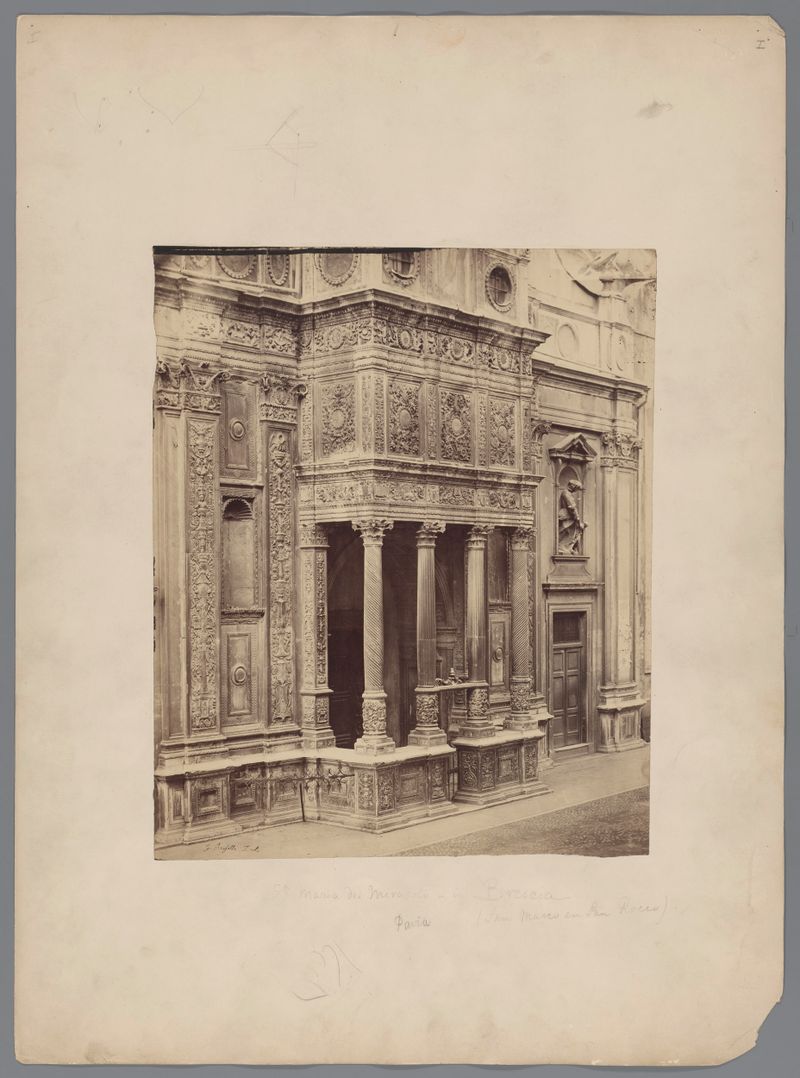
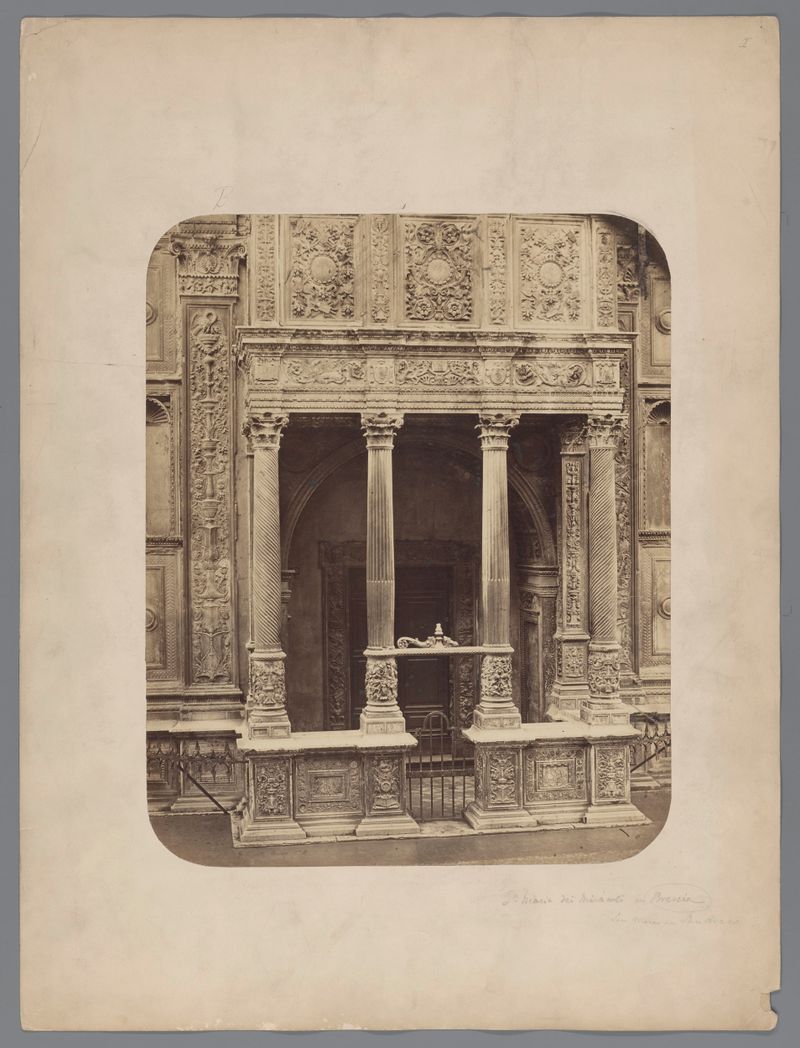
What secret hides in the quiet of the canvas? Beneath the tranquil surface of Palazzo Communale te Brescia, destiny whispers through the muted colors and gentle lines, beckoning the viewer to delve deeper into its serene depths. Look to the foreground, where the elegant arches of the palazzo draw your gaze, framing a small moment suspended in time. The soft play of light dances across the stone façade, revealing the intricate details of its carvings. Notice how the cool blues and warm ochres intermingle, creating a tender balance that evokes both stability and ephemeral beauty.
The composition guides your eye upward, through the passageways, leading to the sky—an infinite expanse that hints at the uncharted possibilities of life within these walls. Yet, in the stillness of this architectural representation lies a tension between permanence and transience. Each arch suggests stories of the past, while the faint shadows hint at the inevitable passage of time. The juxtaposition of light and dark invites contemplation; one could interpret it as a nod to historical weight and the fleeting nature of existence.
As you linger in this moment, you become aware of the quiet pulse of destiny that runs through the building, connecting its history to the present. In the early 1870s, Giacomo Rossetti painted this piece during a time of burgeoning nationalism in Italy, as cities like Brescia were redefining their identities. Artistic movements thrived in the backdrop of a changing society, and Rossetti, influenced by the Romantic ideals of beauty and emotion, sought to capture the essence of a place steeped in history. His keen sensitivity to architecture and its surroundings reveals much about his personal journey and the evolving narrative of Italy itself.
More Artworks by Giacomo Rossetti
Browse all →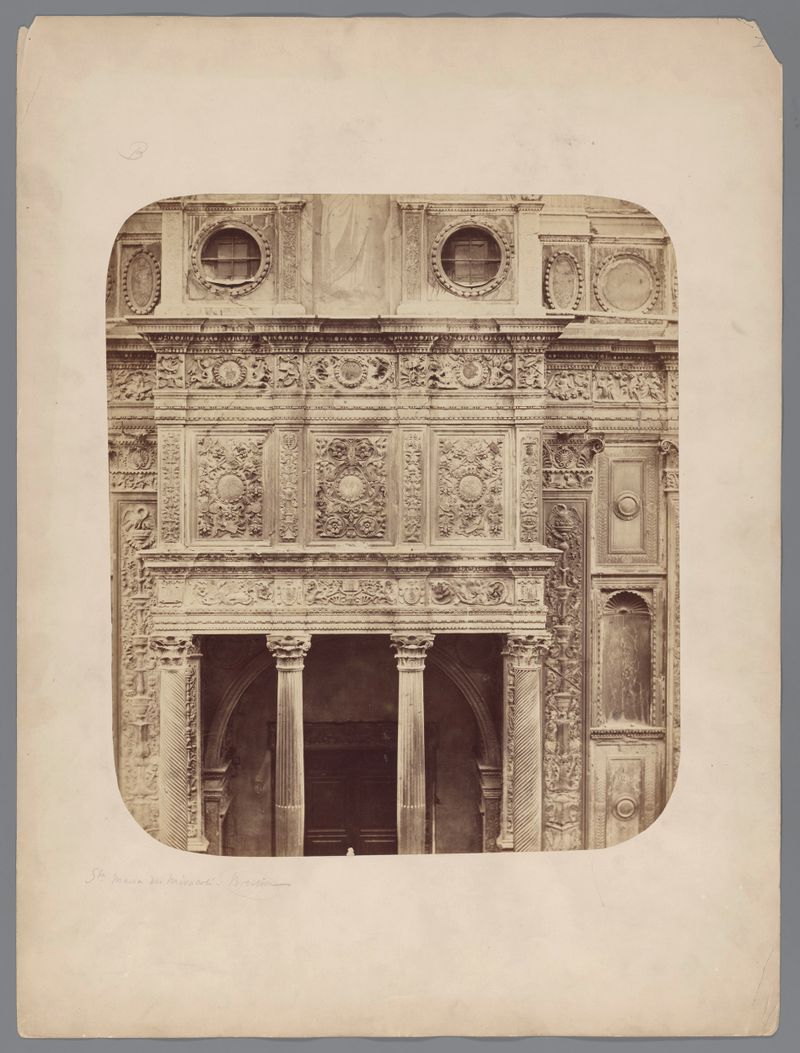
More Architecture Art
Browse all →
The statue of Liberty
Frédéric Auguste Bartholdi

View of Houses in Delft, Known as ‘The Little Street’
Johannes Vermeer

View of Houses in Delft, Known as ‘The Little Street’
Johannes Vermeer

The Cathedral in Rouen. The portal, Grey Weather
Claude Monet

The yellow house
Vincent van Gogh

The Church in Auvers-sur-Oise, View from the Chevet
Vincent van Gogh