
Paris, Vue de la Passerelle des Arts et du Louvre — History & Facts
What if beauty was never meant to be finished? The shadow of a moment lingers in the air, teasing us with the idea of imperfection as a silent partner to our longing. Focus on the gentle embrace of light as it dances across the water, reflecting the iconic silhouette of the Louvre. Look closely at the figures on the passerelle, each one seemingly caught in a world of their own, their gestures both intimate and disconnected. The soft palette of blues and greens invites calm, while the delicate brushstrokes evoke a sense of movement and life, suggesting a fleeting encounter with the picturesque.
Notice how the architecture of Paris frames this tableau, forming a bridge between the real and the ethereal. In this work, contrasts abound—between the solidity of the historic buildings and the ephemeral nature of the clouds drifting above, or between the boldness of the figures and the subtlety of the shadows cast around them. These details weave together a narrative that speaks to the transient beauty of city life, hinting at stories untold. Each shadow serves as a reminder of the lives lived beneath these arches, amplifying the emotional weight of the scene. Giuseppe Canella painted this vision of Paris in 1830, during a period of artistic exploration and change in Europe.
Living in Italy, he was deeply influenced by the Romantic movement, yet his works often embody a unique blend of realism and idealism. At this time, Paris was evolving as an artistic hub, attracting a myriad of talents who sought to capture its dynamic essence, an endeavor Canella undertook with a deft hand and a thoughtful eye.
More Artworks by Giuseppe Canella
Browse all →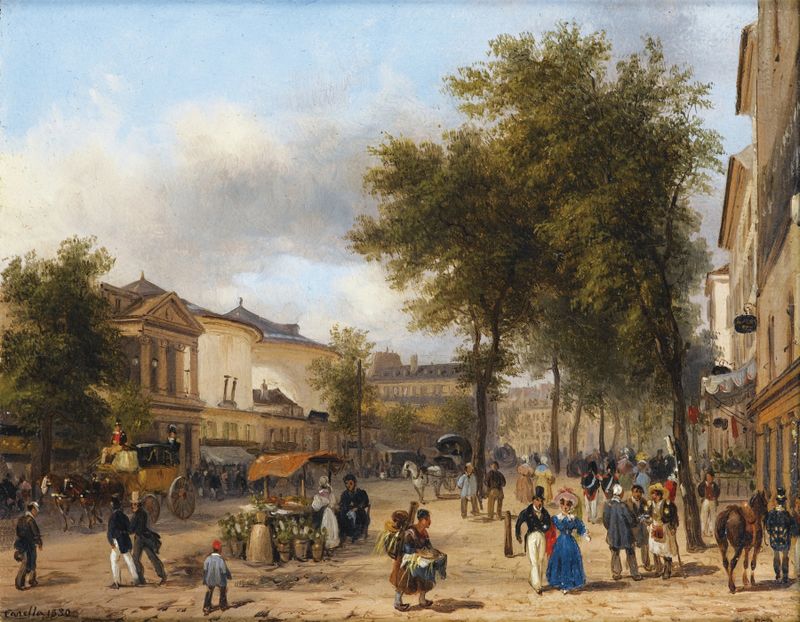
Paris, Vue du Théâtre des Variétés sur le Boulevard Montmartre
Giuseppe Canella

L’Hôtel de Ville et la place de Grève, vus de l’Ile de la Cité
Giuseppe Canella
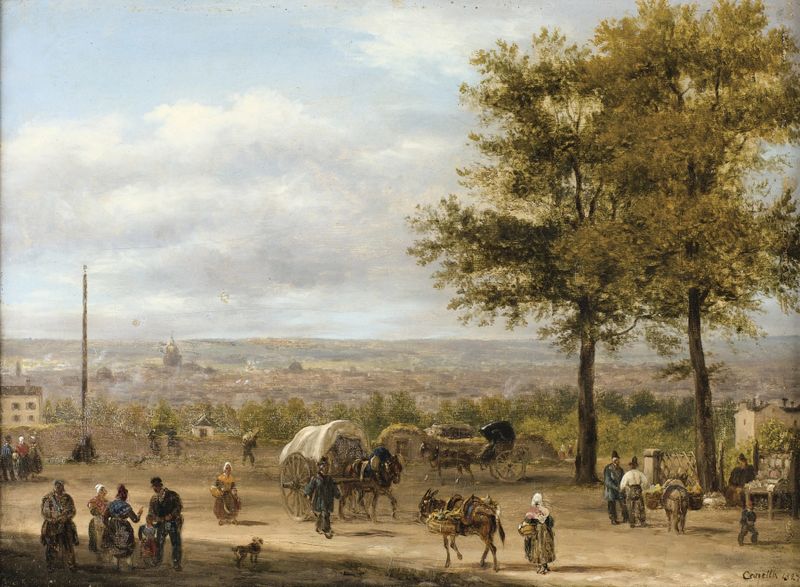
Vue des hauteurs de Paris
Giuseppe Canella
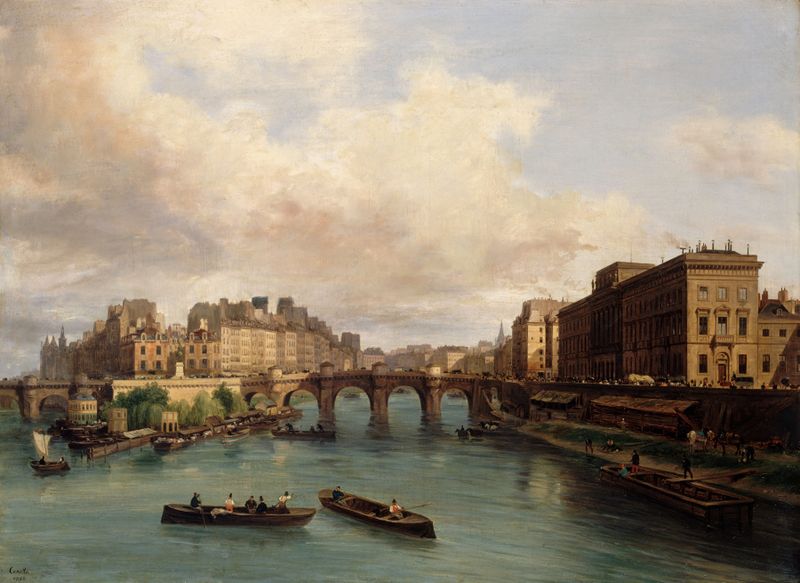
L’Ile de la Cité et le quai Conti, vus de la passerelle des Arts
Giuseppe Canella

Amsterdam, A View of the Royal Palace
Giuseppe Canella

Les Halles et la rue de la Tonnellerie
Giuseppe Canella
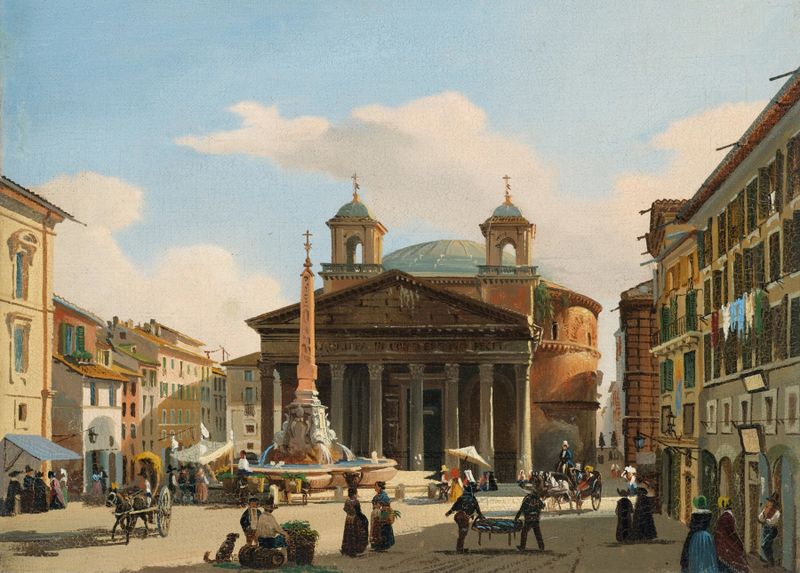
Vue du Panthéon à Rome
Giuseppe Canella
Venice, A View Of Piazza San Marco From Piazzetta Dei Leoncini
Giuseppe Canella
Le marché aux fleurs, la Tour de l’Horloge, le Pont au Change et le Pont-Neuf
Giuseppe Canella
A Venetian scene with a gondola on a lagoon
Giuseppe Canella
More Architecture Art
Browse all →
The statue of Liberty
Frédéric Auguste Bartholdi

View of Houses in Delft, Known as ‘The Little Street’
Johannes Vermeer

View of Houses in Delft, Known as ‘The Little Street’
Johannes Vermeer

The Cathedral in Rouen. The portal, Grey Weather
Claude Monet

The yellow house
Vincent van Gogh

The Church in Auvers-sur-Oise, View from the Chevet
Vincent van Gogh