
Paysage — History & Facts
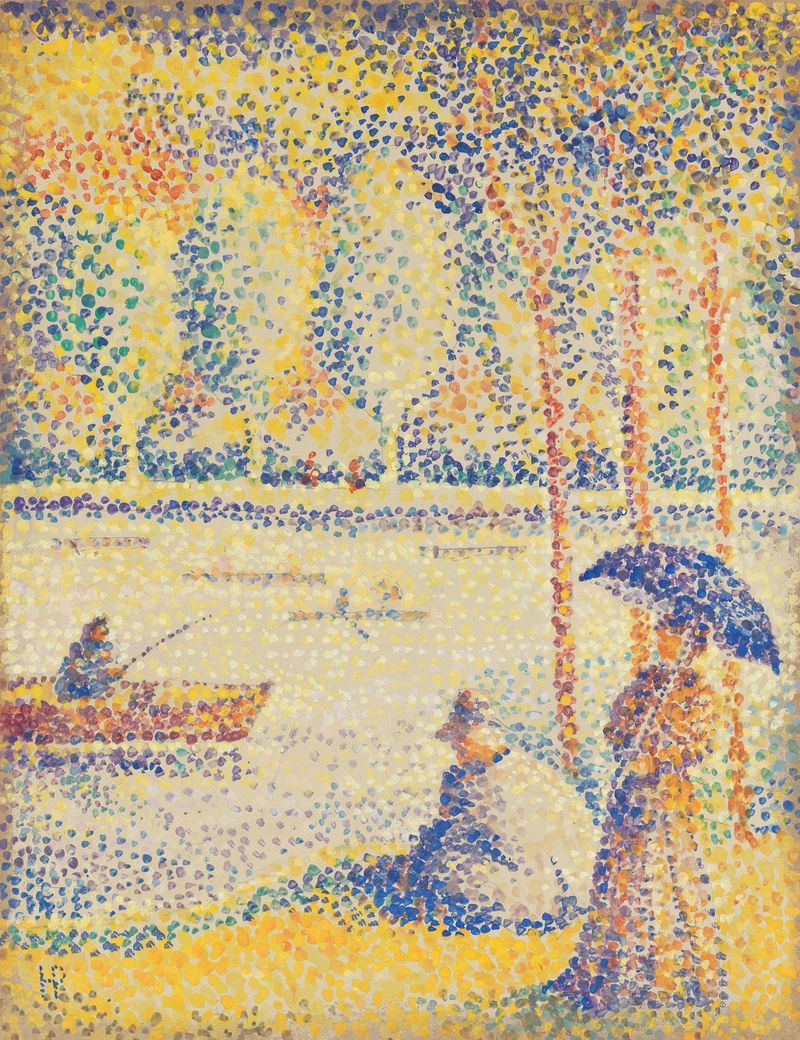
Did the painter know this moment would outlive them? In Paysage, the essence of revelation hangs in the stillness of a serene landscape, inviting the viewer to ponder the passage of time and the breath of nature. Look to the left where delicate strokes of green reveal a meadow, dancing gently under the embrace of a soft light. The horizon unfolds in layers, with gentle hills merging into the deep blue sky, punctuated by clouds that evoke both calmness and contemplation. Notice how the brushwork shifts from tightly defined blades of grass to the looser, more fluid strokes in the sky, creating a sense of depth that draws you into this tranquil world.
The warm palette of yellows and greens infuses the scene with life, while the cool blues provide a counterbalance, reflecting an emotional harmony. Yet, amidst the tranquility, there exists a tension—a contrast between the vividness of the foreground and the fading hues of the background. This interplay of light and shadow hints at the transient nature of beauty, a reminder that every moment is precious. Additionally, the absence of human figures suggests solitude, provoking thoughts on the relationship between humanity and the natural world, and the fleeting moments we often overlook. In 1897, Hippolyte Petitjean painted this piece during a period when France was experiencing a renaissance in art, embracing Impressionism and Post-Impressionism.
He sought to capture the subtleties of light and atmosphere, turning his focus toward landscapes that emphasized emotional experience over realism. At this juncture, he was refining his style, deeply engaged in exploring how color could convey feeling, laying the groundwork for the revelation that would resonate long after his brush had left the canvas.
More Artworks by Hippolyte Petitjean
Browse all →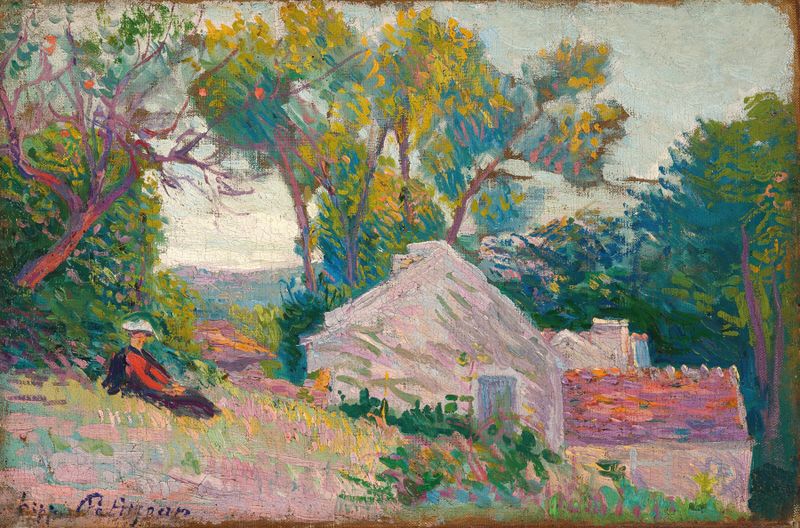
Femme dans un paysage
Hippolyte Petitjean
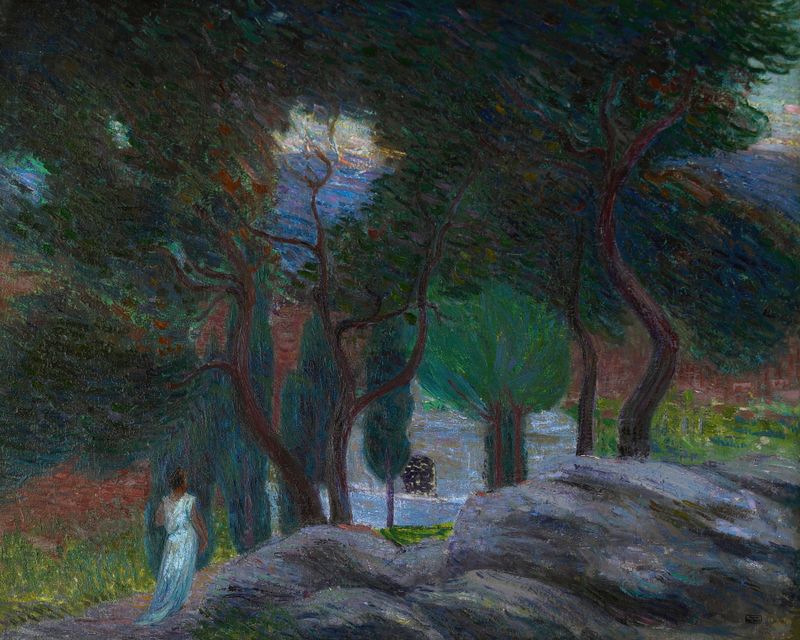
An evening in the springtime of life, circa 1890
Hippolyte Petitjean
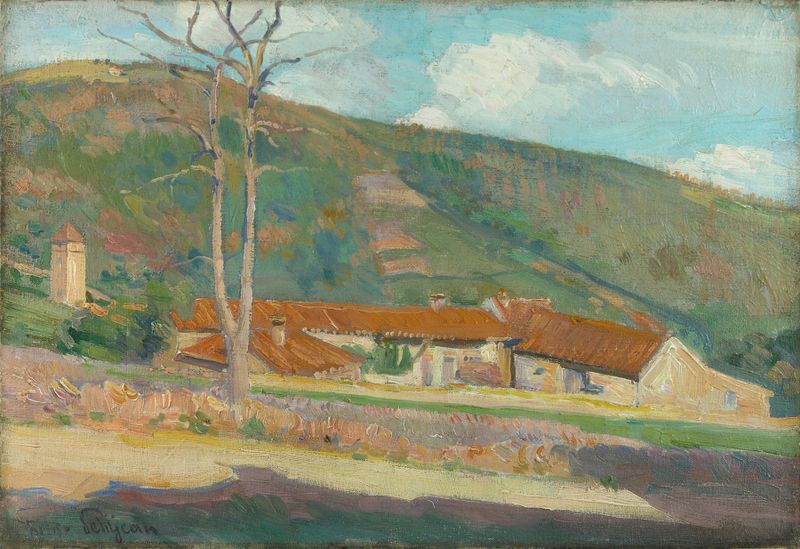
Landscape, Upper St. Tropez
Hippolyte Petitjean
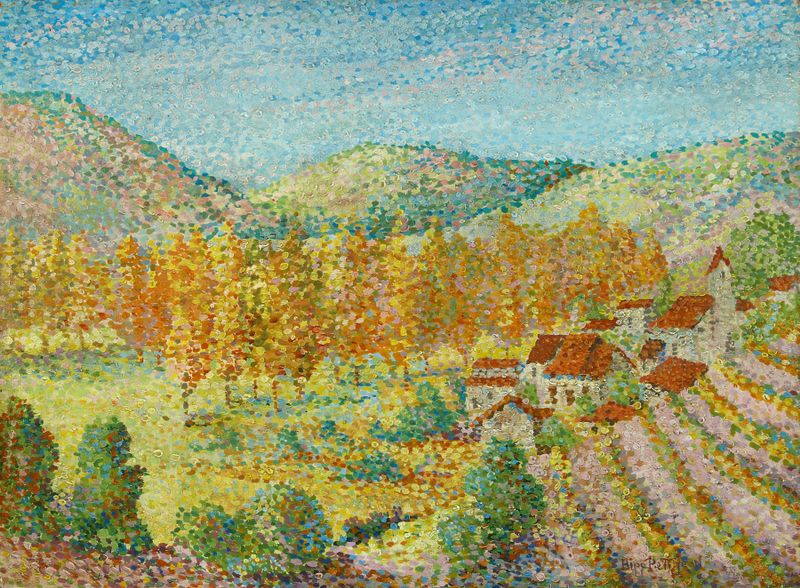
Vineyard in Southern France
Hippolyte Petitjean

Maisons Au Bord D’un Lac
Hippolyte Petitjean

A Broad Valley at Sunset
Hippolyte Petitjean

Sous-Bois
Hippolyte Petitjean
Barques sur le canal
Hippolyte Petitjean





