Paysage aux cavalier et lavandières — History & Facts
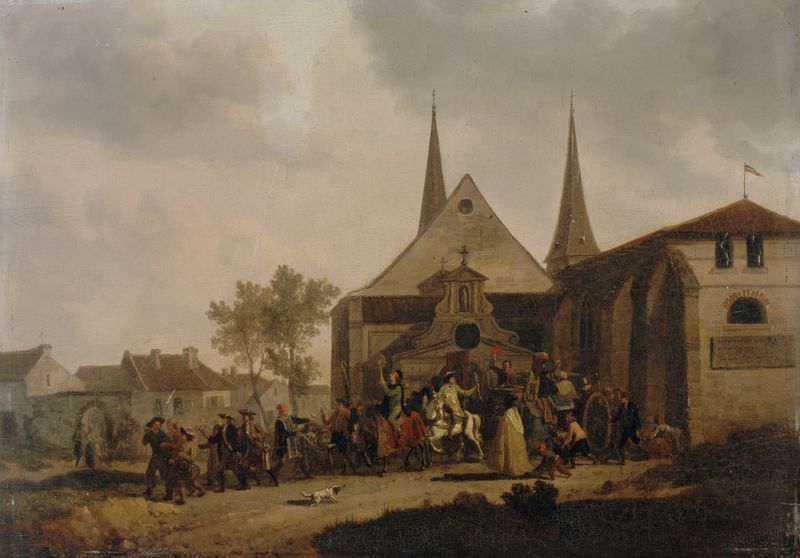
Could a single brushstroke hold eternity? In Paysage aux cavalier et lavandières, the enduring beauty of nature mingles with the delicate toil of humanity, captured in a moment that invites endless contemplation. Focus first on the vibrant greens and soft blues that dominate the canvas, suggesting a serene landscape alive with the whispers of the wind. Look to the center where the gentle figures of washerwomen bend over their tasks, their postures conveying both labor and grace. Notice how the light dances upon the water’s surface, revealing a shimmering reflection that draws the eye deeper into this harmonious scene.
The composition’s balance between the human figures and the expansive backdrop evokes a sense of unity with nature. Beneath the surface, small details tell richer stories; the contrast of the understated clothing of the lavandières against the nobility of the horseman introduces themes of class and labor. The distant mountains loom, timeless and indifferent to the scene, emphasizing the transient nature of human effort amidst the unchanging earth. This juxtaposition sparks a tension between the fleeting and the eternal, challenging viewers to consider their own place within this landscape. Created during an era when neoclassicism was evolving into romanticism, the artist painted this piece amidst a growing fascination with the everyday lives of common people.
Reflecting a shift in cultural values, the work embodies a moment when the artisanal and the noble gracefully intersected, revealing Swebach-Desfontaines’ keen understanding of both nature and humanity.