Paysage d’automne — History & Facts
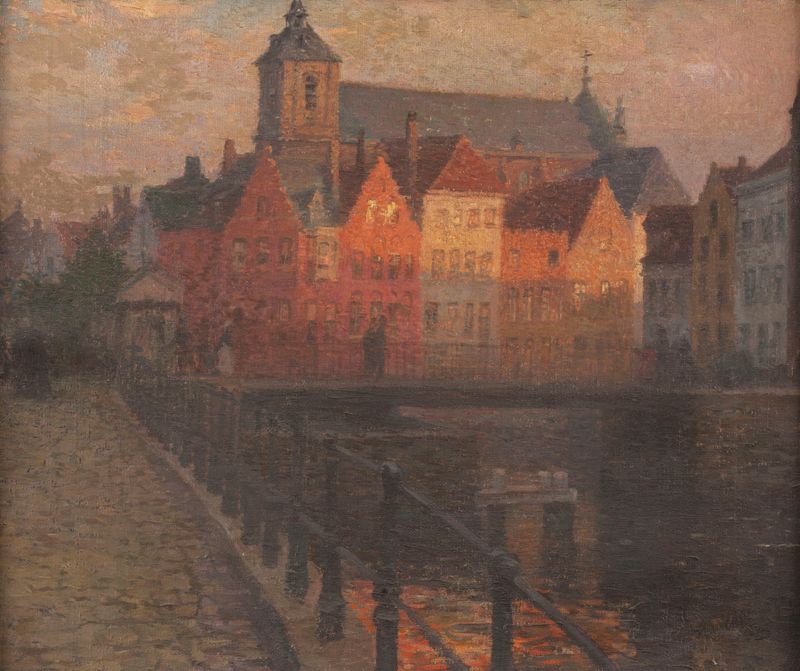
In Paysage d’automne, innocence flickers like a candle in the fading light of autumn, reminding us of the fragility of our joys. Focus on the far left, where the golden hues of falling leaves capture the essence of the season. The painter’s brushwork invites the eye to dance across the canvas, where warm yellows and deep oranges blend seamlessly with cooler greens, creating a vibrant tapestry of color. Notice how the light filters through the trees, casting dappled shadows that suggest both shelter and ephemerality.
Each stroke reveals not just the landscape but an emotional landscape, resonating with a bittersweet charm. The gentle undulation of the hill, crowned with a solitary tree, evokes a sense of both longing and nostalgia. There’s a tension between the serene beauty of nature and the underlying sense of loss as the leaves surrender to the wind. The juxtaposition of vibrancy and decay reminds us of innocence fading with time, a poignant reminder of life's cyclical nature. Paul Steck created this piece in 1902 while living in France, a period marked by a burgeoning interest in Impressionism.
At this time, the art world was witnessing the shift from traditional representations to more emotive explorations of light and color. Steck’s work reflects this evolution, capturing not just a scene but an essence of fleeting moments that resonate deeply with the viewer's experience of time and beauty.