Quai de la Paille à Bruges — History & Facts
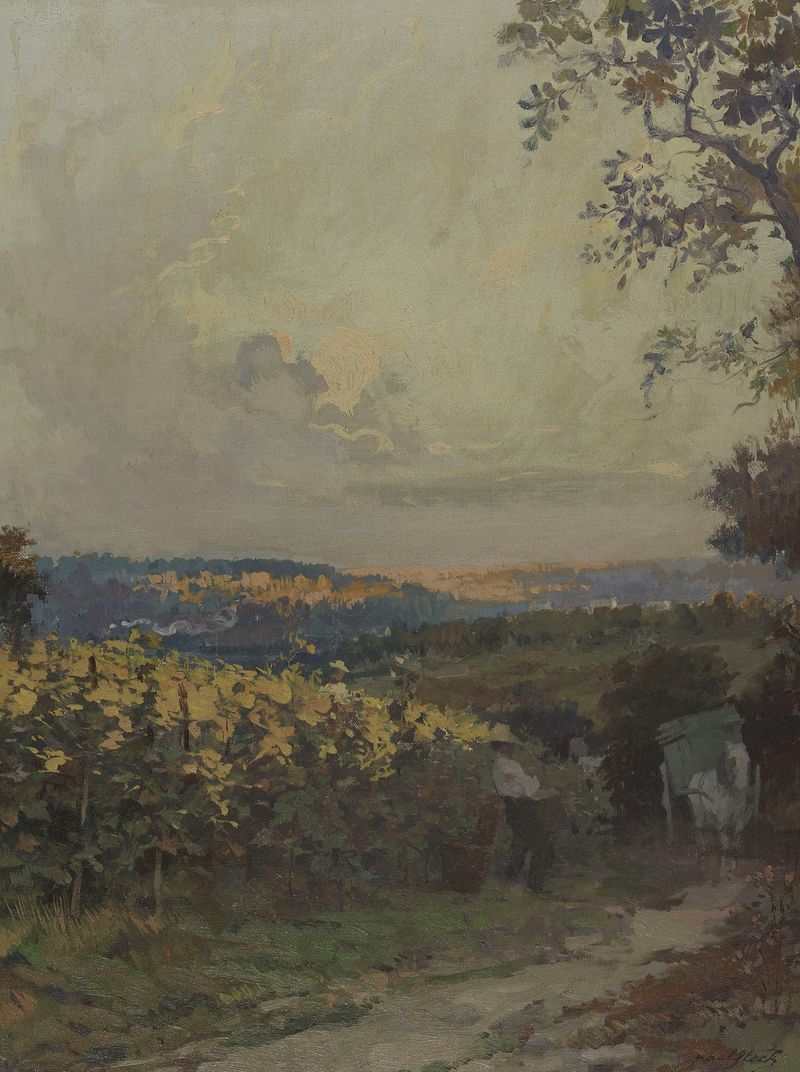
Who listens when art speaks of silence? In Quai de la Paille à Bruges, a stillness resonates, capturing the fleeting essence of mortality and the quiet moments we often overlook. Look to the lower right corner where the textured brushstrokes of the canal's surface ripple softly, reflecting a muted sky. The palette, dominated by deep blues and earthy browns, imbues the scene with a sense of calm, while the gentle blending of colors evokes the passage of time. Notice how the distant buildings appear hazy, their outlines softened, suggesting a world that is both present and elusive, much like memory itself. The contrast between the serene water and the looming, shadowed structures invites contemplation on the inevitability of change.
Each stroke seems to whisper of lives lived and lost, while the tranquil water embodies the weightlessness of moments that slip through our fingers. The emotion captured here speaks to a shared human experience—the tension between the permanence of the landscape and the ephemeral nature of existence. Paul Steck painted this work during an era when the world was buzzing with change, yet he chose to focus on the quietude of everyday life. Living in Bruges, likely around the early 20th century, he immersed himself in the tranquil beauty of his surroundings at a time when modernism was beginning to reshape artistic narratives.
Steck’s choice to capture such an intimate, reflective scene highlights his desire to find solace amid the chaos of the world outside.