Paysanne à la moisson — History & Facts
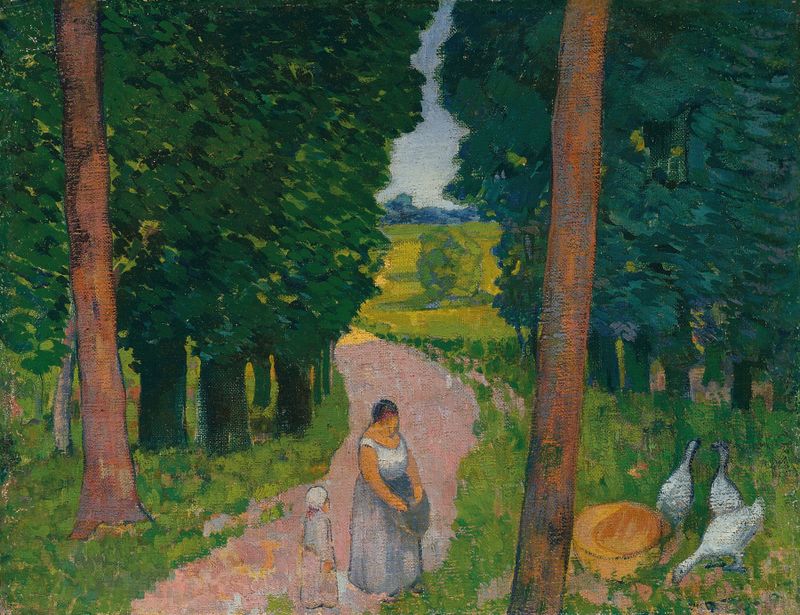
In the stillness of harvest time, faith manifests through the quiet diligence of a peasant. Each stroke of the sickle reveals the sacred relationship between toil and nature, a testament to resilience and dedication. Look to the left at the figure of the woman, her posture bent but unyielding, embodying strength in labor. Notice the muted earth tones, harmonizing browns and greens that ground the scene in reality, while soft highlights on her arms and face catch the waning light, illuminating her humble reverence.
The composition draws the eye not only to her but also to the sprawling fields that envelop her, hinting at the vastness of the work ahead and the spiritual reward nestled within the land. Within the simplicity of her task lies profound significance; the act of harvesting becomes a ritual of faith and gratitude. The interplay between the solitary figure and the expansive field conveys both isolation and interconnectedness, reflecting the quiet struggle and hope embedded in rural life. The silence of the scene invites contemplation, suggesting that every harvested grain carries with it the weight of dreams, prayers, and survival. Louis Roy painted this piece in 1891, a time of significant change in France.
As industrialization swept through the nation, rural life began to fade, prompting artists like him to document and celebrate the simplicity and dignity of agrarian existence. Working in a period marked by the emerging impressionist movement, Roy captured not just a moment, but a way of life that was at risk of being forgotten, infusing his work with both nostalgia and reverence for the faith found in everyday labor.