Pelepones set fra Megara — History & Facts
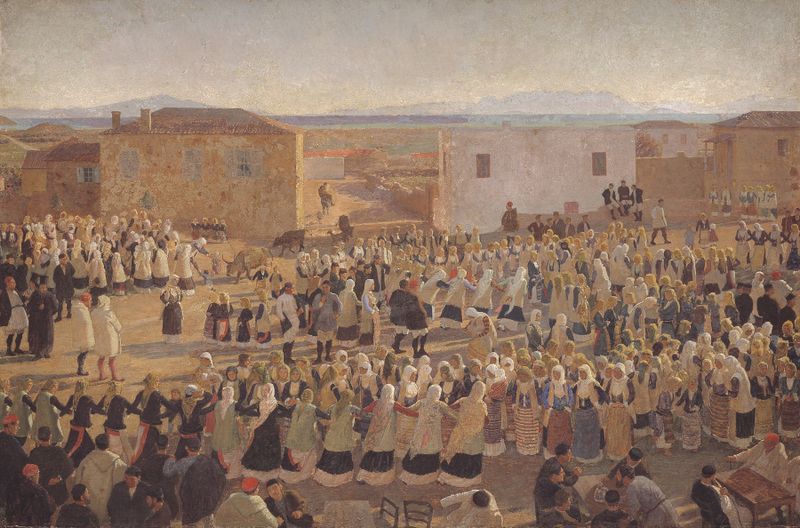
Could beauty survive in a century of chaos? In Pelepones set fra Megara, we are invited to ponder this question as we gaze upon a landscape that teeters between tranquility and the tumult of the human condition. Look to the horizon, where soft hues of green and gold meld into the undulating hills, capturing the essence of a sun-drenched day. The foreground, lush and vibrant, draws the eye with delicate brushstrokes depicting wildflowers swaying gently in the breeze. The artist’s careful attention to detail creates a sense of intimacy with the landscape, while the play of light and shadow evokes a serene yet contemplative atmosphere, inviting viewers to linger in their thoughts. As we delve deeper, notice the contrasts within this idyllic scene.
The serene beauty of nature seems to juxtapose the undercurrents of unease that permeated the late 19th century—an era marked by industrialization and existential uncertainty. The inviting landscape may symbolize a longing for peace, yet the distant mountains suggest challenges yet to be faced, embodying the struggle to find hope amidst upheaval. Each element, from the vibrant flowers to the looming mountains, holds significance, revealing the tension between serenity and chaos—a dance of creation against a backdrop of turmoil. Niels Skovgaard painted this piece between 1890 and 1891, during a time when the world of art was in flux, shifting from Romanticism towards the dawn of Modernism.
Living in Denmark, Skovgaard was immersed in an artistic community that sought to redefine beauty and humanity's connection to nature. His work during this period reflects not only personal exploration but also a broader contemplation of existence, capturing the essence of an era on the brink of transformation.