
Philippe François d'Arenberg meeting Troops — History & Facts
A hush of anticipation hovers in the air as a grand carriage, drawn by a team of pale horses, halts beneath the dense canopy of trees. The scene is alive with the subtle choreography of arrival and encounter: richly dressed figures dismount, hats are doffed, and attendants cluster in careful formation. The artist, Adam Frans van der Meulen, orchestrates the moment with a keen sense for ceremony and hierarchy, guiding the viewer’s eye from the golden gleam of the horses to the cluster of dignitaries at the carriage door.
Each gesture and costume signals the importance of the meeting, while the lush landscape frames the event in a world of power and privilege. The sky, vast and changeable, hints at the larger forces—political and natural—that shape such gatherings. Painted in 1662, this work belongs to a world where the display of military and aristocratic power was both spectacle and necessity. In the age of the Baroque, rulers and nobles commissioned paintings like this to commemorate alliances, arrivals, and the pageantry of command.
Van der Meulen was renowned for his ability to capture the grandeur of such occasions, often working for the French court and specializing in scenes of military life and royal progress. Though history has kept few traces of this particular meeting, the painting itself—now preserved in an online collection—remains a vivid record of its era’s rituals and ambitions. Look again at the faces, the horses, the careful arrangement of figures: each detail is a clue to the world that made and valued such images.
More Artworks by Adam Frans van der Meulen
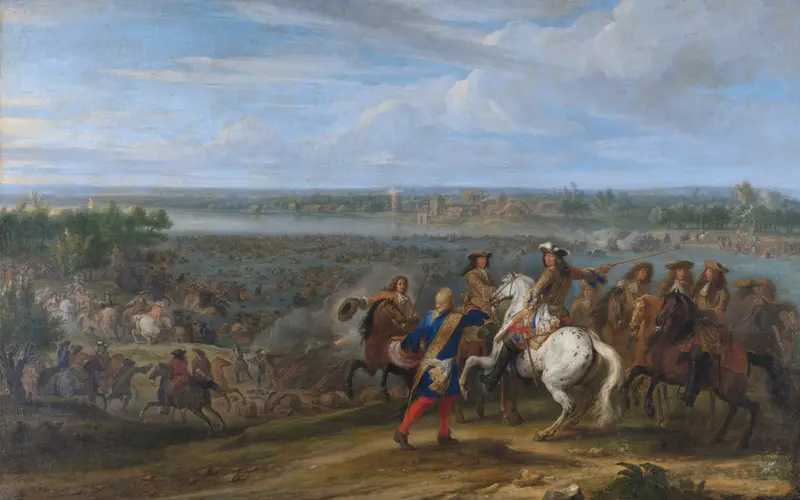
Louis XIV Crossing into the Netherlands at Lobith
Adam Frans van der Meulen
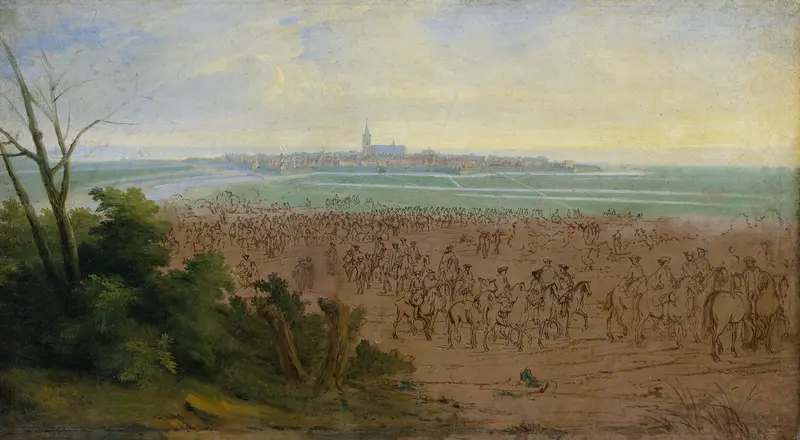
The Troops of Louis XIV before Naarden, 20 July 1672
Adam Frans van der Meulen
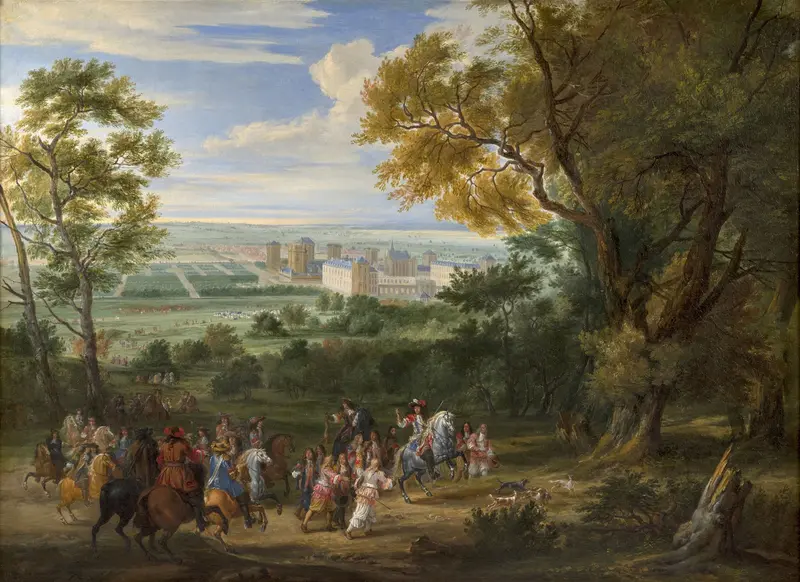
View of the château de Vincennes or The Departure of Louis XIV for the hunt
Adam Frans van der Meulen

A battle scene
Adam Frans van der Meulen
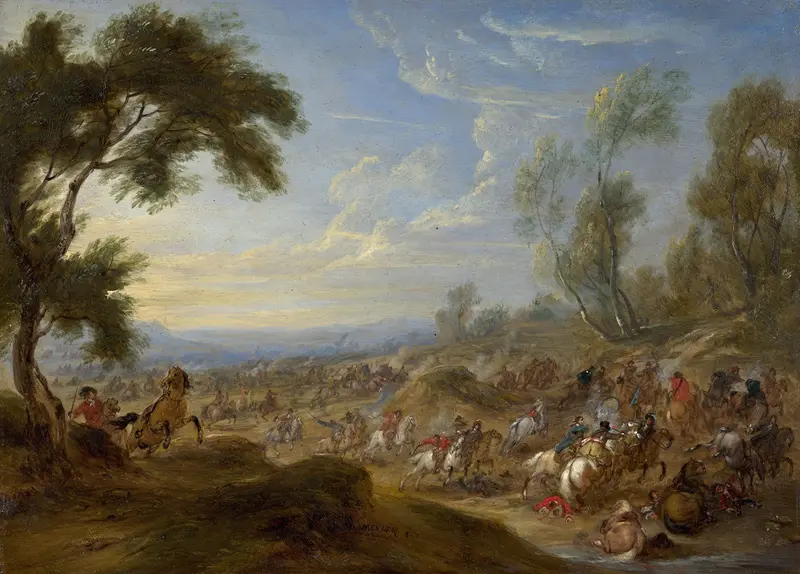
A cavalry charge
Adam Frans van der Meulen
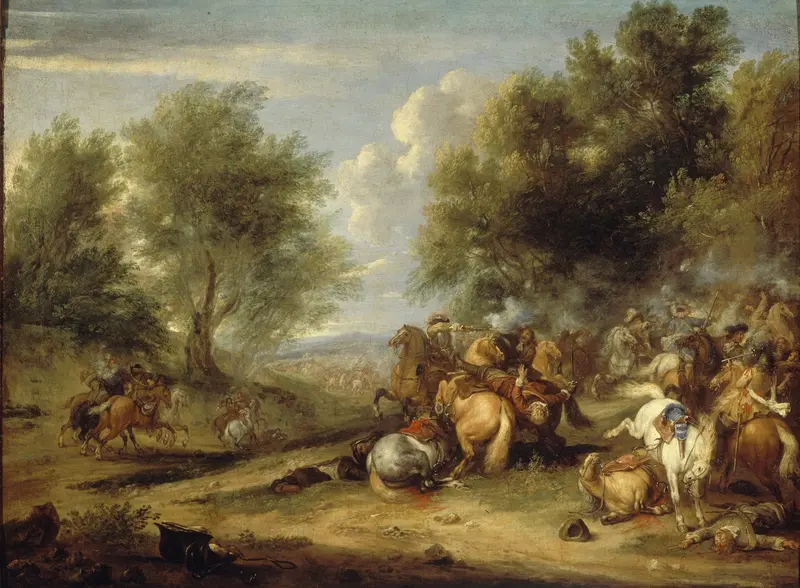
Choc de cavalerie ou Combat de cavalerie
Adam Frans van der Meulen
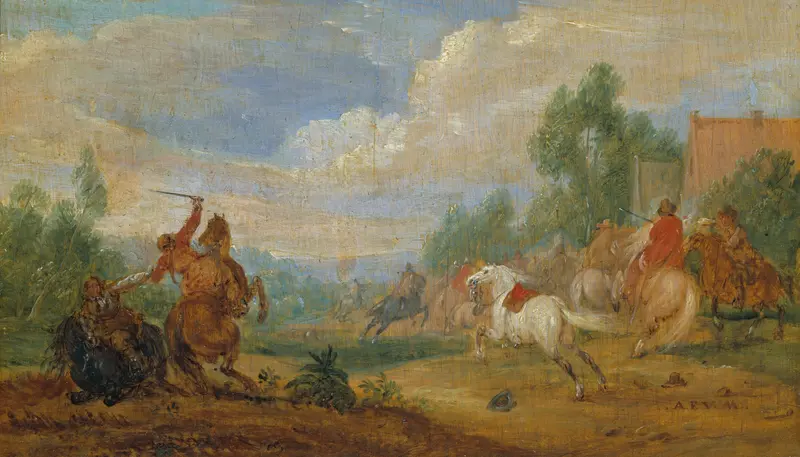
Cavalry Skirmish
Adam Frans van der Meulen
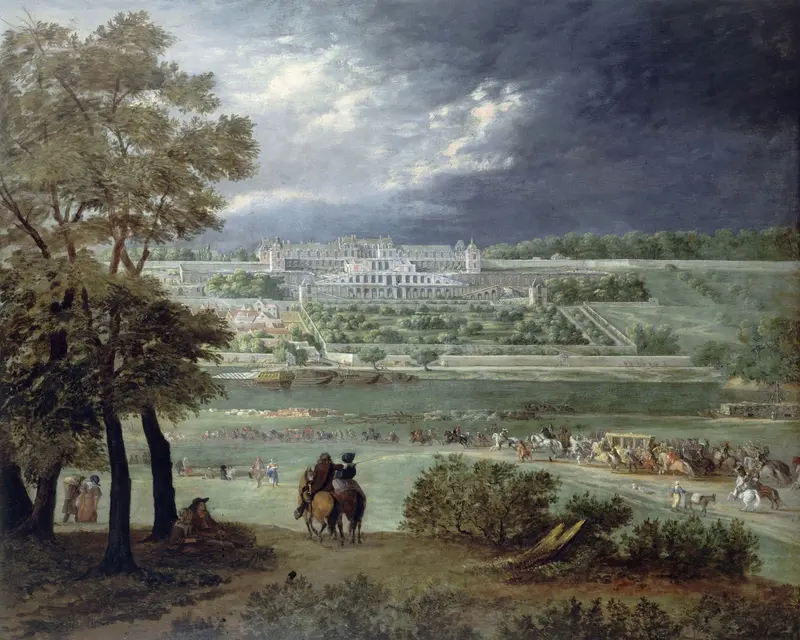
Le Château Neuf de Saint-Germain-en-Laye et les jardins, vus de la rive droite de la Seine
Adam Frans van der Meulen
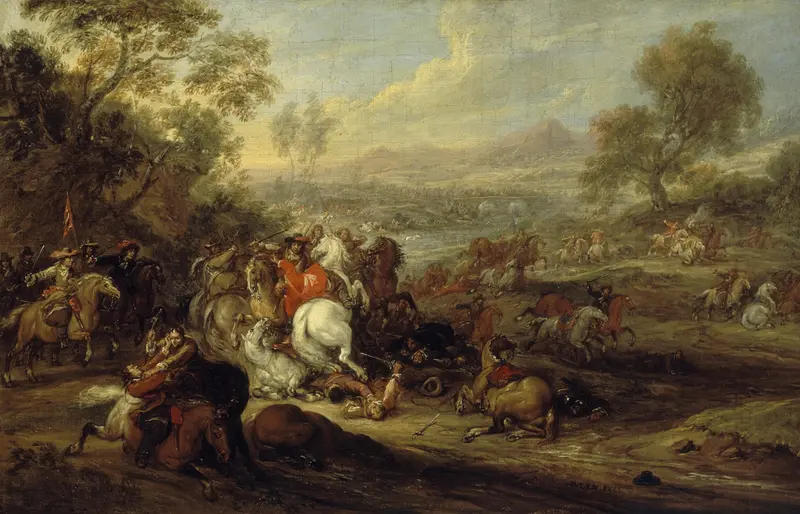
Choc de cavalerie ou Combat de cavalerie
Adam Frans van der Meulen
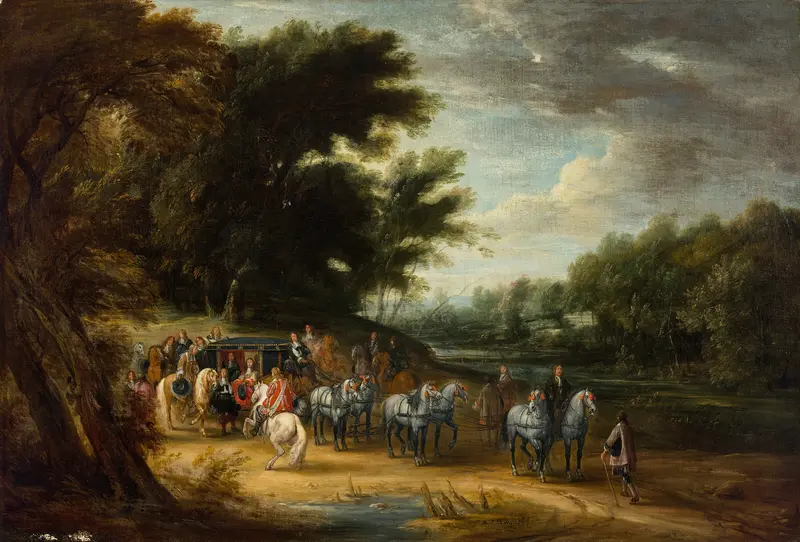
A nobleman in a state coach at rest escorted by his men and horses, with a gentleman on a white horse approaching and landscape beyond
Adam Frans van der Meulen





