
Pines in the Mountains — History & Facts
In Pines in the Mountains, vibrant strokes of green and gold reveal nature's quiet magnificence, inviting viewers to lose themselves in a landscape filled with life and mood. Look to the foreground, where the deep greens of towering pines stretch upward, their textured trunks contrasting with the soft, billowing clouds above. Notice how the artist captures the interplay of light filtering through the foliage, creating an almost ethereal glow that warms the scene. The juxtaposition of the rugged mountain peaks in the background, painted in darker shades, enhances the feeling of depth and majesty.
The palette harmonizes with the tranquil yet dynamic composition, drawing the eye toward the distant horizon. Beneath the surface, the painting speaks of duality—the serene beauty of nature juxtaposed with the unyielding strength of the mountains. The delicate play of light and shadow suggests a moment between day and dusk, capturing the transient beauty of the natural world. The vibrant colors evoke an emotional response, prompting contemplation of the interconnectedness of all living things.
This balance of chaos and order reflects the artist's intention to portray not just a scene, but an experience. In the mid-1890s, Herzog found himself immersed in the American landscape after emigrating from Germany. Settling in the picturesque areas of the West, he became known for his ability to convey the grandeur of nature. During this period, the art world was shifting towards capturing realism and the sublime, as artists sought to bridge the gap between the viewer and the natural environment.
In Pines in the Mountains, Herzog combines his European training with the raw beauty of the American wilderness, marking a significant moment in his artistic journey.
More Artworks by Hermann Ottomar Herzog
Browse all →
Snow-Capped Peaks
Hermann Ottomar Herzog
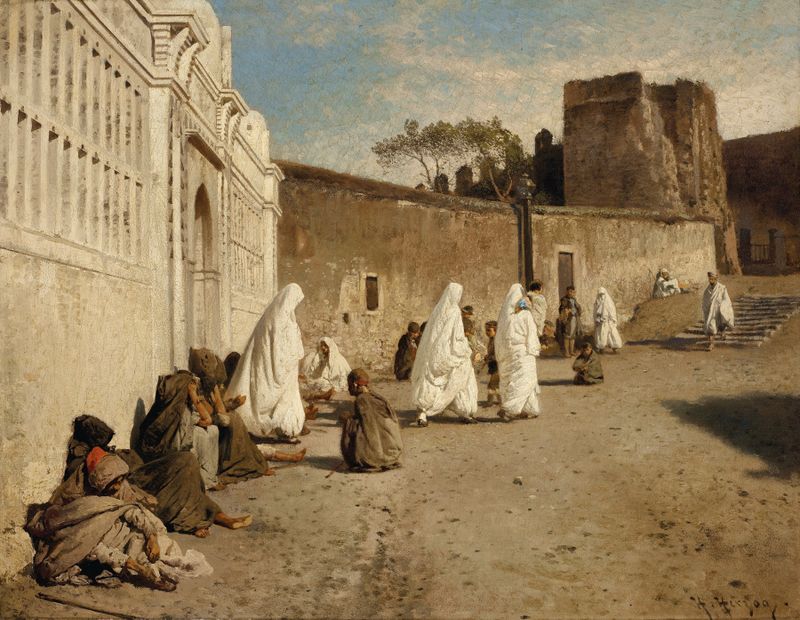
Entrance into the Alhambra, Spain
Hermann Ottomar Herzog

Hafen in Ostende
Hermann Ottomar Herzog
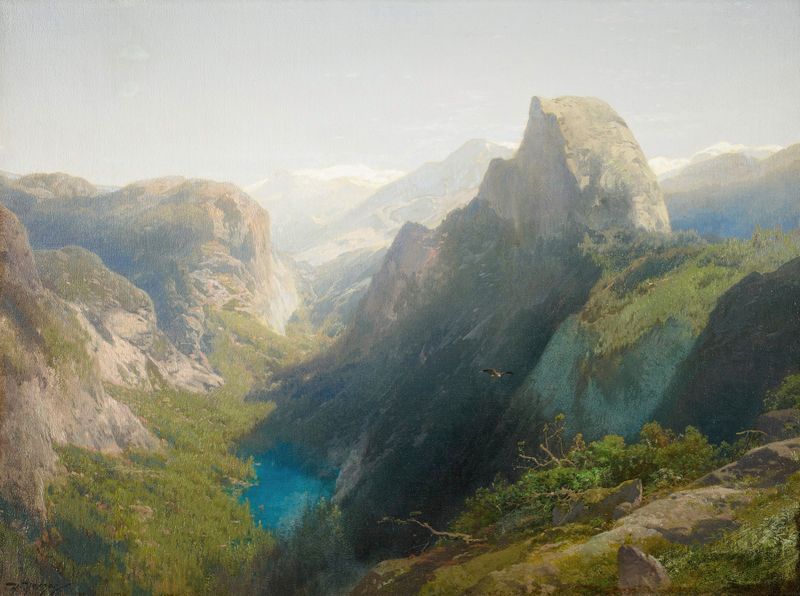
Mirror Lake, Yosemite
Hermann Ottomar Herzog
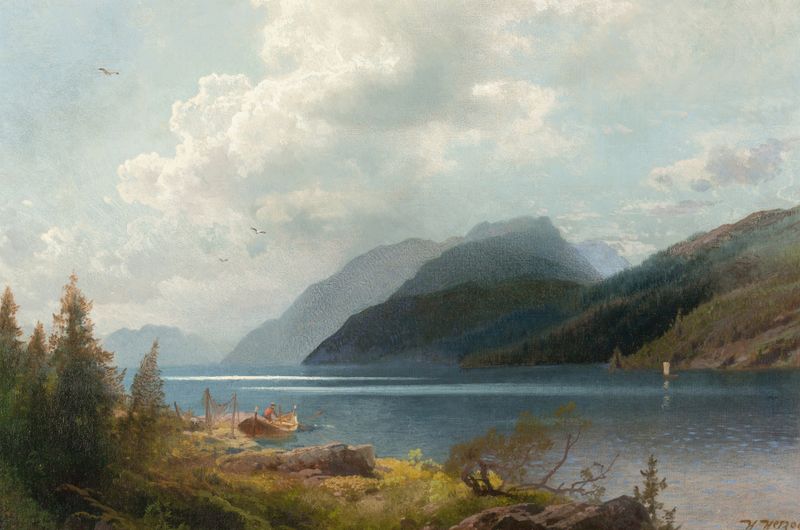
Mountain Lake, Sagne Fjord, Norway
Hermann Ottomar Herzog
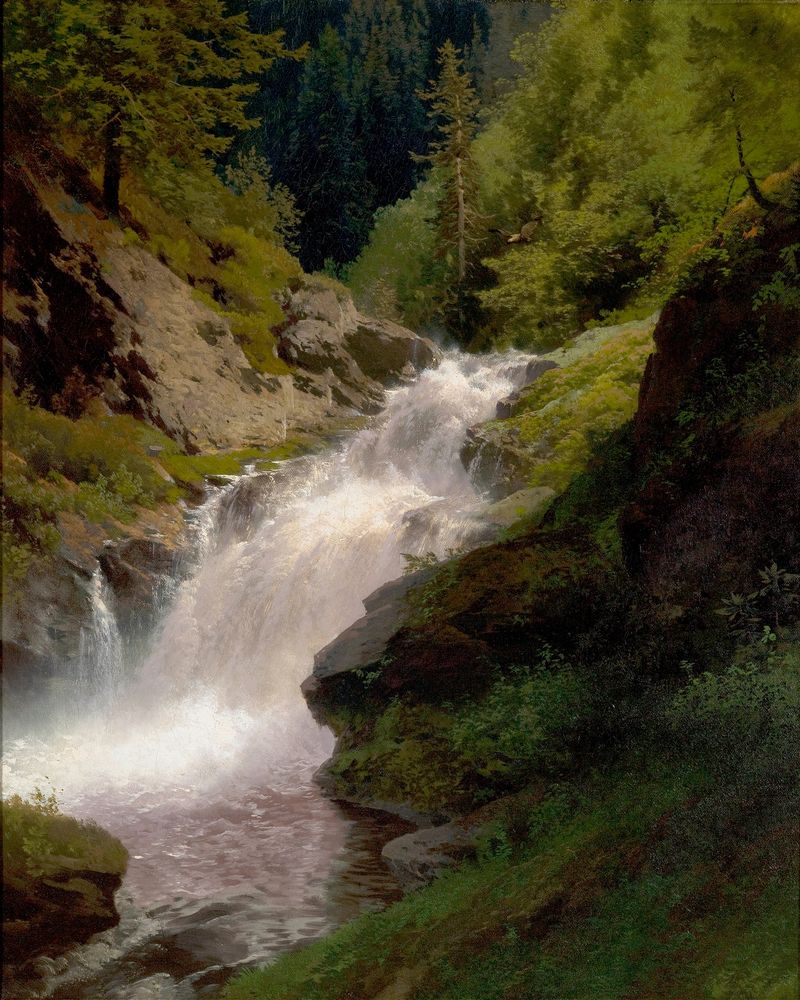
Winona Falls
Hermann Ottomar Herzog
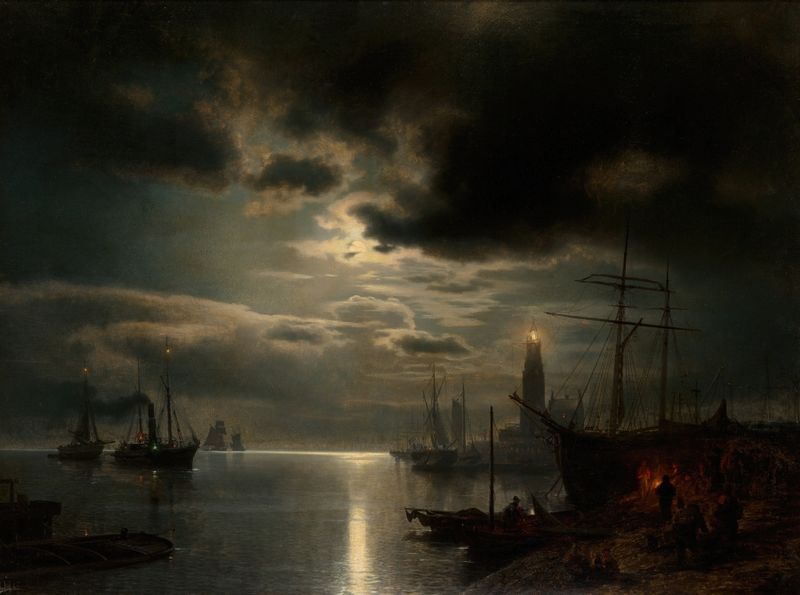
A Moonlit Harbor
Hermann Ottomar Herzog
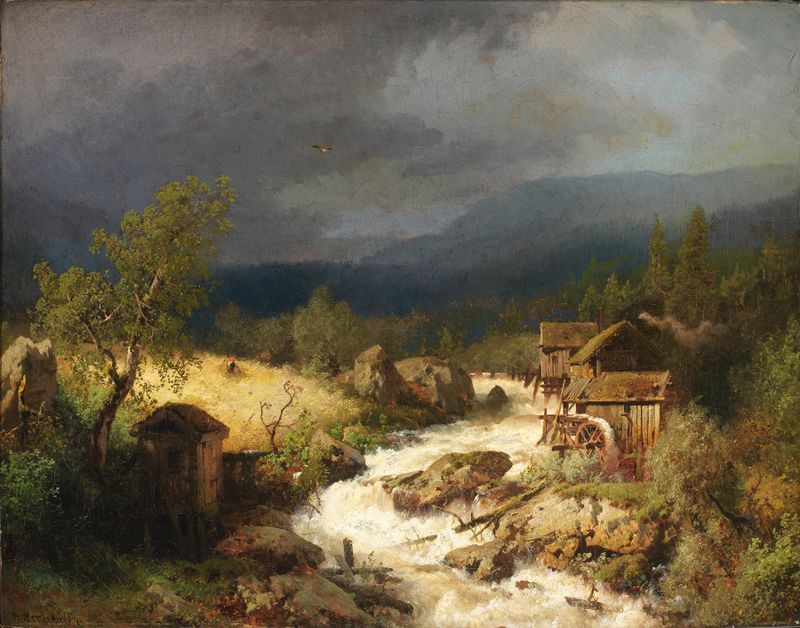
Mill on a Torrent
Hermann Ottomar Herzog

The Rippling River
Hermann Ottomar Herzog

Alpine Landscape Mountain Hut
Hermann Ottomar Herzog





