
Pins et peupliers — History & Facts
Who listens when art speaks of silence? In Pins et peupliers, the stillness of the landscape whispers the madness lurking beneath its tranquil surface. Begin your exploration with the trees. Look to the left at the towering poplars, their slender forms stretching towards the sky, as if trying to escape the confines of the canvas. The meticulous strokes create a rhythmic pattern that draws the eye upward, while the muted palette envelops the scene in an eerie calm.
Notice how the light dapples through the foliage, creating a dance of shadow and illumination that evokes a sense of both serenity and unease. This contrast becomes evident as you delve deeper. The juxtaposition of the delicate trees against an unseen, tumultuous backdrop suggests a fragile balance between sanity and chaos. Hidden beneath the serene exterior lies an unsettling tension.
Each leaf seems to tremble with unspoken stories, echoing the artist’s own inner struggles. The quietude of the scene belies a world where madness lurks in the shadows, waiting to disrupt the tranquil façade. Created between 1777 and 1825, this work emerged during a period of great personal and artistic upheaval for its creator. Lequeu navigated the shifting tides of the French Revolution and the evolving art scene, where traditional boundaries were being challenged.
His exploration of architectural forms and landscapes, infused with a sense of introspection, reflects the complexities of his life and the world around him.
More Artworks by Jean Jacques Lequeu
Browse all →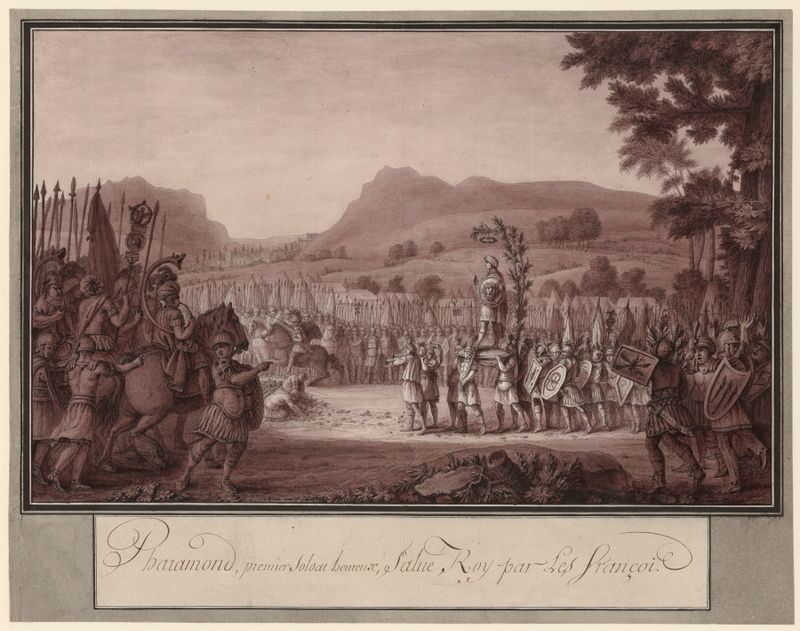
Pharamond, premier soldat heureux, salué roy par les françoi
Jean Jacques Lequeu
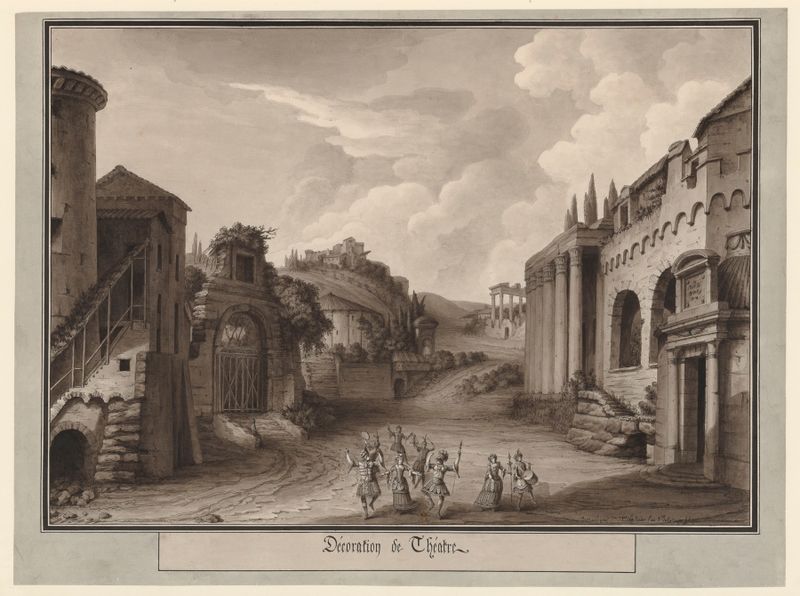
Décoration de théatre
Jean Jacques Lequeu

Vüe d’un ancien palais de Rome
Jean Jacques Lequeu
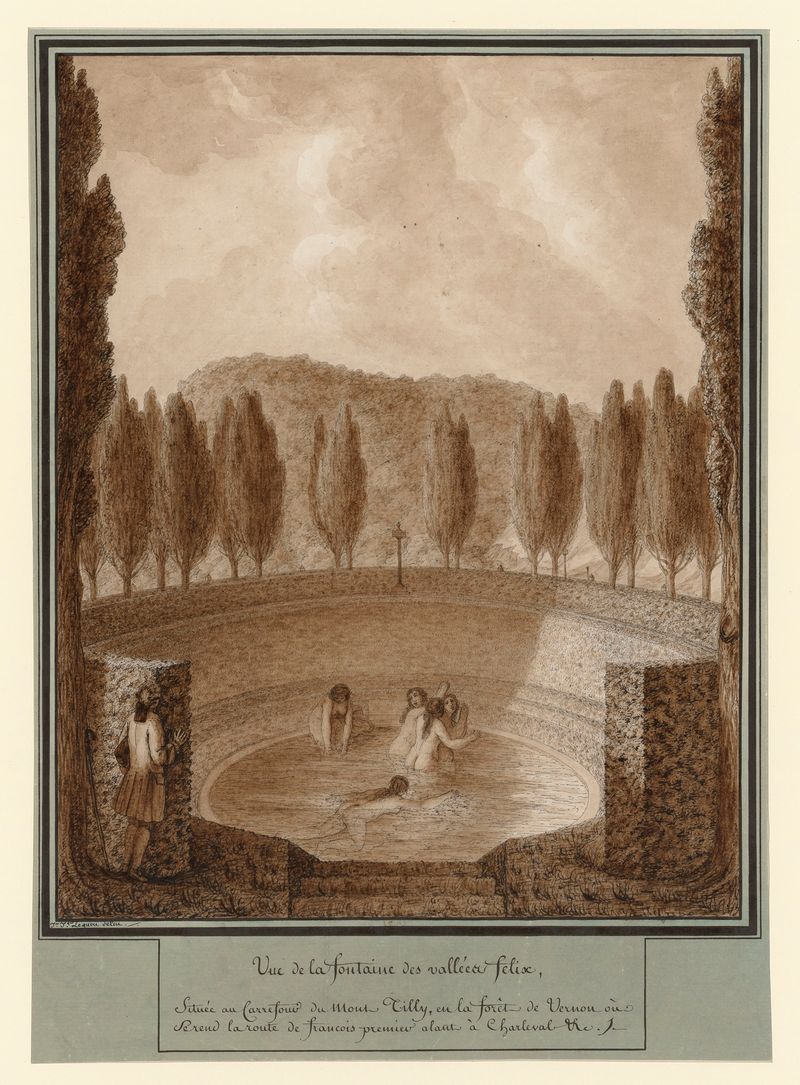
Vue de la fontaine des vallées Félix, située au carrefour du Mont Tilly, en la forêt de Vernon où se rend la route de François Premier alant à Charleval etc
Jean Jacques Lequeu

Vue d’un paysage avec pont en ruine
Jean Jacques Lequeu





