
Vue d’un paysage avec pont en ruine — History & Facts
When did color learn to lie? It is a question that lingers heavily within the realms of art and perception, particularly in the delicate landscape crafted by Jean Jacques Lequeu. Here, the essence of obsession seeps through the layers, transforming a simple view into a contemplation of nature's fragility and human ambition. Look to the foreground, where a crumbling bridge arches gracefully over a serene river. The muted greens and browns of the foliage contrast sharply with the cool blue of the water, creating a juxtaposition of decay and vitality.
Notice how the light dances upon the surface of the stream, refracting into hues that suggest both depth and illusion. The artist’s precise technique in rendering textures draws the viewer's eye towards the intricate details of the bridge and the trees that surround it, suggesting a nostalgic whisper of time long gone. As you explore the scene further, consider the tension between the natural environment and the man-made structure. The bridge, a symbol of connection, is depicted in disrepair, representing the impermanence of human endeavors against the backdrop of nature's eternal cycle.
The subtle play of shadow and light amplifies this feeling, inviting the viewer to reflect on what is lost and what remains. It serves as a reminder of how obsession can lead to the construction of both beauty and ruin. Created between 1777 and 1825, this work reflects Lequeu’s engagement with neoclassical ideals amidst the growing Romanticism in art. The artist was navigating an era filled with changing perceptions about nature, architecture, and the human experience.
His meticulous approach not only reveals personal obsessions but also encapsulates a moment in art history where the line between nature and structure began to blur.
More Artworks by Jean Jacques Lequeu
Browse all →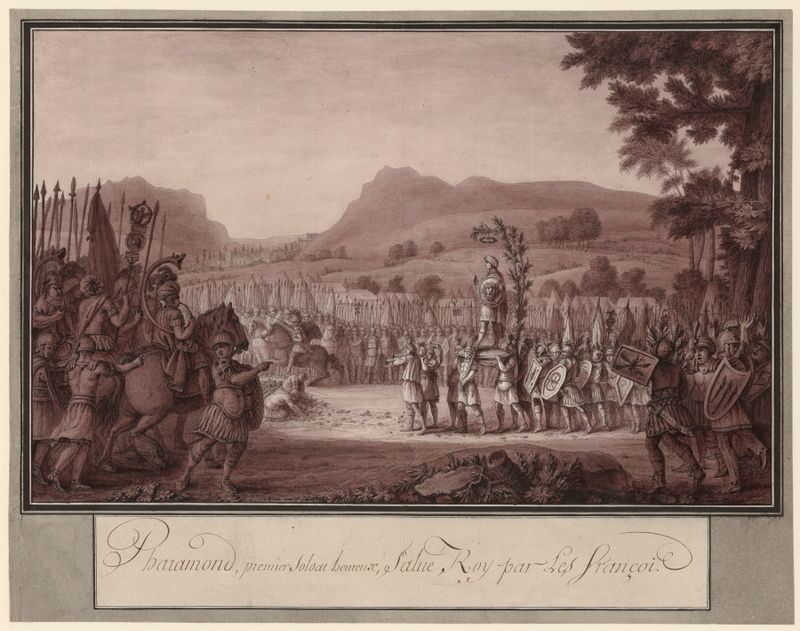
Pharamond, premier soldat heureux, salué roy par les françoi
Jean Jacques Lequeu
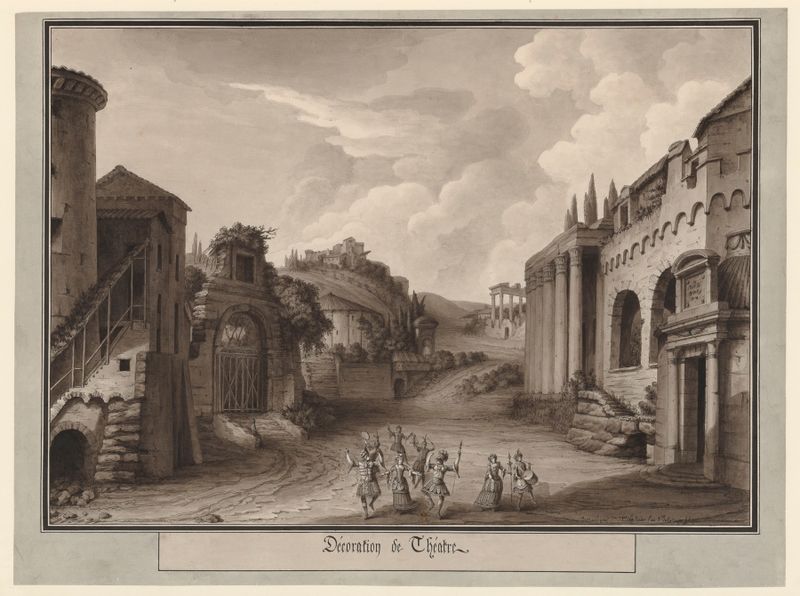
Décoration de théatre
Jean Jacques Lequeu

Vüe d’un ancien palais de Rome
Jean Jacques Lequeu

Pins et peupliers
Jean Jacques Lequeu
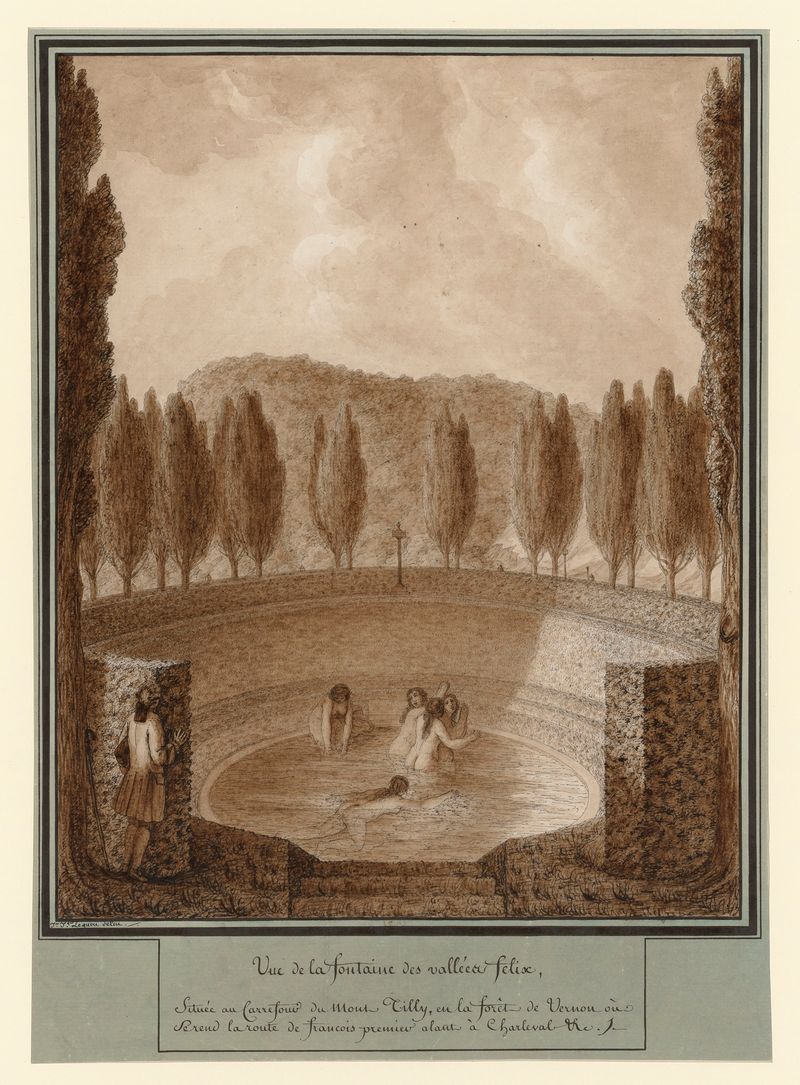
Vue de la fontaine des vallées Félix, située au carrefour du Mont Tilly, en la forêt de Vernon où se rend la route de François Premier alant à Charleval etc
Jean Jacques Lequeu





