
Place de la Bastille — History & Facts
The juxtaposition of abstract forms and vivid colors evokes a sense of balance amidst turmoil, inviting contemplation of the world around us. Begin your exploration by looking to the center of the canvas, where the vibrant hues of the trees create a lush sanctuary. Notice how the gentle strokes of green and ochre blend seamlessly, revealing Loiseau's mastery of the Impressionist technique. The light dances across the surface, illuminating the playful reflections on the water that meander through the scene.
These elements are not just mere representations; they become a symphony of color and texture that draws the eye into the heart of the painting. As you delve deeper into the work, consider the contrasting emotions at play. The vivid foliage suggests life and vibrancy, while the shadows cast by the trees whisper of solitude and introspection. This duality reflects a deeper narrative about the complexities of urban life in Paris.
The figures in the background, barely discernible, hint at the presence of humanity, yet they remain cloaked in mystery, echoing the struggle to find balance in a bustling city. In 1922, Loiseau painted this work during a time of personal reflection and artistic evolution. Living in France post-World War I, he sought to capture the essence of urban landscapes while moving away from traditional forms. His commitment to showcasing the interplay of light and color was part of a broader shift in the art world, embracing the beauty found within the chaos of modernity.
This painting stands as a testament to his journey and the vibrant spirit of his time.
More Artworks by Gustave Loiseau
Browse all →
Rue de village en Normandie
Gustave Loiseau
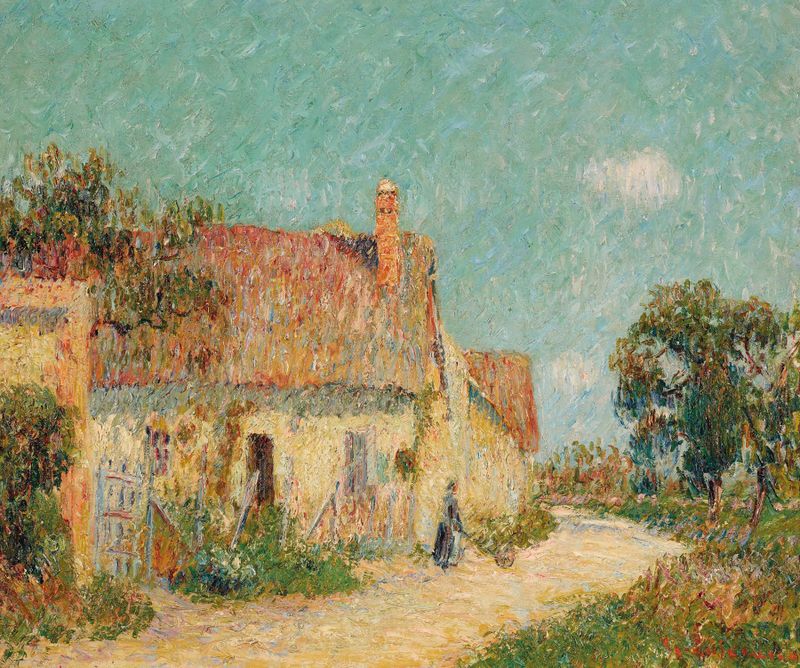
Chaumière en Normandie
Gustave Loiseau

Paysage d’Hiver à Chaponval
Gustave Loiseau
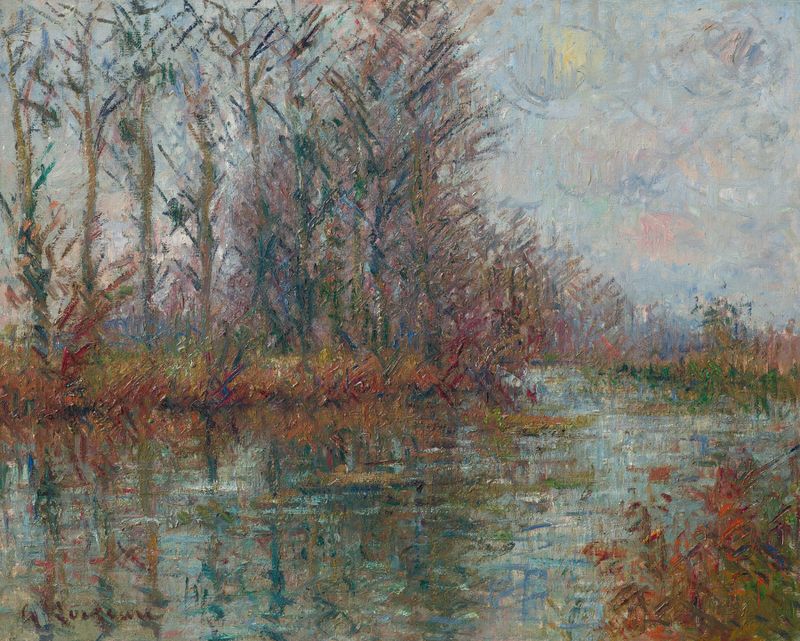
Tournant de rivière, L’Eure
Gustave Loiseau

Pont Marie, Paris
Gustave Loiseau

Le Bras De Mer
Gustave Loiseau

Le Pont Suspendu À Triel
Gustave Loiseau

Bord de la rivière
Gustave Loiseau
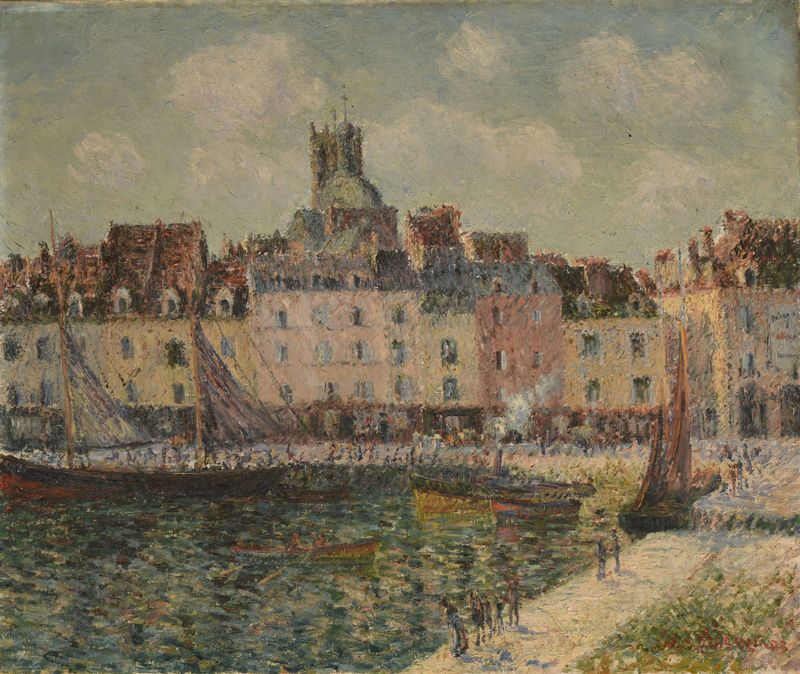
Le Quai Duquesne à Dieppe
Gustave Loiseau

Rocher la Teignouse, Cap Fréhel
Gustave Loiseau





