Plassende ruiter bij rustend paard met man en ruiter te paard — History & Facts
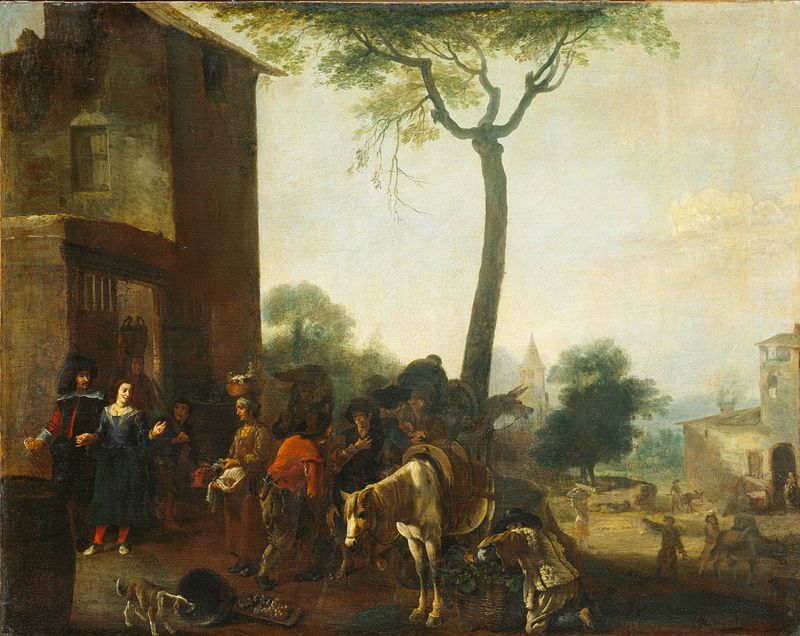
When did color learn to lie? In the quiet communion between man and beast, innocence breathes softly through the brushstrokes of the moment. Look to the foreground, where the rider and his resting horse occupy the canvas. The gentle interplay of muted earth tones envelops them, with the rich browns and greens conjuring a sense of serene stillness. Notice how the artist captures the sun’s tender light filtering through the trees, casting dappled shadows that dance on the ground, accentuating the figures' calm demeanor.
The composition feels intimate, drawing the viewer into this tranquil pause. Yet, beneath this placid surface lies an intricate web of emotions. The rider’s gentle grip on the reins suggests a bond that transcends mere utility; it speaks to a deeper trust, an unspoken understanding between humankind and nature. The juxtaposition of the resting horse against the poised rider hints at a moment suspended in time, a fleeting respite before the chaos of life reasserts itself.
There is an inherent contrast in this tableau — the dynamic energy of the rider held in harmony with the stillness of the waiting horse. Created during a period of exploration and transformation in Dutch art, the artist painted this work in the early 17th century. At the time, Europe was experiencing social and political upheaval, yet within this turbulence, Bodding van Laer found solace in capturing serene moments of everyday life. This painting reflects not only a personal affinity for the tranquil but also the broader movement towards realism and emotional depth that characterized the Dutch Golden Age.