A Shepherd and Washerwomen at a Spring — History & Facts
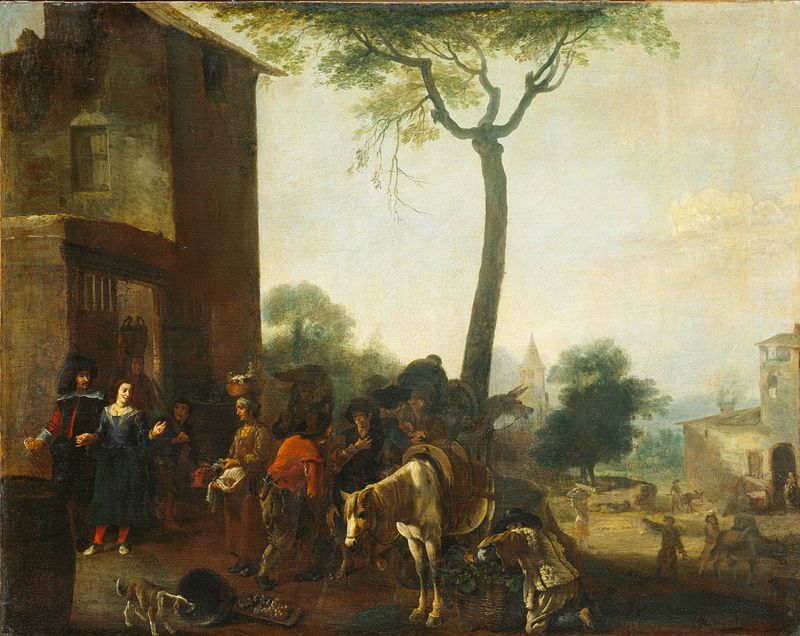
In an era marked by revolution, moments of tranquility like this whisper tales of simplicity and connection amidst a world in flux. Begin by gazing at the lush greenery that envelops the figures, inviting your attention to the vibrant colors that seem to pulse with life. Focus on the interaction between the shepherd and the washerwomen, their postures and expressions revealing an intimate dialogue. The play of light accentuates their faces, highlighting the warmth of the sun as it filters through the trees, casting dappled shadows that dance across the scene.
This careful composition draws the eye first to their hands, engaged in the humble acts of spring—work, community, and the passing of time. Delving deeper, notice the contrast between the pastoral figures and the surrounding landscape. The shepherd, with his relaxed demeanor, embodies serenity, while the washerwomen, engaged in their labor, exude a quiet strength. This juxtaposition illustrates the harmony in their coexistence, hinting at a world where nature and human endeavor thrive together.
The gentle ripples of the nearby water reflect not just light, but the transient nature of life itself, inviting contemplation on the cycles that bind us all. During the 1630s, the artist found himself at a crossroads in the evolving landscape of Dutch art, as traditional motifs began to blend with emerging themes of realism and everyday life. Working in the Netherlands, a time of social and political upheaval, he chose to capture fleeting moments of harmony against the backdrop of change, grounding his work in the beauty of the ordinary while reflecting the revolutionary spirit of his times.