Plein Air-Painter at the Coast — History & Facts
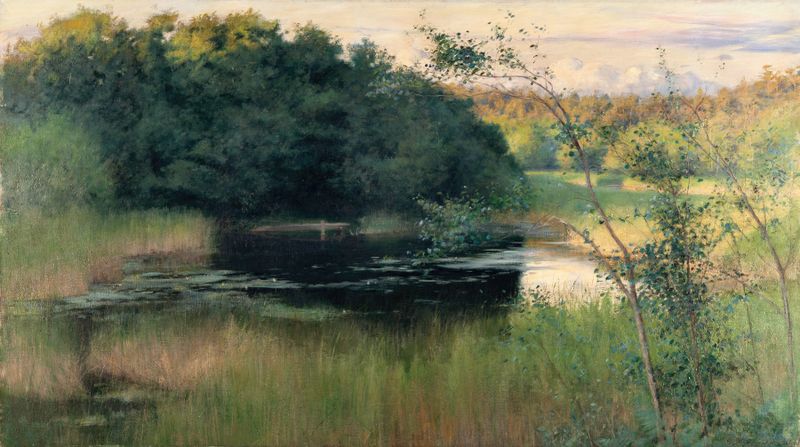
What secret hides in the quiet of the canvas? In Plein Air-Painter at the Coast, the stillness of the seaside moment evokes a profound sense of loss, as if the artist’s brush has captured not just the landscape, but the weight of nostalgia itself. Look to the left at the solitary figure, hunched over their easel, seemingly lost in the act of creation. Notice how the light dances across the gentle waves, reflecting a shimmering palette of blues and greens. The painter's shadow stretches toward the viewer, merging with the sandy shore, emphasizing the connection between artist and nature.
The soft brushwork contrasts sharply with the solid ground beneath, creating a tension that pulls the observer into the scene, as if time has momentarily paused. Within this tranquil composition lies a tension between solitude and inspiration. The painter's posture suggests a deep introspection, perhaps mourning a past that can never be captured in full. The distant horizon, painted with a hazy blend of colors, hints at unreachable dreams, while the coastal rocks stand resilient, symbolizing the permanence of nature against the fleeting nature of human experience.
Each stroke holds the weight of unsaid words, echoing the unvoiced emotions that linger in the air. In 1881, Robert Thegerström painted this work during a period marked by personal introspection and societal change in Sweden. The art world was shifting, with the influence of Impressionism altering the landscape of artistic expression. As he navigated these changes, he found solace in plein air painting, a practice that brought him closer to nature, even as he grappled with the passage of time and his own artistic legacy.