Péniches sur le Dniepr — History & Facts
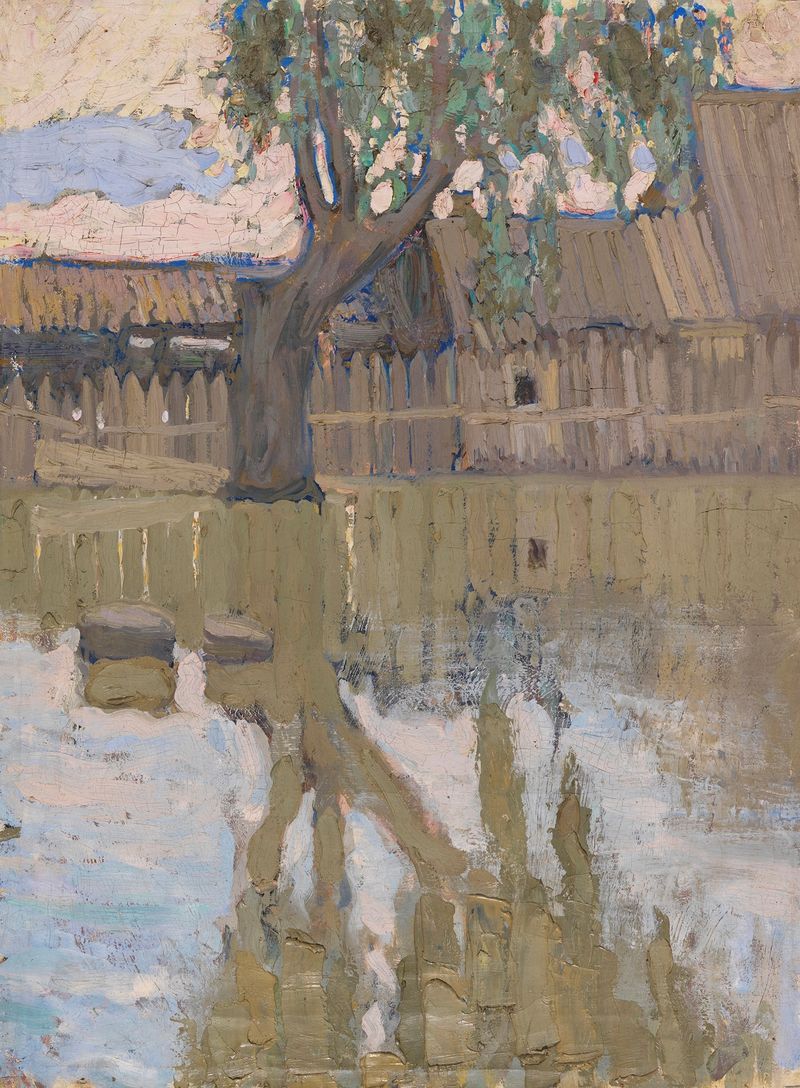
In a world that often feels chaotic, the act of capturing a moment on canvas offers a profound sense of balance and reflection, inviting us to pause and consider what endures beyond the fleeting present. Look closely at the foreground, where the gently flowing Dniepr melds with the rugged outlines of the vessels that float atop its surface. The contrast between the vibrant blues of the river and the warm, earthy tones of the boats creates a dynamic yet harmonious composition. The brushwork is both fluid and deliberate, guiding your eye through the serene landscape while imbuing it with a sense of movement.
Notice how the light dances upon the water, illuminating the scene and evoking feelings of stillness amidst the soft ripples. Within this tranquil depiction lies a deeper tension between human industry and the natural world. The boats, though manmade, appear as integral parts of their environment, reflecting a mutual dependence. The muted hues of the hulls suggest wear and passage of time, hinting at the stories of those who inhabit this space.
Amidst the calm, there exists an underlying urgency — a reminder of the ever-present struggle to maintain harmony between progress and preservation. Created in 1907, this work emerged during a transformative period in the artist's life, as he grappled with his identity in a rapidly changing Russia. Baranov-Rossiné, influenced by contemporary movements in art, sought to blend the emotional depth of color with the solidity of structure. This piece reflects his commitment to capturing the essence of his surroundings while engaging with the broader conversations in the art world about balance and representation.