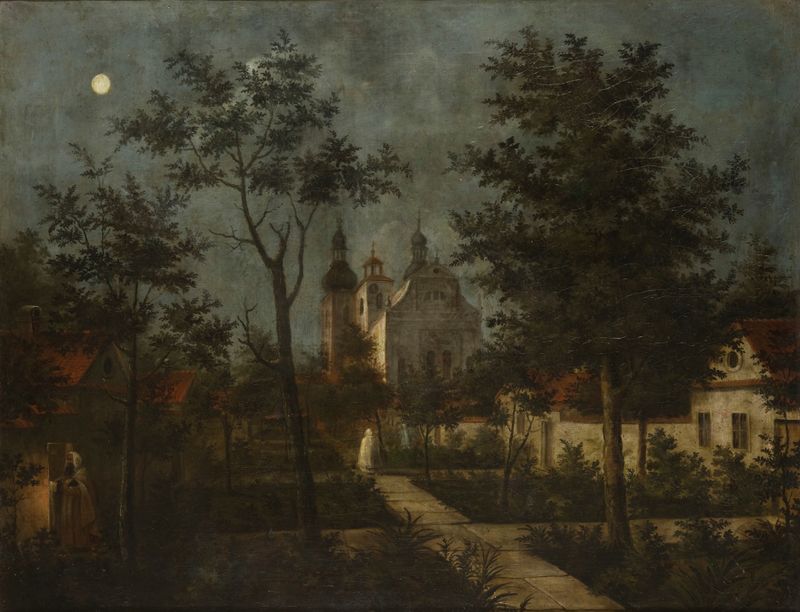
Pond in the Salt Mine at Wieliczka — History & Facts
Within the depths of the earth, where light seldom enters, dreams take shape in the stillness of the dark. The ethereal quality of this underground pond invites contemplation, whispering secrets of the past and beckoning the imagination to wander. Look closely at the shimmering water in Pond in the Salt Mine at Wieliczka, where the interplay of light and shadow creates an otherworldly glow. The surface of the pond mirrors the jagged salt formations above, inviting you to trace the delicate contours of the rugged landscape.
Notice how the muted blues and soft grays dominate the scene, casting a serene yet somber atmosphere that pulls you into the depths of this subterranean world. Within this quiet sanctuary lies a tension between the natural and the man-made—between the beauty of the untouched water and the harshness of the salt mine. The tranquil surface belies the labor that carved these passages and pools, reflecting humanity’s struggle against the earth’s weight. This contrasts starkly with the gentle ripples, hinting at the fragility of both nature and memory, as if the pond holds stories of those who toiled in darkness. Teodor Baltazar Stachowicz painted this work in 1850 amidst a period of artistic exploration, when Romanticism was giving way to Impressionism.
Living in Poland, he was influenced by the natural beauty of his homeland and the emerging interest in capturing landscapes in their truest forms. The salt mine, a significant cultural and historical site, provided a unique setting for his expression, merging artistry with the stark reality of labor and life underground.