The Cameldolites’ Monastery at Bielany near Krakow — History & Facts
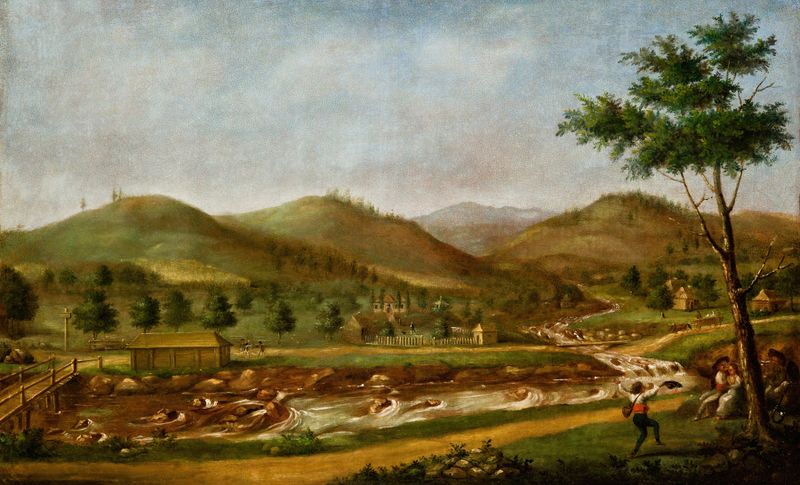
Who listens when art speaks of silence? In The Cameldolites’ Monastery at Bielany near Krakow, stillness envelops the viewer, inviting contemplation and introspection. Look to the left where the monastery stands, its serene façade bathed in soft, golden light. Notice how the artist masterfully captures the play of shadows across the stonework, highlighting its intricate details. The warm hues contrast beautifully with the cool tones of the surrounding landscape, creating a harmonious balance that draws the eye across the canvas.
The gentle slope leading to the structure invites you to journey deeper into this tranquil world. Yet amidst this calm, the painting whispers deeper narratives. The solitary path leading up to the monastery suggests a pilgrimage, a quest for solitude in a noisy world. There’s a tension between the serene architecture and the wild, untamed nature surrounding it, hinting at the struggle between human creation and the chaotic beauty of the natural world.
Additionally, the absence of figures amplifies the sense of isolation, allowing the viewer to become a participant in this moment of reflection. In 1860, while creating this work, the artist was deeply influenced by the Romantic movement's emphasis on nature and the sublime. At this time, Poland was grappling with political struggles, and Stachowicz found himself reflecting on themes of spirituality and the quest for inner peace. The monastery, a symbol of refuge and contemplation, serves as a poignant reminder of the power of creation, both in art and in life.