
Poortje van het gilde in de St. Anthoniswaag, Amsterdam — History & Facts
It holds within it the obsessions of the artist, a world captured yet yearning for escape. In the stillness of this scene, every detail beckons the viewer to step closer, to wonder what stories linger beneath the surface. Look to the left at the archway, its sturdy frame reminiscent of both protection and confinement. Notice how the muted colors of the brick façade contrast with the vibrant greens of the foliage, symbolizing life outside the rigid boundaries of the guildhall.
The meticulous brushwork draws the eye to the intricate patterns of the entrance, a testament to the artist’s devotion to detail, inviting a pause for contemplation. Hidden within the image lies a tension between the rigidity of the structure and the organic growth surrounding it. The guildhall may represent tradition and order, yet the encroaching leaves speak to life’s unstoppable force. The shadows cast by the archway embody a sense of foreboding, hinting at the struggles of those who passed through, caught in a cycle of duty and desire.
In this juxtaposition, one can sense the artist’s own obsession with capturing both the tangible and elusive. Johan Adolph Rust painted this work in the late 19th century, a period marked by rapid changes in Amsterdam’s urban landscape. As industrialization began to shape the city, the artist’s focus on historical architecture reflected his desire to preserve the past amidst the modernizing world. This painting stands not only as a visual record but as a poignant commentary on the tension between progress and nostalgia.
More Artworks by Johan Adolph Rust
Browse all →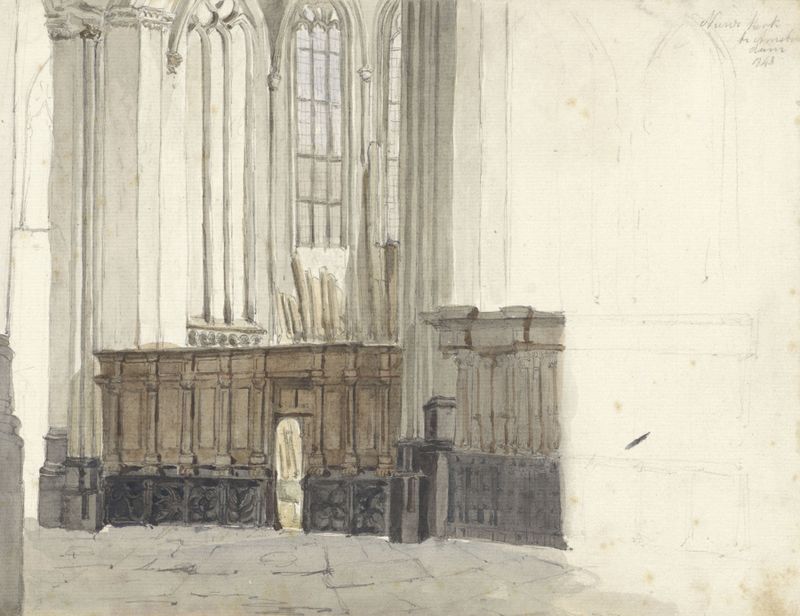
Drapenierskapel in de Nieuwe Kerk te Amsterdam
Johan Adolph Rust
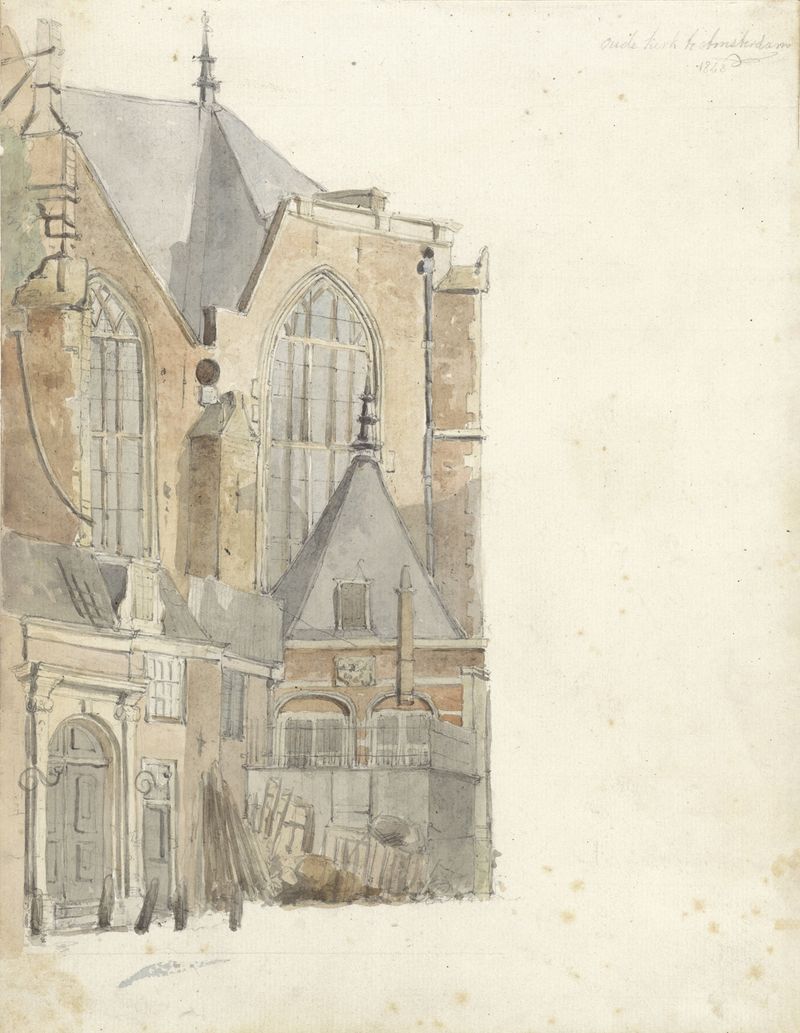
De Oude Kerk te Amsterdam
Johan Adolph Rust
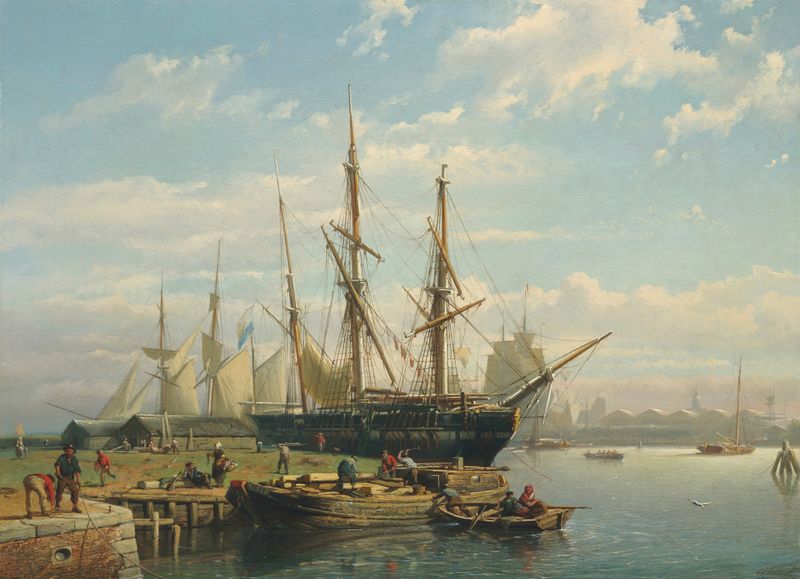
Dutch sailing ships at anchor in a river estuary
Johan Adolph Rust
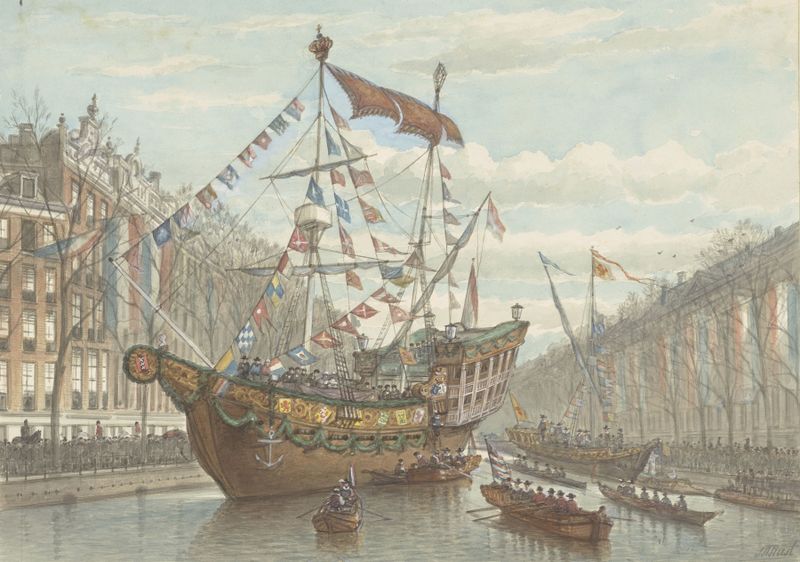
Versieringen op de Herengracht ter gelegenheid van de Aprilfeesten 1887
Johan Adolph Rust

Rivierlandschap met sloepen en zeilschepen
Johan Adolph Rust
More Architecture Art
Browse all →
The statue of Liberty
Frédéric Auguste Bartholdi

View of Houses in Delft, Known as ‘The Little Street’
Johannes Vermeer

View of Houses in Delft, Known as ‘The Little Street’
Johannes Vermeer

The Cathedral in Rouen. The portal, Grey Weather
Claude Monet

The yellow house
Vincent van Gogh

The Church in Auvers-sur-Oise, View from the Chevet
Vincent van Gogh