Poplar Alley — History & Facts
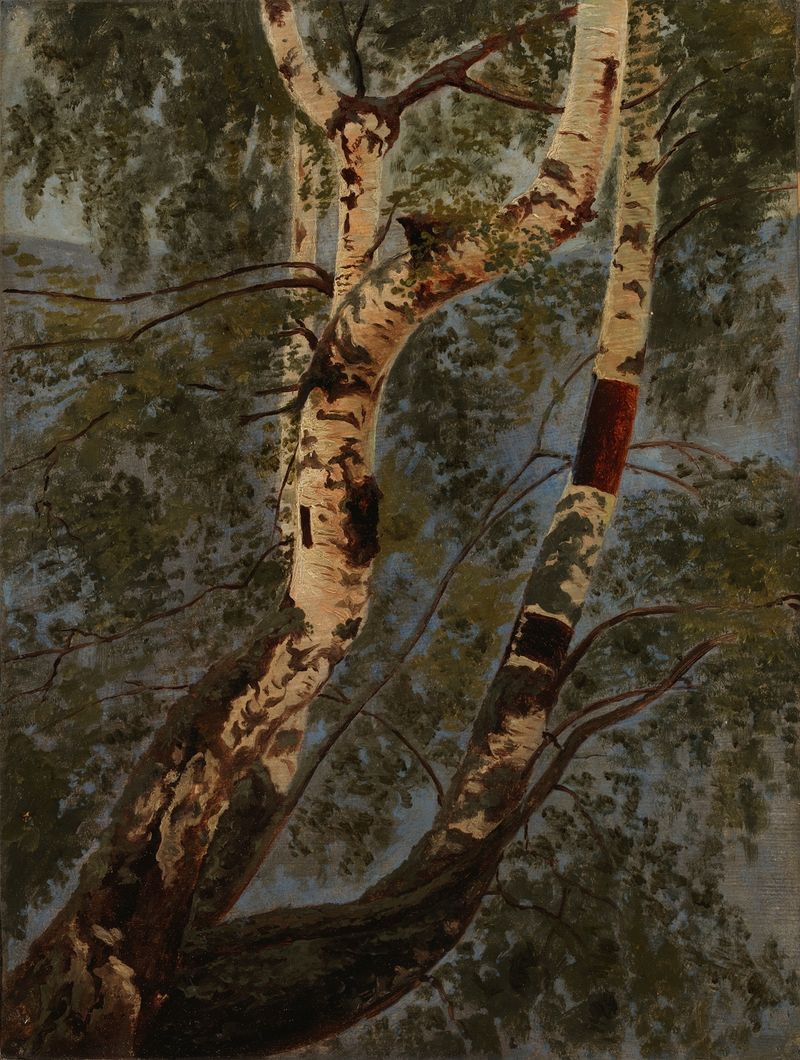
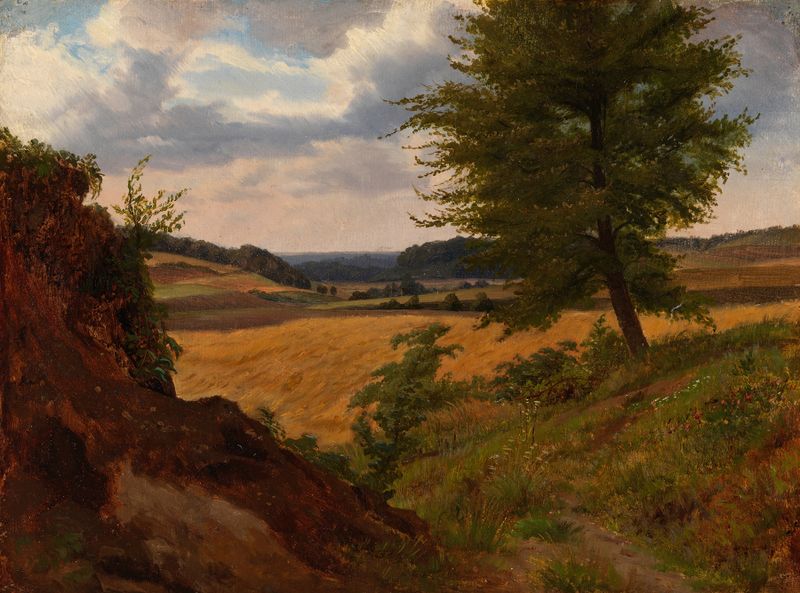
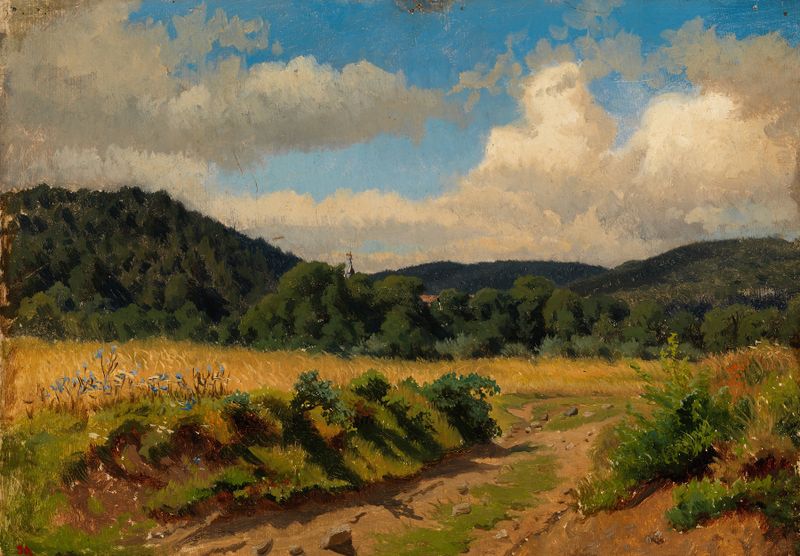
Who listens when art speaks of silence? In Poplar Alley, the stillness becomes a profound presence, inviting contemplation of time's passage through the intricate play of light and shadow. Look to the left at the tall, slender poplar trees, their trunks standing like sentinels, stretching upward towards the sky. Notice how the dappled sunlight filters through the leaves, creating a tapestry of light patterns on the ground. The pathway, winding gently between the trees, beckons the viewer to follow, evoking an enchanting sense of journey and exploration.
Holmberg’s earthy palette of greens and browns, punctuated by vibrant touches of yellow, breathes life into this serene landscape, revealing the artist's mastery of color and form. Delve deeper into the painting’s emotional landscape: the juxtaposition of the vibrant foliage against the quiet path suggests both life and solitude. The viewer is drawn into a meditative state, pondering the unseen narratives that unfold within this deserted space. Each tree appears to whisper secrets of nature, memories of moments captured in their stillness, while the unoccupied path speaks of journeys yet to come, evoking a palpable sense of anticipation and nostalgia. In 1856, an era marked by romanticism and the burgeoning appreciation for nature, the artist created this piece in Sweden, a country on the verge of artistic evolution.
Holmberg was deeply influenced by the landscapes surrounding him, as well as the broader Romantic movement that sought to capture emotional depth and the beauty of the natural world. This painting reflects both his personal exploration of tranquility and the collective yearning of an age that revered the timeless dialogue between humanity and nature.