Road And Building In The Landscape — History & Facts
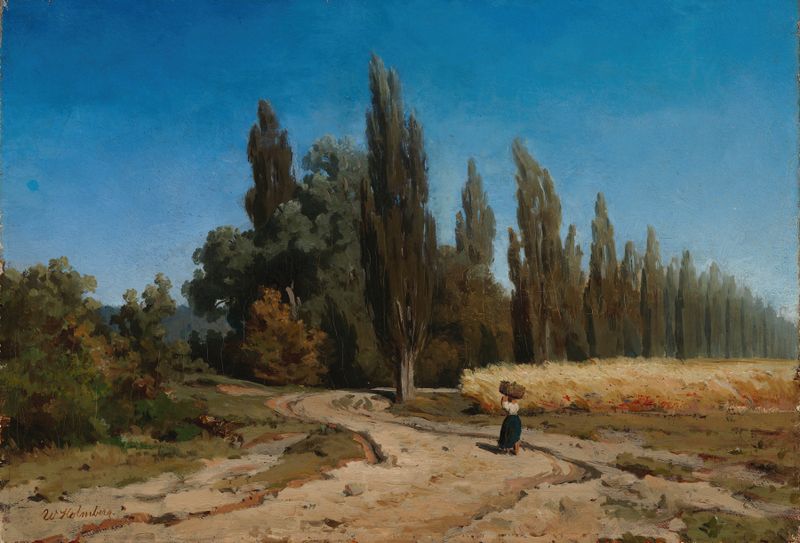
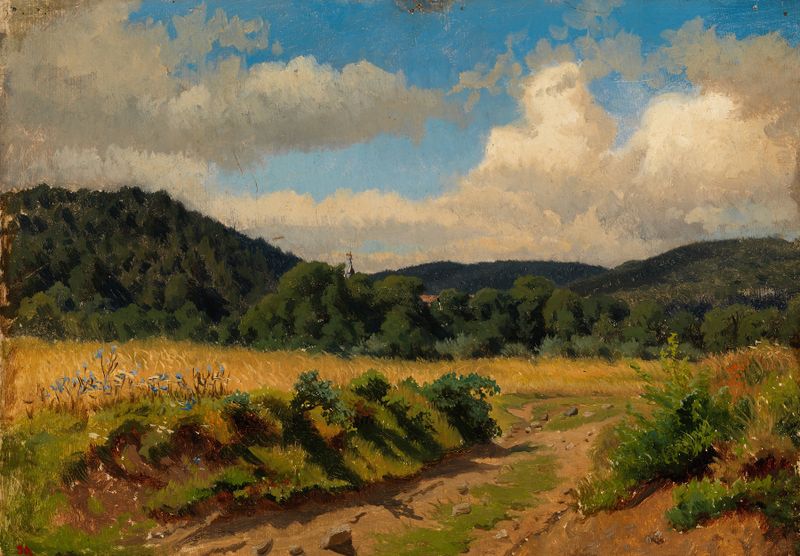
In Road And Building In The Landscape, the essence of balance whispers through the tranquil composition, inviting contemplation. The painting beckons us to explore the harmony found in nature and the human touch intertwined within it. Look to the left at the winding road, gently leading the eye toward a distant, modest building nestled among the trees. The muted greens and earthy browns evoke a sense of serenity, while delicate brushwork reveals the textures of both foliage and structure.
Holmberg's use of light subtly bathes the landscape, illuminating the building just enough to suggest its presence without overpowering the surrounding nature, emphasizing a thoughtful coexistence. This artwork vibrates with emotional tension, particularly in the juxtaposition of the man-made structure against the expansive, undisturbed landscape. The road, representing human intervention, twists through the verdant terrain, yet it does not intrude; rather, it flows harmoniously with the natural elements. The quiet atmosphere suggests a moment of reflection, prompting viewers to ponder their place within this equilibrium of civilization and wilderness. In 1855, as Holmberg painted this piece in Sweden, the art world was experiencing a shift towards realism, focusing on the truthful representation of everyday life and landscapes.
At this time, the Romantic movement was in decline, and artists were increasingly drawn to the beauty and intricacies of the natural world. Holmberg, influenced by these currents, sought to capture the serene balance of human existence within nature, reflecting both personal and societal shifts during an era of industrial transformation.