Tree In Field Landscape, Study — History & Facts
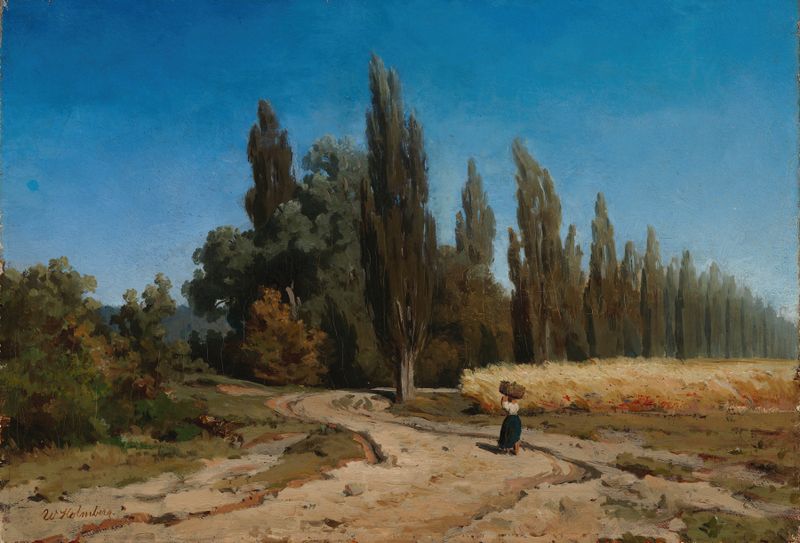
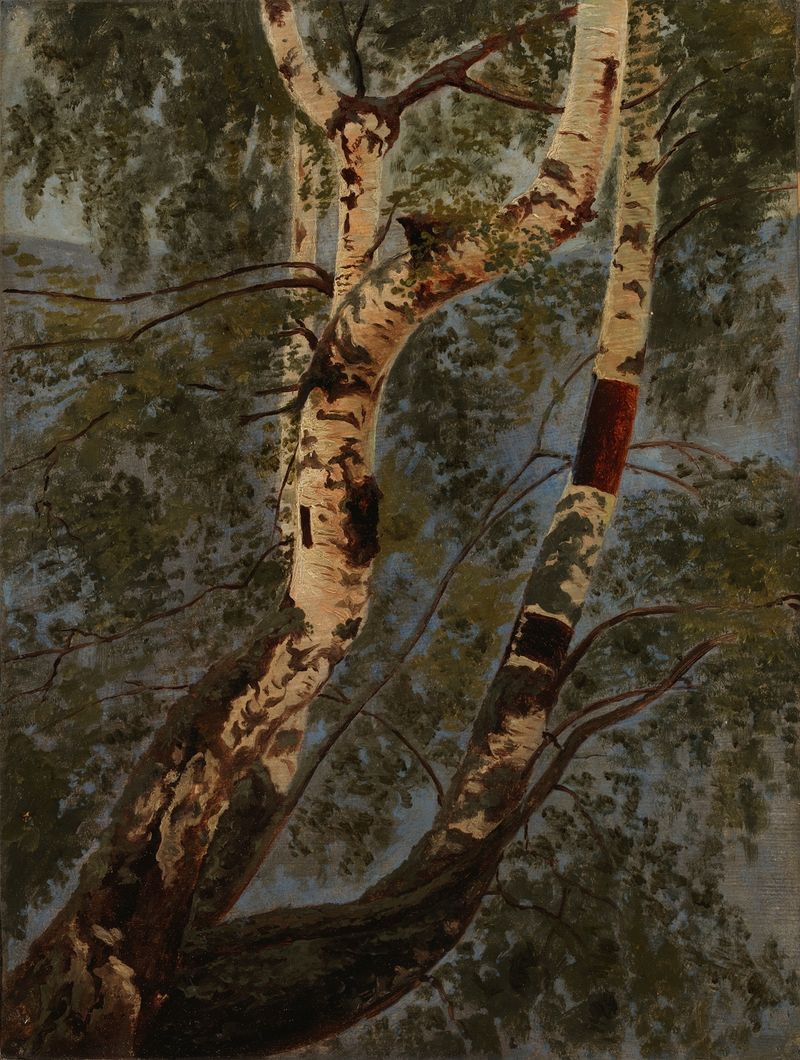
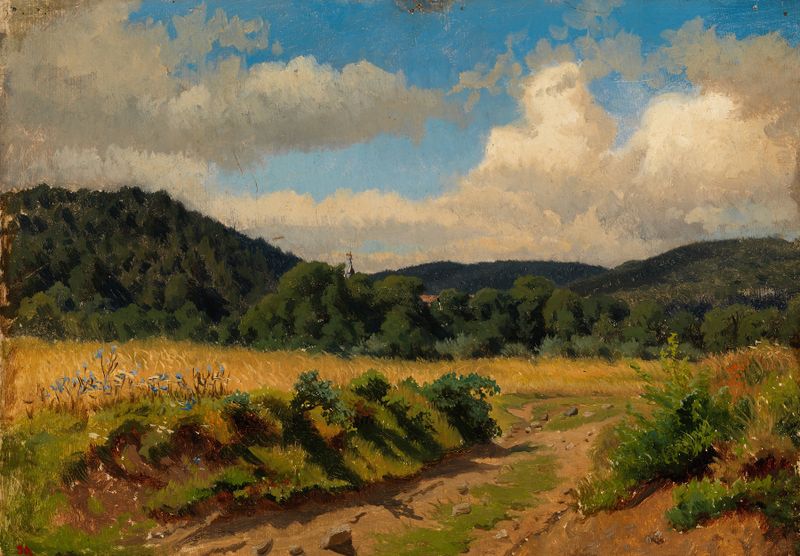
When did color learn to lie? In a world where nature shifts with the seasons, this landscape study invites us to ponder the passage of time and the truths woven into the fabric of the earth. Look to the left at the solitary tree, its silhouette stark against a backdrop of rolling fields. The palette is a delicate interplay of muted greens and earthy browns, inviting us to experience the quietude of the scene. Notice how the brushstrokes vary; the textured bark contrasts with the smooth, fluid strokes that evoke the gentle sway of grass under a soft breeze.
Holmberg’s composition draws the eye towards the horizon, where the sky lightens, hinting at the promise of dawn or dusk—an invitation to contemplate the day's fleeting moments. Embedded within this simple setting are deeper emotional currents. The lone tree symbolizes resilience amidst the vastness of nature, echoing themes of solitude and endurance. The landscape, while tranquil, carries an unspoken weight—a reminder of the constant passage of time and the ephemeral nature of beauty.
Each color choice, each stroke of the brush, encapsulates a fleeting moment, urging the viewer to reflect on their own experience of time’s relentless march. In 1854, while creating this work, the artist was deeply engaged in exploring the nuances of nature through landscape painting. During this period, Holmberg was influenced by the burgeoning Romantic movement, which emphasized the emotional power of nature. His thoughtful exploration of light and landscape reflects the era's growing interest in capturing the sublime, marking an important moment in the history of Swedish art as it transitioned towards impressionistic elements.