Portrait of a Gentleman — History & Facts
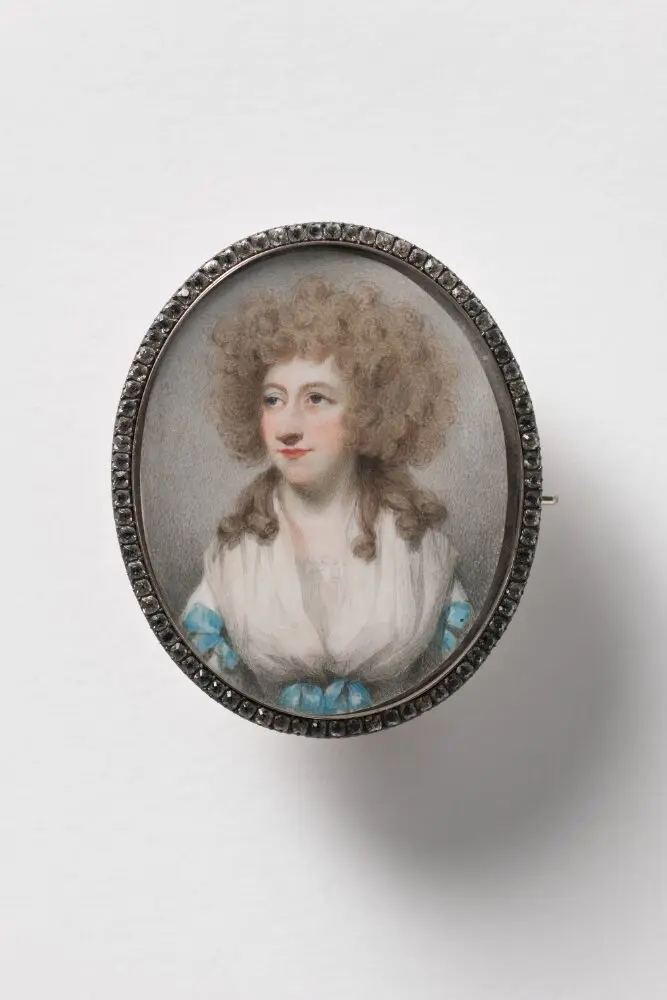
A glint of self-assurance animates the gentleman’s gaze, drawing the viewer into a quiet exchange across centuries. The sitter’s powdered wig and crisp white cravat speak to a world of careful appearances, but it is the subtle arch of his eyebrow and the gentle tilt of his head that hint at a personality behind the formality. The soft, almost smoky background throws his features into relief, while the oval frame encircles him like a locket—an object meant to be cherished, perhaps carried or hung where it could be seen daily.
The artist, Abraham Daniel, captures not just the likeness but the momentary spark of presence, as if the gentleman has paused mid-thought, aware of being observed. Portrait miniatures such as this flourished in the eighteenth and early nineteenth centuries, treasured as tokens of affection or status in an era before photography. Commissioned by families or lovers, these intimate works were often exchanged or worn close to the body, their small scale demanding both technical precision and psychological insight from the artist. While little is recorded about this specific Portrait of a Gentleman, now in the Yale Center for British Art, it stands as a testament to a time when identity and memory were preserved in paint and ivory, rather than pixels.
The delicate modeling and restrained palette invite a closer look, asking us to imagine the world that shaped both sitter and artist.