
Portrait of Johanna Margaretha de Heer — History & Facts
What first draws the eye in Portrait of Johanna Margaretha de Heer is the gentle, almost conspiratorial gaze exchanged between sitter and viewer, interrupted only by the presence of a lamb nestled close against her. The young woman’s hand rests lightly on the animal’s head, her fingers poised in a gesture that suggests both affection and a quiet sense of command. The soft play of light across her face and the lamb’s fleece creates a luminous focus, while the muted greens and ochres of the background recede, leaving the pair in a world of their own.
The lamb’s ribbon hints at domestication and gentility, a coded signal of status and virtue, while the sitter’s serene expression and classical drapery invite the viewer to read her as both an individual and an ideal. Painted by Aert Schouman between 1735 and 1739, this portrait belongs to a tradition of eighteenth-century Dutch portraiture that blended personal likeness with allegorical overtones. In this period, such works were often commissioned by prosperous families keen to display both their wealth and their values, with animals and costume serving as visual shorthand for innocence, fidelity, or learnedness. Little is recorded about the journey of this specific painting before its arrival in the collection at Museum Boijmans Van Beuningen, but its presence there now allows us to see how the conventions of the era—its taste for gentle symbolism and poised elegance—still speak across the centuries.
Look again at the sitter’s eyes, and notice how the painter’s world quietly invites you in.
More Artworks by Aert Schouman

Gezicht op Dordrecht met de Rietdijkspoort en windmolens
Aert Schouman
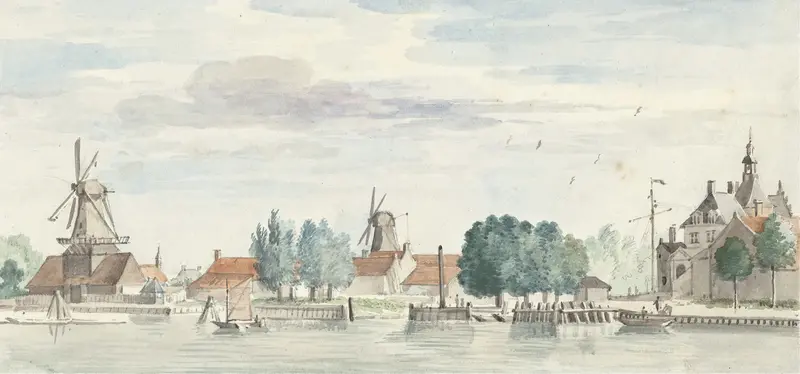
Gezicht op Dordrecht met de Rietdijkspoort en windmolens
Aert Schouman
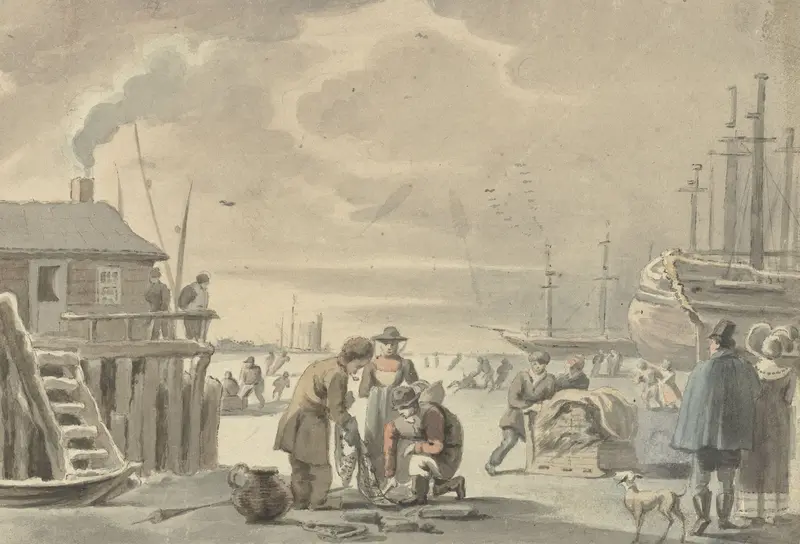
Gezicht op de bevroren Merwede bij Moerdijk
Aert Schouman
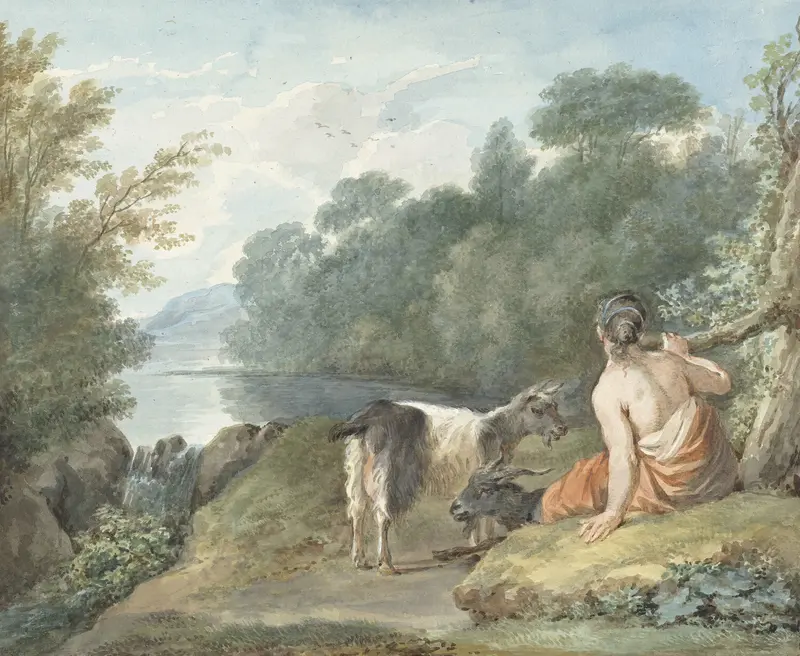
Herderin met geiten in een landschap met een meer
Aert Schouman
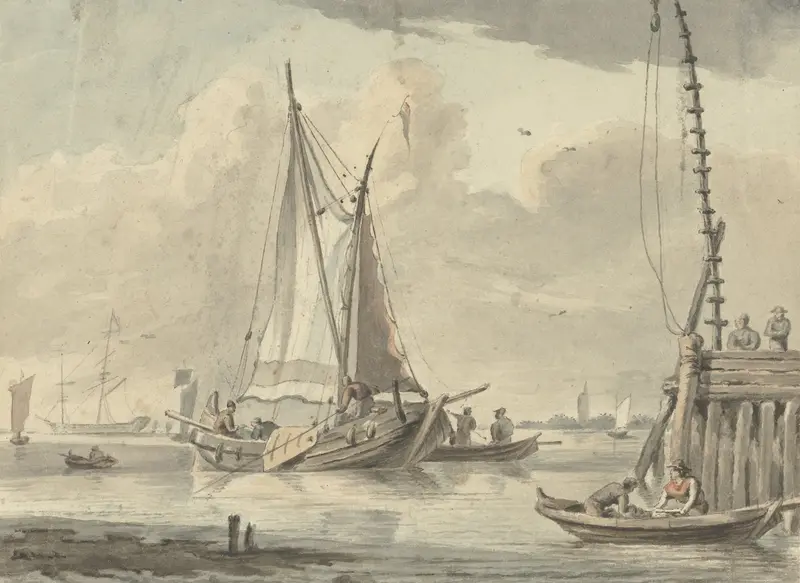
Zeilschepen op de rivier bij Dordrecht
Aert Schouman

Zeilend schip op de Beneden Merwede bij de Papendrechtse dijk
Aert Schouman
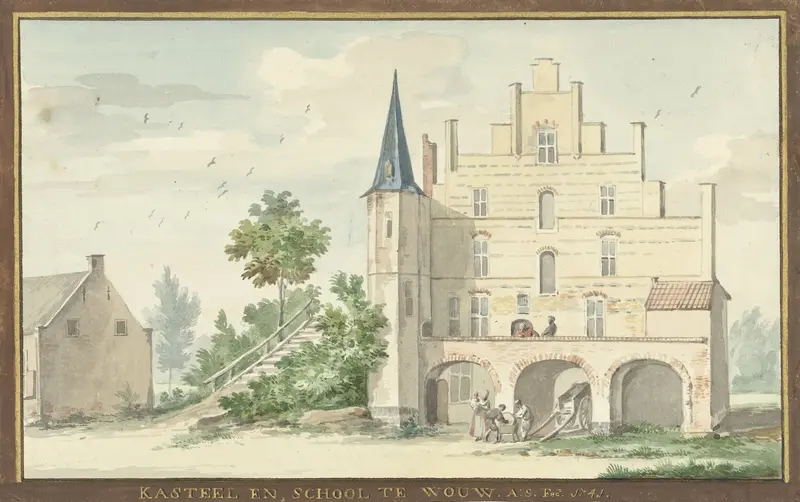
Het kasteel en school te Wouw
Aert Schouman
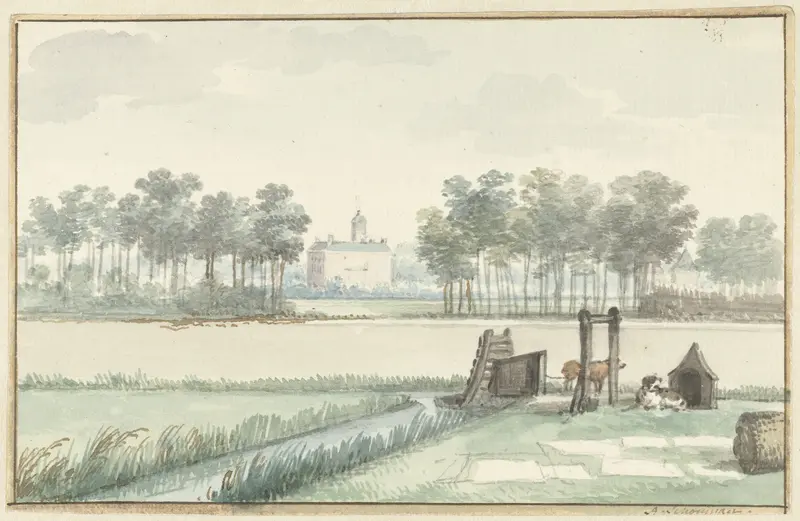
Het kasteel Ter Hooge op Walcheren
Aert Schouman
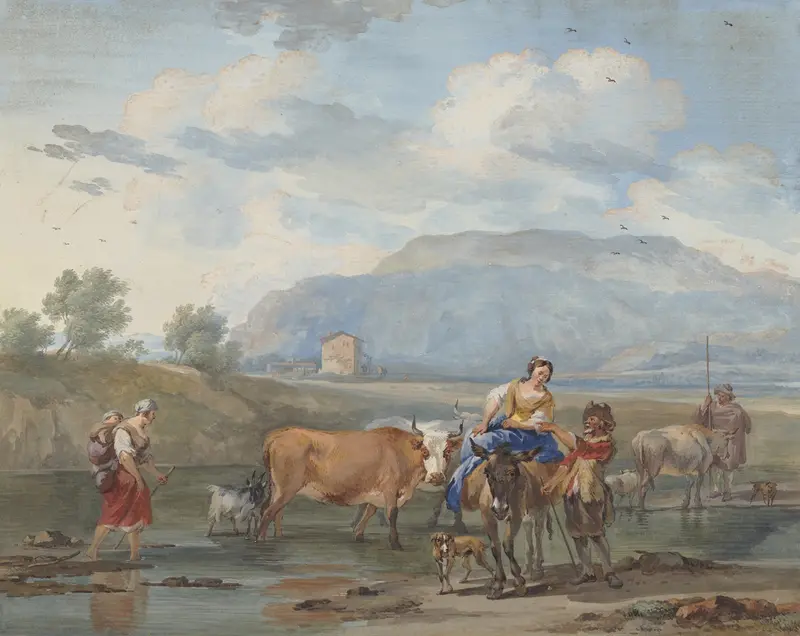
Hirten treiben Kühe durch ein Wasser, links trägt eine Frau ihr Kind auf dem Rücken, rechs reitet eine andere auf einem Esel
Aert Schouman
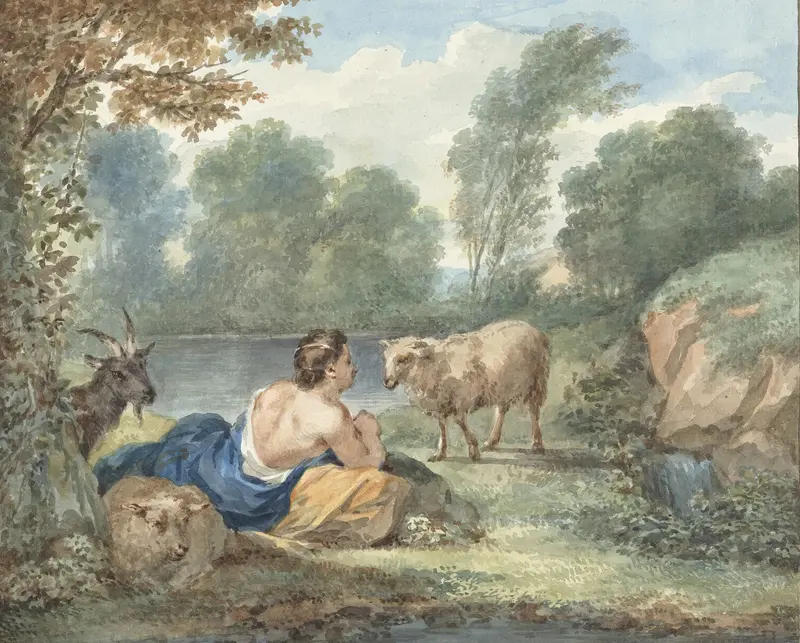
Herderin met schapen in een landschap met een meertje
Aert Schouman





