
Portrait of Nicholas II — History & Facts
What draws the eye first in Portrait of Nicholas II is not the emperor’s regalia, but the quiet reserve in his stance—a figure set apart by both rank and solitude. The sweep of the dark drapery behind him creates a stage, isolating Nicholas against a void that seems to hush the grand interior at his back. His uniform glints with medals and silver epaulettes, but the painter, Albert Edelfelt, has chosen a moment of stillness rather than pomp: the emperor’s right hand rests lightly on his sword, his left at his side, as if caught between duty and introspection.
The light pools gently across his face and chest, drawing out the blue sash and the pale, almost hesitant expression, while the polished floor beneath him echoes the formality of the setting. Painted in 1896 for Helsinki University, this portrait belongs to a tradition of official state likenesses that flourished in late imperial Europe. Such works were not mere likenesses, but instruments of legitimacy and loyalty—commissioned by institutions or governments to assert allegiance or commemorate a ruler’s visit. In the case of this painting, Edelfelt later produced a copy for the Imperial Senate of Finland, underscoring the political ties between Finland and the Russian Empire at the close of the nineteenth century.
History has kept few traces of the journeys of these canvases, but they remain as documents of a vanished world—one where the image of the sovereign was both a symbol and a silent negotiation. Stand before it and consider what is revealed, and what is withheld, in the measured gaze of an emperor.
More Artworks by Albert Edelfelt

The Day of Rest
Albert Edelfelt
Portrait of August Streng
Albert Edelfelt
Portrait Of Mrs. Anna Sinebrychoff
Albert Edelfelt

The Poet, Larin Paraske
Albert Edelfelt

Parisian lady in a Peignoir
Albert Edelfelt
The Grand Dukes Boris and Kirill Vladimirovich as Children
Albert Edelfelt
Christ Bears The Cross
Albert Edelfelt
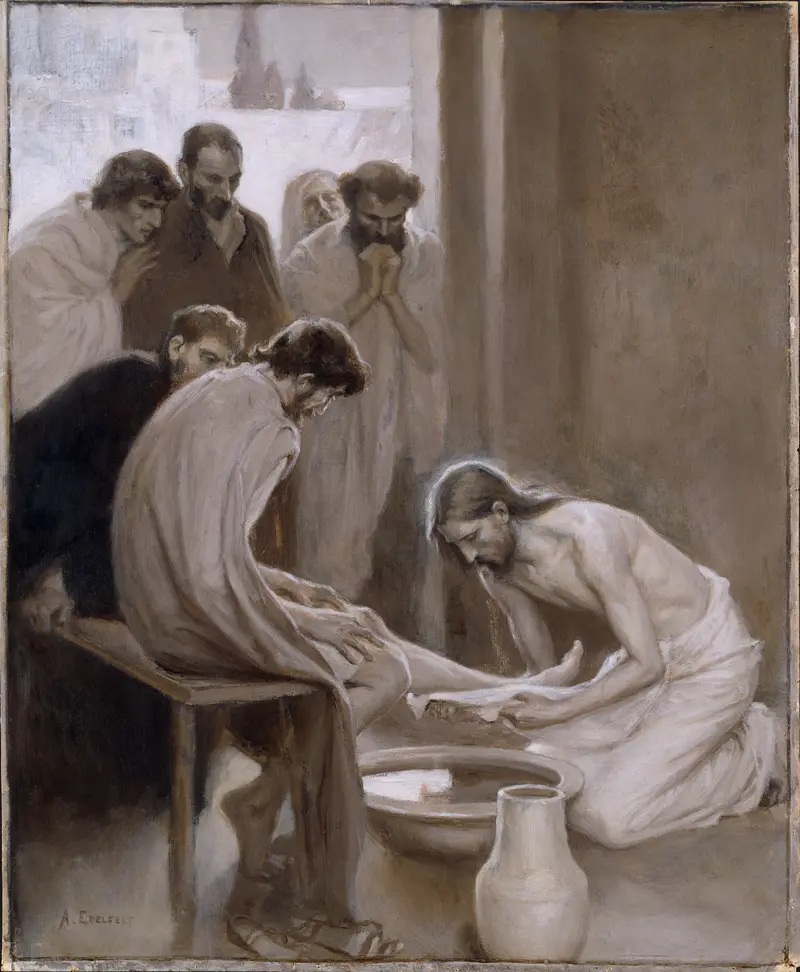
Jesus Washing the Feet of his Disciples
Albert Edelfelt

Larin Paraske with Kantele
Albert Edelfelt
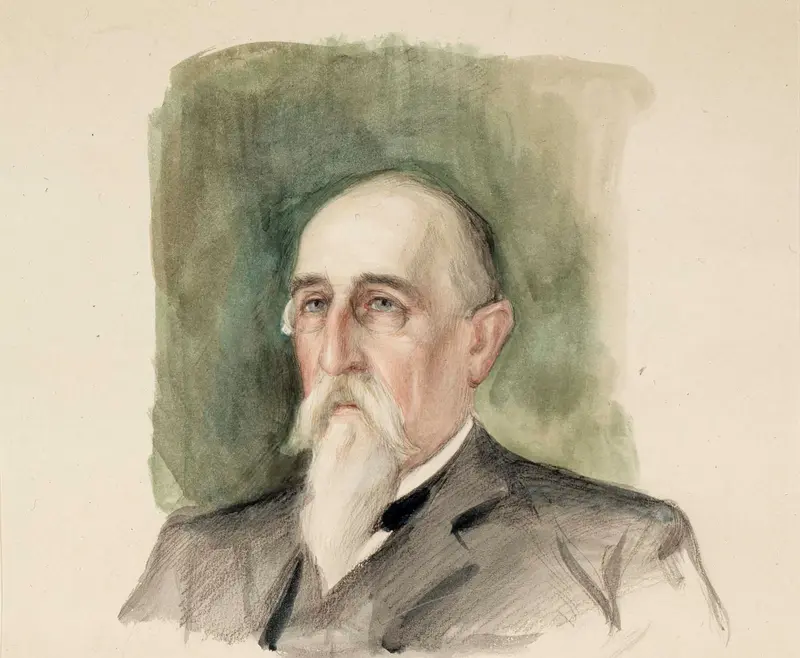
Leo Mechelin, Portrait Study
Albert Edelfelt





