
Portrait of Professor J.W. Runeberg — History & Facts
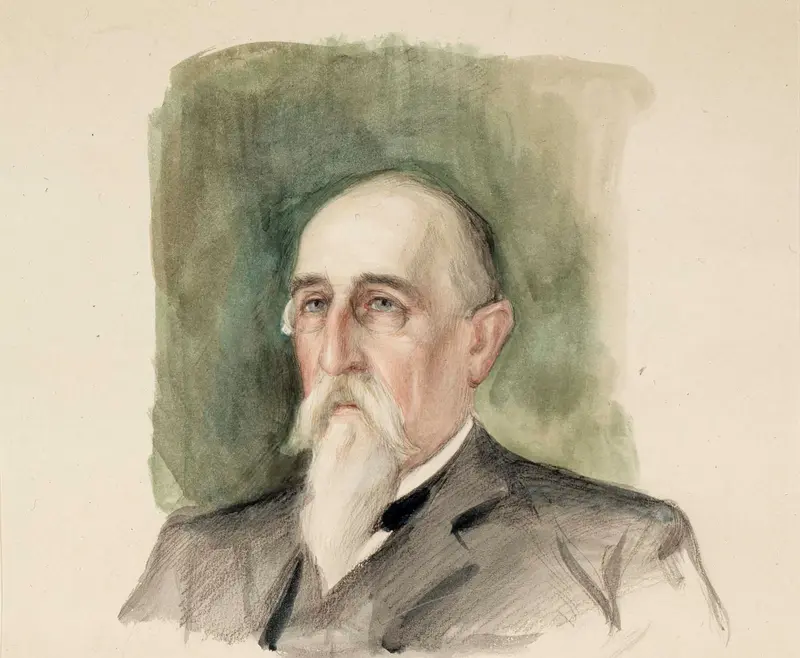
What first catches the eye in Portrait of Professor J.W. Runeberg is the restless energy of the artist’s hand, still visible in the swift, searching strokes that shape the sitter’s face. The professor’s gaze is fixed just above the horizon, his eyes alive behind rimless glasses, as if caught mid-thought.
Light falls from the left, carving out the planes of his forehead and cheekbones, while the brushwork leaves parts of the jacket and background almost unfinished—drawing our attention relentlessly back to the head. The mustache, crisply defined, and the high collar signal a man of intellect and formality, but the looseness of the medium betrays a moment of immediacy, of presence rather than pose. Painted in 1902, this work belongs to a world where portraiture was both a personal and public act, a way to honor scholars, civic leaders, and cultural figures at the height of their influence. In the Nordic countries, artists like Albert Edelfelt were celebrated for their ability to capture not just likeness but character—often for academic or institutional collections.
History has kept few traces of the specific circumstances behind this portrait, but its survival in a national collection (as documented by its presence at http://kokoelmat.fng.fi/app?si=A+II+1519%3A14) hints at the enduring value placed on such images as records of intellectual life. The unfinished edges and direct gaze invite us to imagine the conversation between artist and sitter, still echoing across the years.
More Artworks by Albert Edelfelt

The Day of Rest
Albert Edelfelt
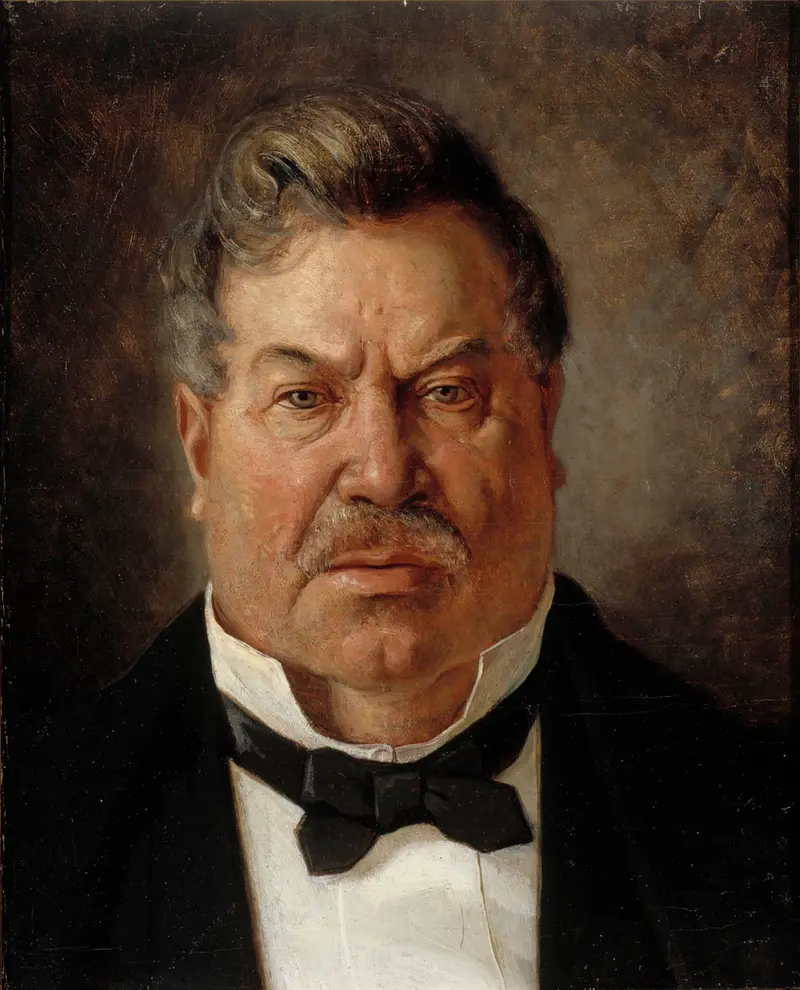
Portrait of August Streng
Albert Edelfelt
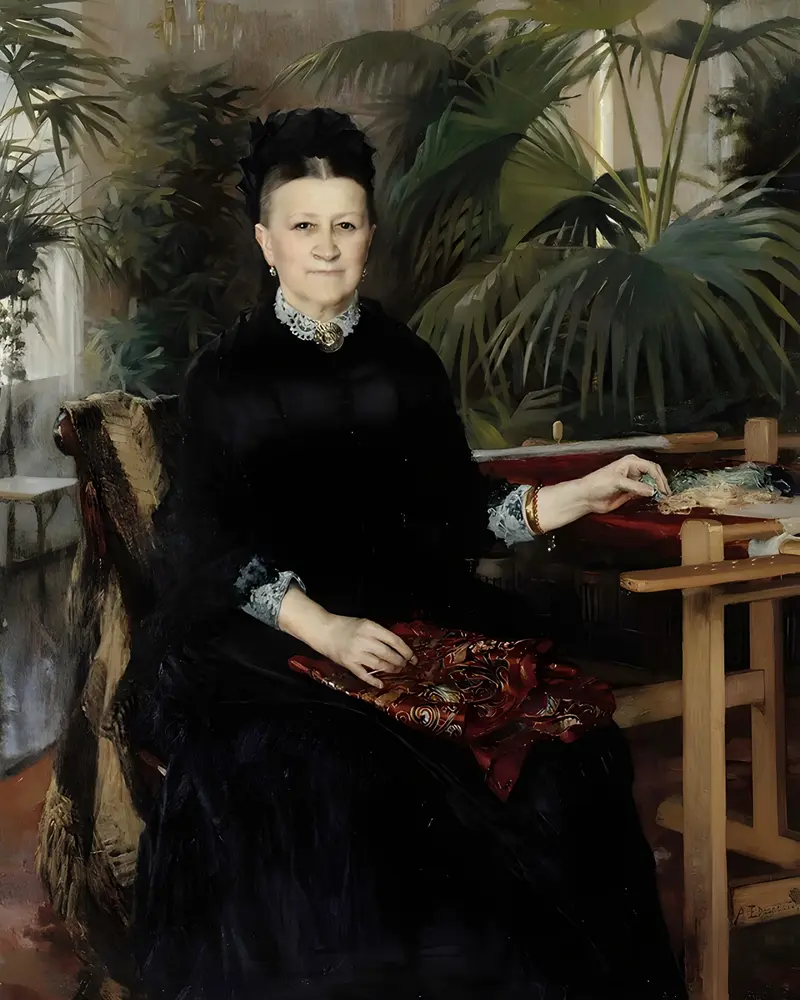
Portrait Of Mrs. Anna Sinebrychoff
Albert Edelfelt

The Poet, Larin Paraske
Albert Edelfelt

Parisian lady in a Peignoir
Albert Edelfelt
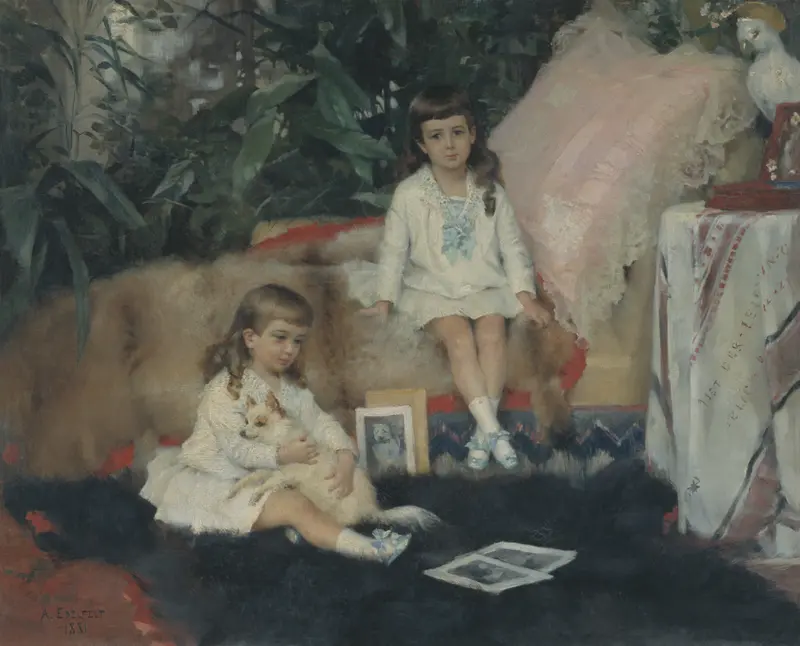
The Grand Dukes Boris and Kirill Vladimirovich as Children
Albert Edelfelt
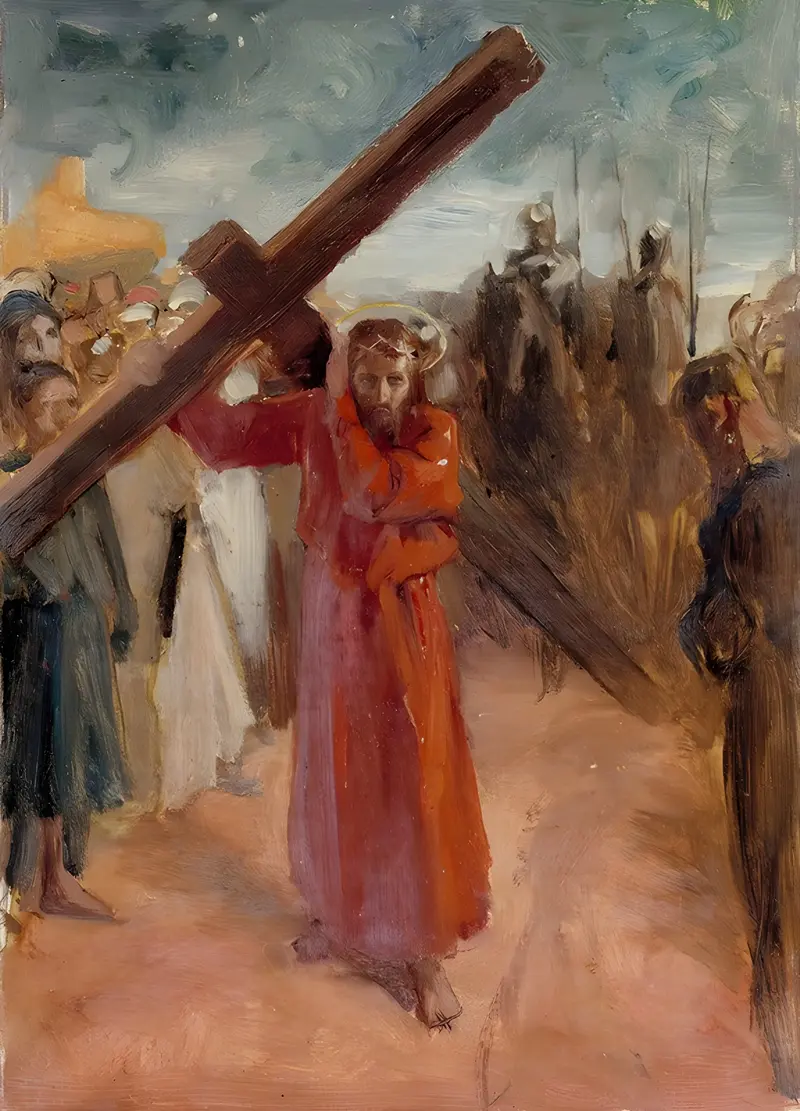
Christ Bears The Cross
Albert Edelfelt
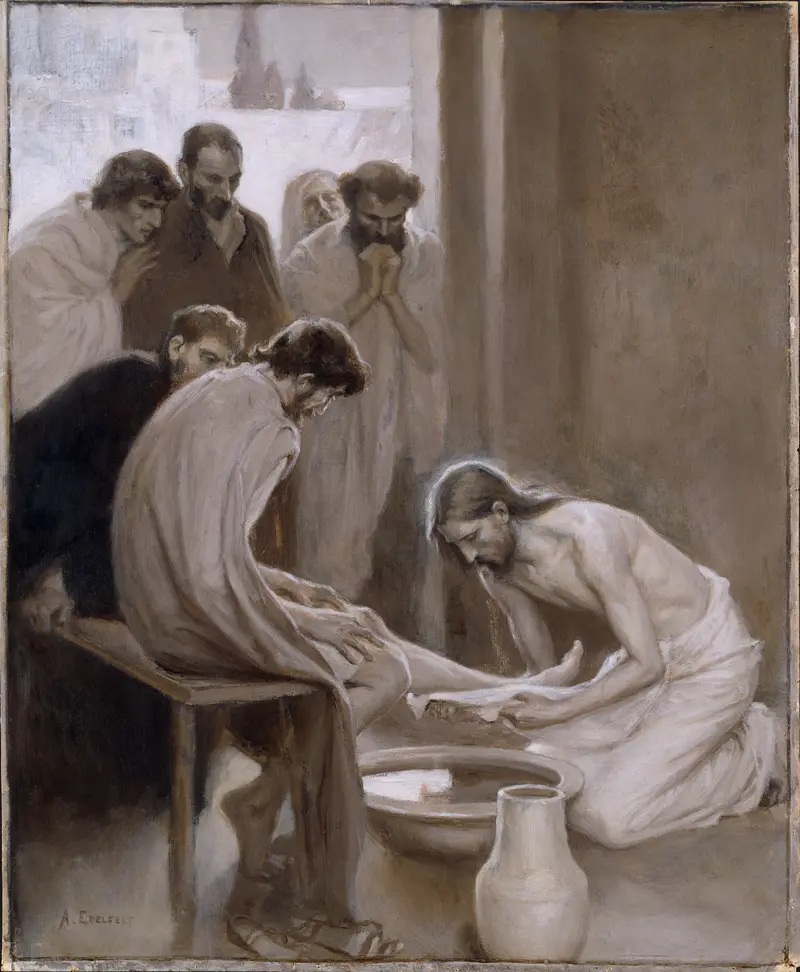
Jesus Washing the Feet of his Disciples
Albert Edelfelt

Larin Paraske with Kantele
Albert Edelfelt
Leo Mechelin, Portrait Study
Albert Edelfelt





