
Portrait of Zacharias Topelius — History & Facts
The first thing that draws the eye in Portrait of Zacharias Topelius by Albert Edelfelt is the sitter’s quietly amused gaze, a look that seems to invite the viewer into a private conversation. The light, filtered through a frosted window, falls gently across his face and crisp white cravat, setting his features in soft relief against the darker, loosely-brushed background. The sitter’s hand, resting on a book or perhaps the arm of a chair, is rendered with broad, confident strokes, suggesting both ease and intellect.
Edelfelt’s palette, dominated by cool blues and warm browns, creates an atmosphere of wintery introspection, while the blurred forms outside the window hint at a world just out of focus—a world the sitter observes from within. Painted in the 19th century, this work belongs to a moment when portraiture was both a record and a declaration of status, intellect, and character. In northern Europe, artists like Edelfelt were beginning to loosen the academic grip, allowing more personality and immediacy to enter their portraits. The oil on panel format, measuring 41 by 30 centimeters, would have suited a private collector or a family commission, intended for display in a domestic interior rather than a grand public space.
Though history has left few traces of this specific painting’s early life, its presence in the Bukowskis collection today reminds us how such images once shaped—and still shape—our sense of those who came before. Look again at the sitter’s expression: it is the artist’s invitation to imagine the life behind the brushstrokes.
More Artworks by Albert Edelfelt

The Day of Rest
Albert Edelfelt
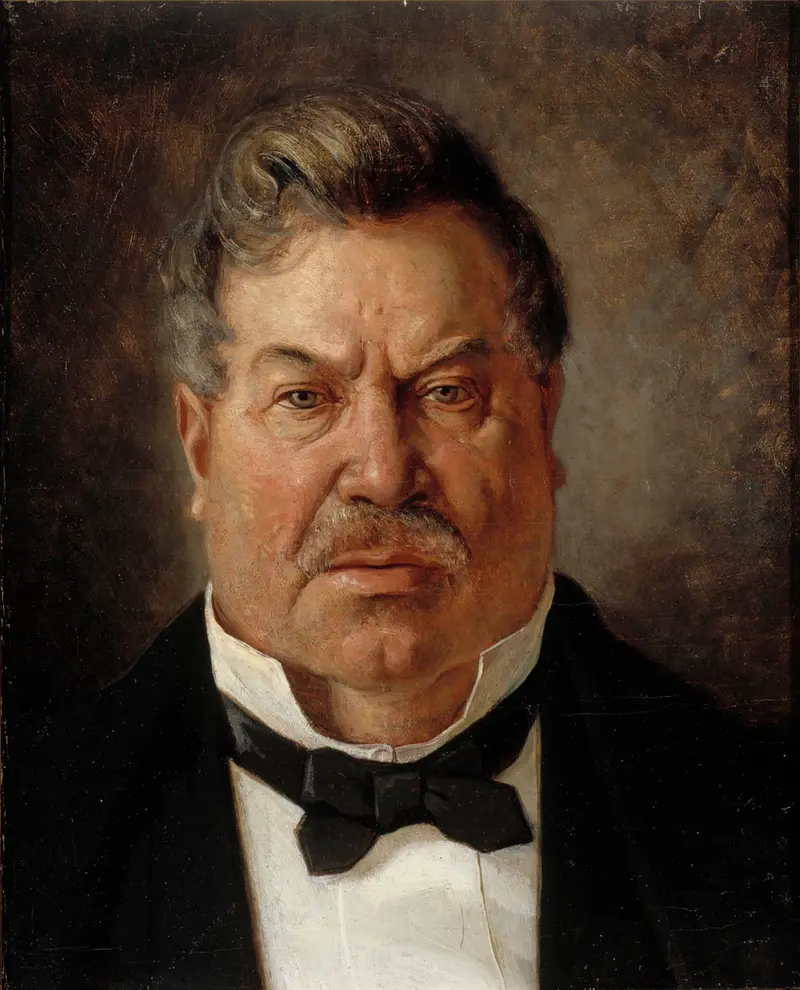
Portrait of August Streng
Albert Edelfelt
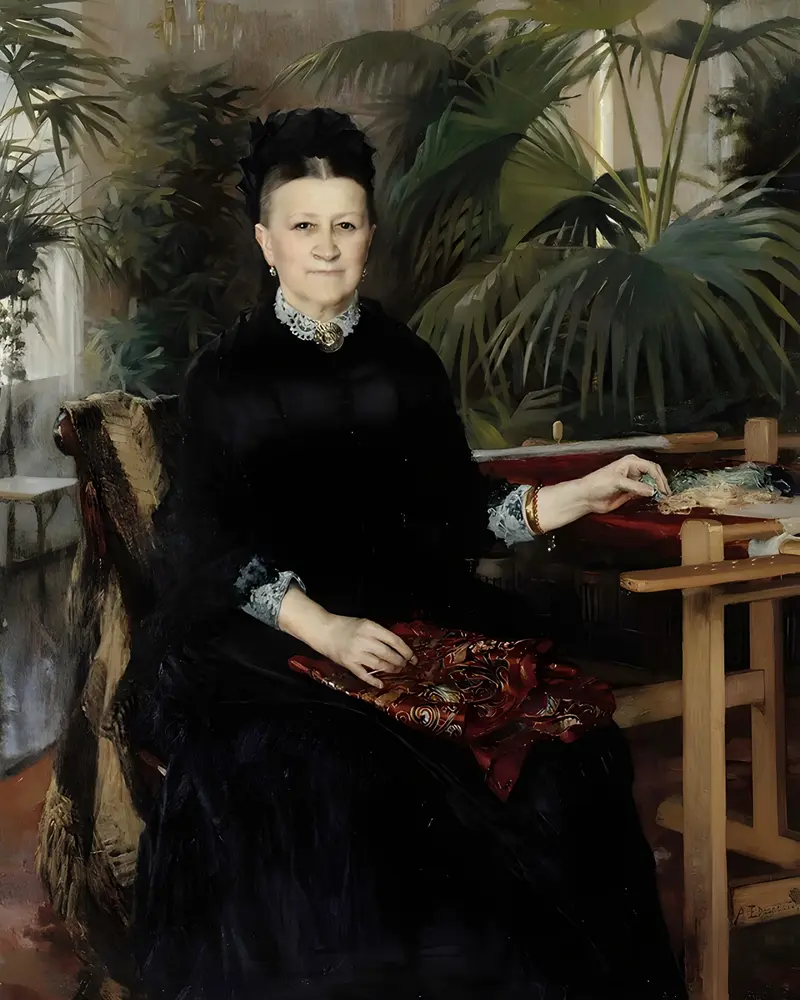
Portrait Of Mrs. Anna Sinebrychoff
Albert Edelfelt

The Poet, Larin Paraske
Albert Edelfelt

Parisian lady in a Peignoir
Albert Edelfelt
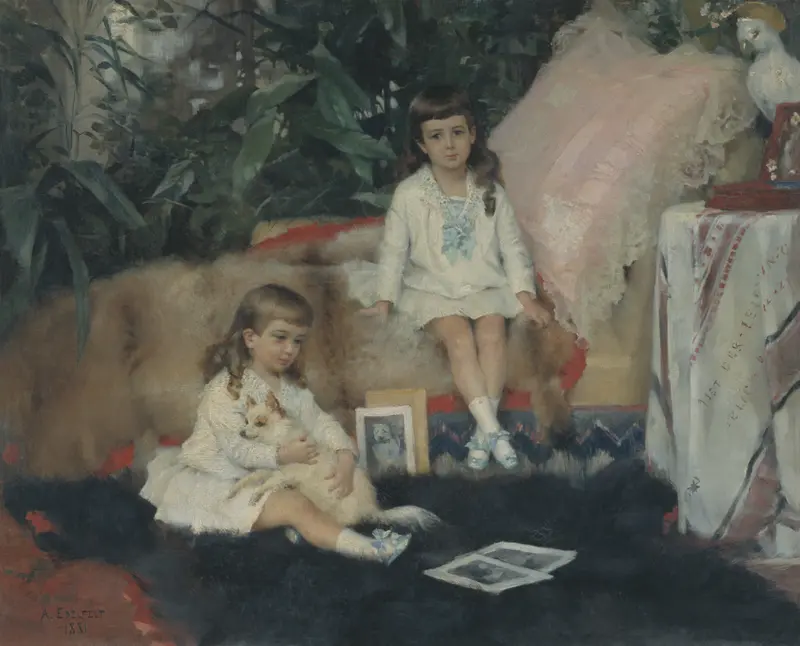
The Grand Dukes Boris and Kirill Vladimirovich as Children
Albert Edelfelt
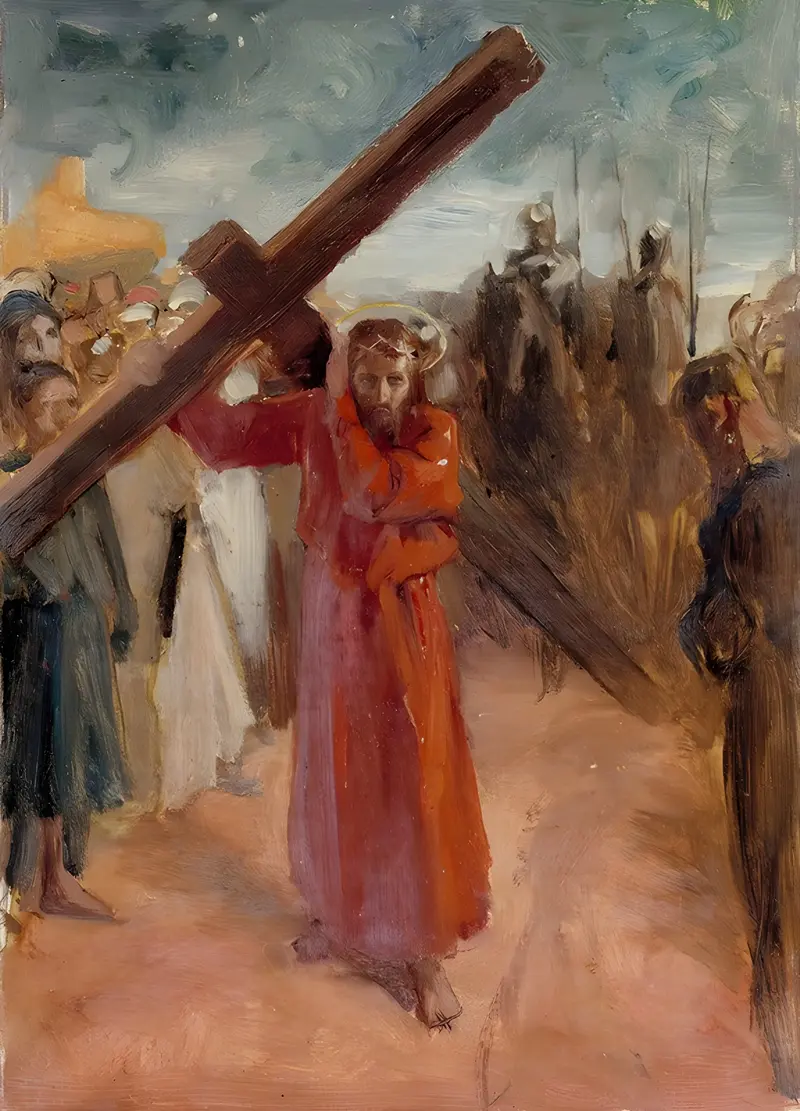
Christ Bears The Cross
Albert Edelfelt
Jesus Washing the Feet of his Disciples
Albert Edelfelt

Larin Paraske with Kantele
Albert Edelfelt
Leo Mechelin, Portrait Study
Albert Edelfelt





