Prophet Jeremiah: meaning and where it is
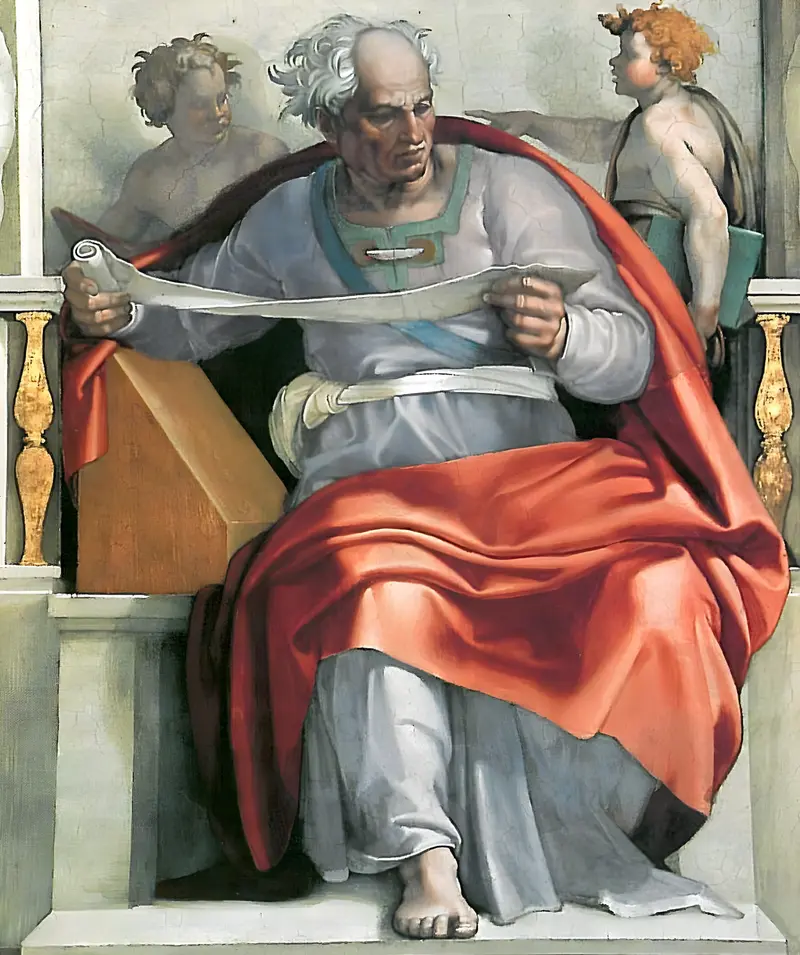
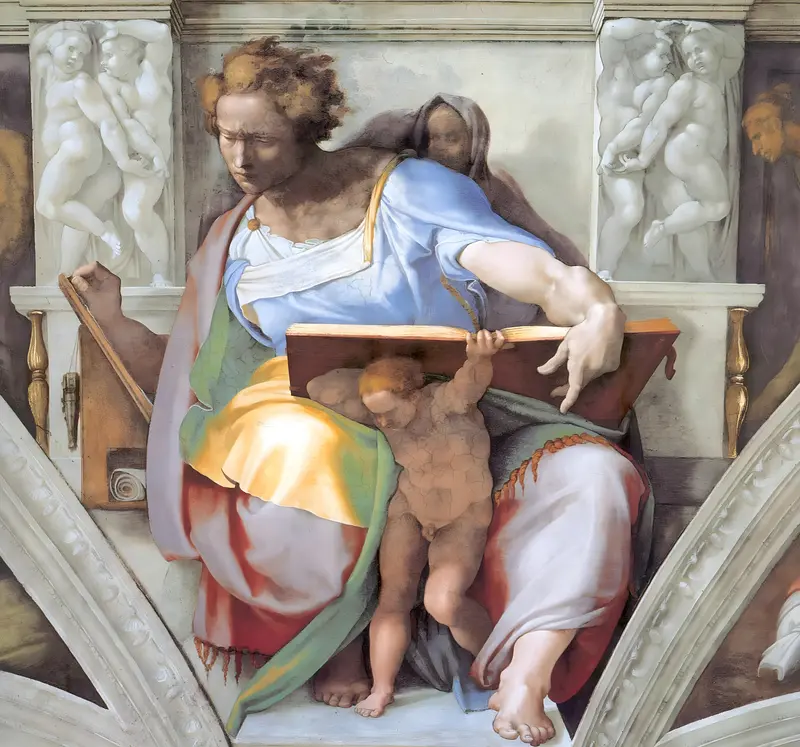
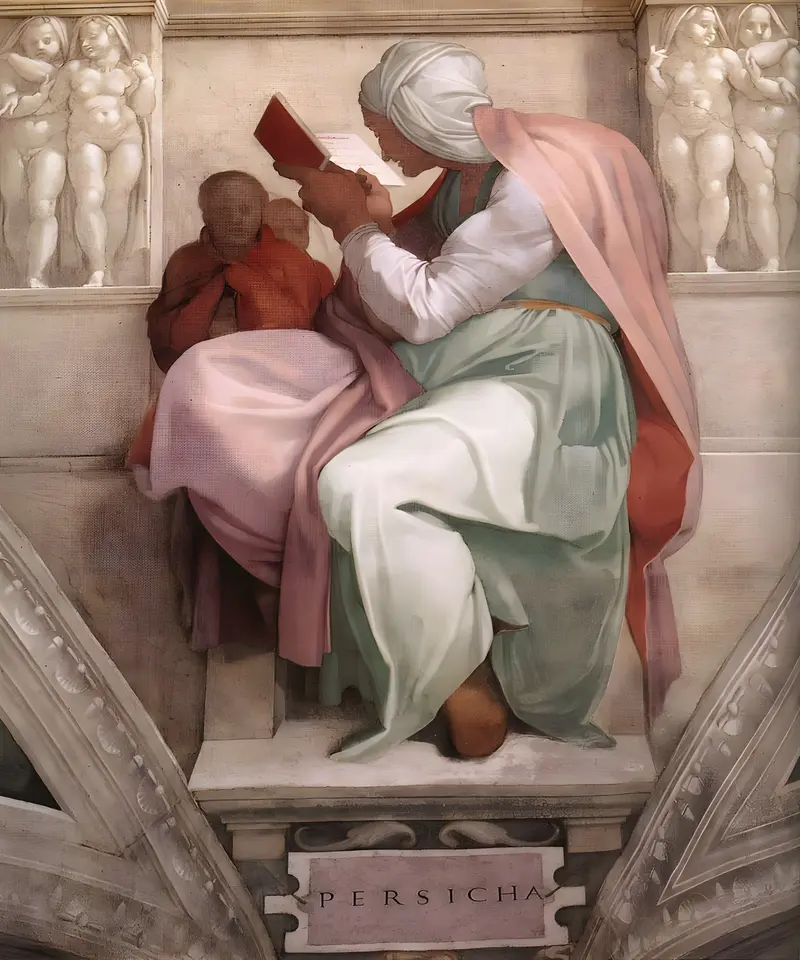
An old man sits on a monumental throne, elbow on his knee and a hand raised to his face, while two figures stand behind him. The figure is Prophet Jeremiah, one of twelve prophets and sibyls painted in fresco by Michelangelo (1475-1564) on the Sistine Chapel ceiling between 1508 and 1512. The Vatican Museums, which hold this Renaissance cycle, count him among the prophets who foresaw the coming of Christ.
- Pose and mood: Jeremiah is seated with his elbow on his knee and his hand at his face; Artchive calls the figure contemplative and sorrowful, with partly hidden eyes that suggest contemplation and lamentation.
- Among twelve: prophets and sibyls alternate on monumental thrones along the long sides of the ceiling, each named by a text in the label below. The Vatican Museums say the prophets foresaw the coming of Christ for Israel and the sibyls extend that wait to the pagan world.
- Commission and dates: the contract with Julius II was signed on 8 May 1508 and the whole ceiling was finished by 31 October 1512; Wikidata gives 1508 for this fresco, and no source read here dates the single figure.
- Medium and size: fresco, 390 cm high and 380 cm wide according to Wikidata. See also the whole Sistine Chapel Ceiling.
Sources: Vatican Museums: Ceiling · Vatican Museums: Sibyls and Prophets · Artchive: The Prophet Jeremiah · Wikidata Q3760996
Questions and answers about the painting
What does Michelangelo's Prophet Jeremiah show?
It shows an old man seated with his elbow on his knee and his hand at his face, with two figures behind him. Artchive describes him as contemplative and sorrowful, his partly hidden eyes conveying contemplation and lamentation. The Vatican Museums add that each prophet and sibyl on the ceiling is identified by a text in the label below the figure.
Source: Artchive: The Prophet Jeremiah · Vatican Museums: Sibyls and Prophets
Where is the Jeremiah fresco on the Sistine Chapel ceiling?
In the Sistine Chapel in Vatican City, which the Vatican Museums list among their museums. The Vatican Museums place the prophets and sibyls on the long sides of the ceiling, with Zechariah and Jonah on the short sides, so Jeremiah is on a long side. As of November 2026 visiting days, hours and closures are on the Vatican Museums site, so check it before a visit.
Source: Vatican Museums: Sibyls and Prophets · Vatican Museums: Sistine Chapel
How big is the fresco of Jeremiah by Michelangelo?
Wikidata lists it as 390 cm high and 380 cm wide. It is a fresco painted on the plaster of the Sistine Chapel vault, so it stays where it is and is seen there. The Vatican Museums give no size of their own on the pages read here, so the figures are Wikidata's.
Source: Wikidata Q3760996 · Vatican Museums: Ceiling
Who commissioned the Sistine Chapel ceiling that holds Jeremiah, and when?
Pope Julius II. The Vatican Museums say Michelangelo signed the contract on 8 May 1508, finished the first half in August 1510, and that the ceiling must have been completed by 31 October 1512. Wikidata lists 1508 for the Jeremiah fresco, but no source read here gives a single year for this figure.
Source: Vatican Museums: Ceiling · Wikidata Q3760996
Why did Michelangelo paint prophets and sibyls on the Sistine Chapel ceiling?
According to the Vatican Museums, the prophets and sibyls testify to humanity's continuous wait for Redemption. The prophets foresaw the coming of Christ for the people of Israel, while the sibyls, who belonged to the pagan world, were included because of their prophetic gifts, extending the wait from the chosen people to all mankind.
Is Michelangelo's Jeremiah fresco in the public domain?
Yes. Michelangelo died in 1564, so his paintings are free of copyright everywhere. A faithful photograph of a public-domain painting adds no new copyright in the United States or the European Union, so you can download this image and use it in personal or commercial projects, for example on prints, books, websites or products. Public Domain Images for Commercial Use explains how.