Rainy Day at Cookham — History & Facts
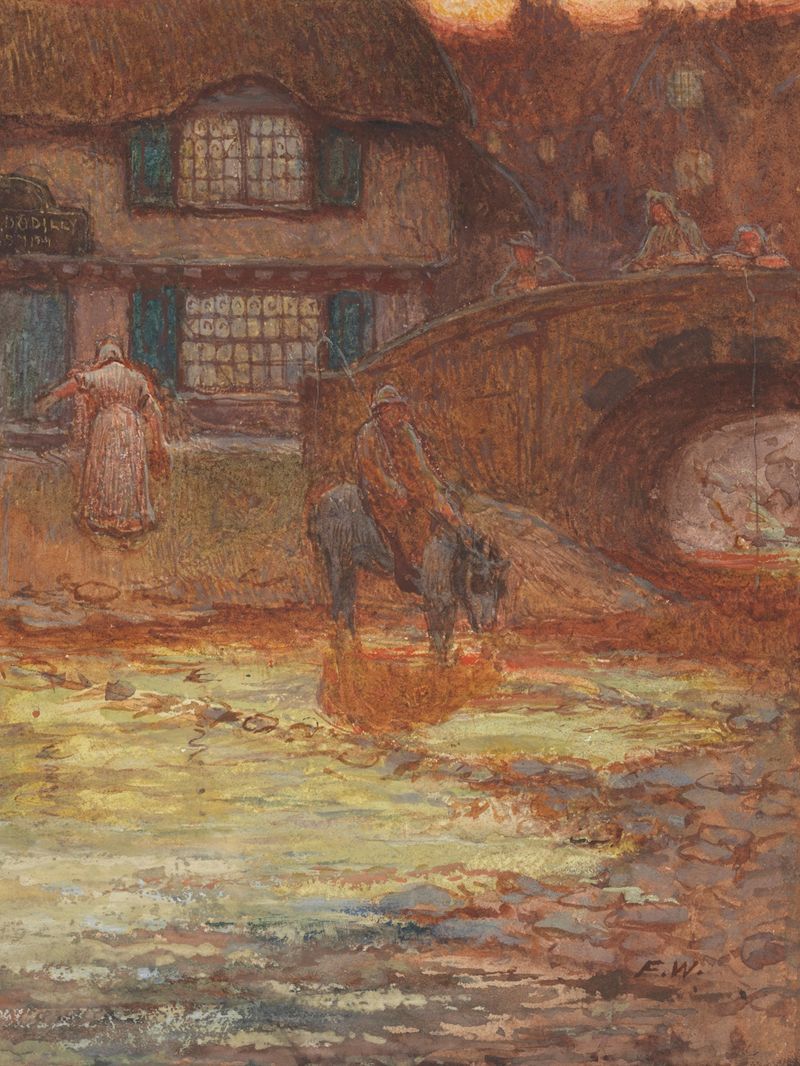
In the world of art, legacy is often the delicate balance between joy and sorrow, where moments of brilliance arise from touches of melancholy. Look to the left, where the soft contours of a figure emerge, partially obscured by a veil of rain. The muted palette imbues the scene with a sense of tranquility, yet the vibrant strokes of gold in the foreground suggest an exclamation of hope amidst the gloom. Notice how the raindrops dance across the canvas, blurring the edges of reality and creating a dreamlike quality that draws you deeper into this serene moment. The juxtaposition of light and shadow speaks to a deeper emotional narrative.
Each drop of rain mirrors the tears of the unspoken, while the cloaked figure, draped in somber tones, evokes a sense of contemplation and introspection. The subtle play of colors invites an exploration of legacy—what we carry from the past and what we choose to reveal or hide from others. In this moment, beauty and pain converge, allowing the viewer to reflect on their own experiences of loss and resilience. Frederick Walker painted Rainy Day at Cookham in 1894, during a time of personal upheaval.
Living in England, he was navigating the complexities of his emerging career in a changing art world that increasingly favored impressionistic styles. Amidst these shifts, he sought to capture the poignant quiet of life, anchoring his legacy in scenes that resonate with the depths of human emotion.