Evening in the village — History & Facts
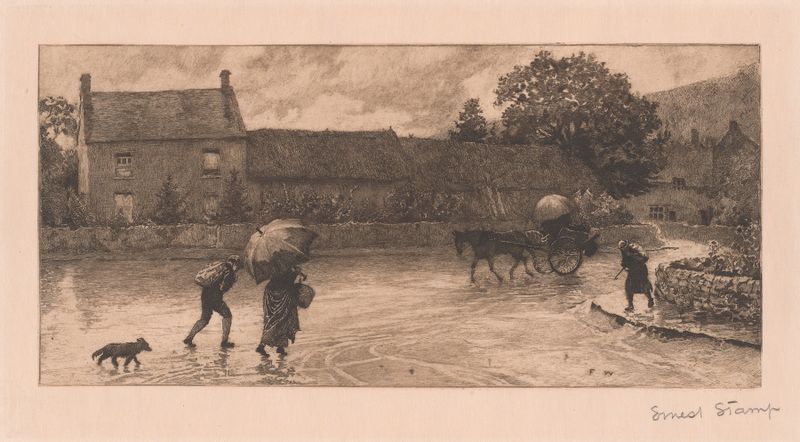
It is a delicate balance, capturing the essence of hope hidden within sorrow, and this piece embodies that exquisite dichotomy. Look to the center, where a lone figure stands amidst a twilight village, the warm hues of dusk wrapping around them like a comforting embrace. The soft, muted palette invites you to immerse yourself in the gentle glow of the scene, as the shadows begin to stretch and bend, creating a sense of intimacy. Notice how the light falls upon the cobblestones, each brick reflecting the day’s last rays, suggesting both continuity and the ephemeral nature of time. In this quiet moment, the viewer can sense an emotional tension; the figure, poised yet contemplative, evokes both solitude and resilience.
The distant rooftops cradle the fading light, hinting at stories untold and dreams yet to be realized. The simplicity of the village life contrasts sharply with the complexity of human emotion, revealing a layered narrative where hope shines through the ordinary struggles of existence. Frederick Walker painted this scene during an era marked by the rise of the Pre-Raphaelite Brotherhood, just before the turn of the 20th century. Living in England, he sought to capture the essence of rural life, emphasizing both its beauty and its inherent challenges.
This painting reflects not only Walker’s personal artistic journey but also a broader cultural fascination with the pastoral ideal, as society grappled with the rapid changes brought about by industrialization.