
Rainy Night in Rome — History & Facts
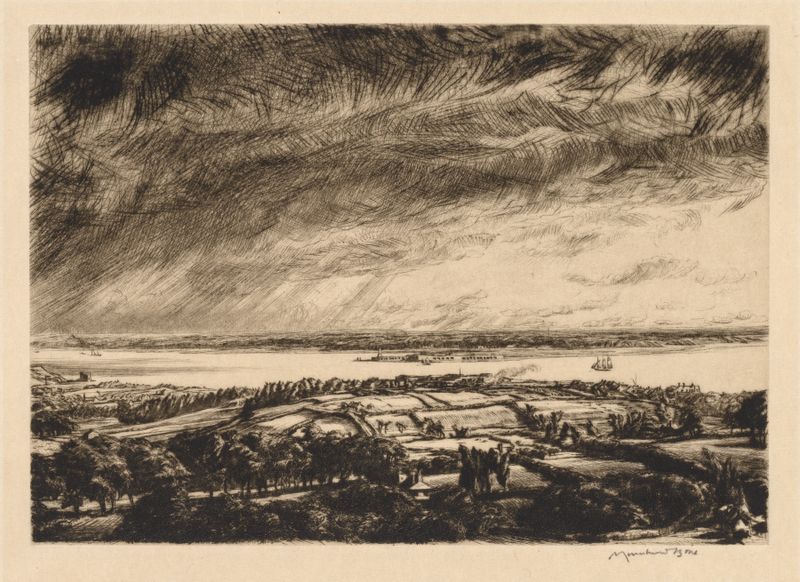
In the stillness of a rainy night, time drips slowly, inviting us to pause and reflect on the transient beauty of life. Look to the foreground, where glistening cobblestones reflect the soft glow of lamplight, creating an almost magical interplay between light and shadow. The blurred silhouettes of pedestrians meander through the damp streets, their umbrellas casting delicate arcs against the deep, moody hues of blue and gray. Notice how the cool colors evoke a sense of solitude, while the vibrant splashes of yellow and white from the lamps offer a warmth that contrasts against the chill of the rain-soaked night. Underneath the surface, the artwork speaks to the fleeting nature of existence.
The steady fall of rain, captured in fluid brushstrokes, embodies both renewal and melancholy — a reminder that every moment, like the rain, is ephemeral. The umbrellas create a rhythm in the composition, highlighting the human experience of navigating through life’s uncertainties. There’s an emotional tension between the bustling activity of the city and the individual’s quiet introspection, emphasizing the dichotomy of connection and solitude. In 1913, Muirhead Bone was in London, gaining recognition as a prominent printmaker and painter, known for his evocative depictions of urban landscapes.
This period marked a significant moment in the art world, as modernism began to take root, pushing against traditional boundaries. The artist’s keen observation of light and atmosphere in Rainy Night in Rome reflects his deep engagement with both his surroundings and the broader shifts occurring in society and art at the time.
More Artworks by Muirhead Bone
Browse all →
On the Clyde, 1917-1918; Building a Liner at Greenock
Muirhead Bone
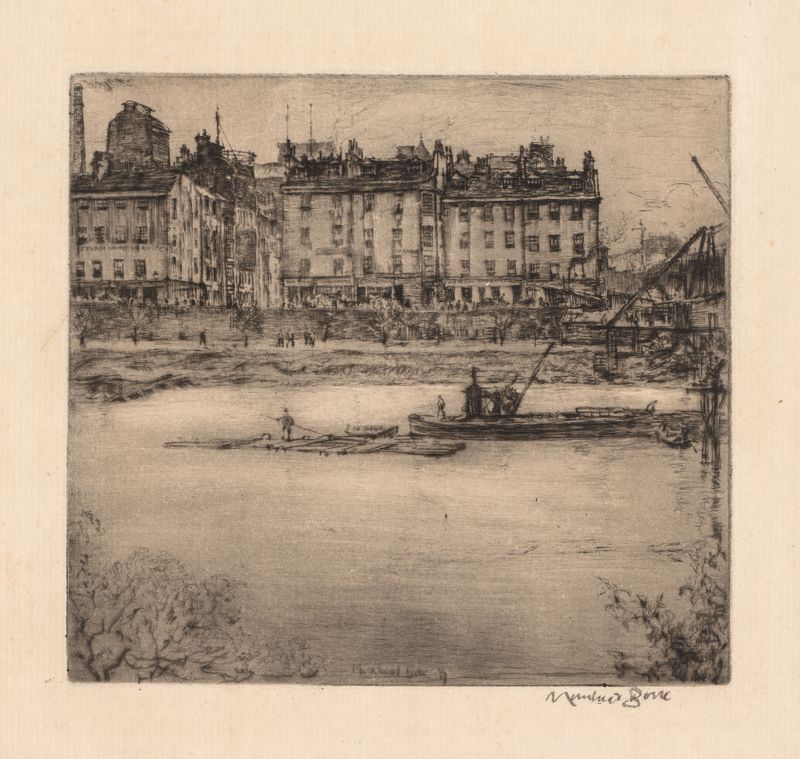
Etchings of Glasgow; Gorbals
Muirhead Bone

On the Clyde, 1917-1918; Reconstructing a Clyde Shipyard
Muirhead Bone

The Great War; Britain’s Efforts and Ideals; Building Ships; A Fitting Out Basin
Muirhead Bone

Picadilly Circus
Muirhead Bone

Demolition of St. James Hall, Exterior
Muirhead Bone
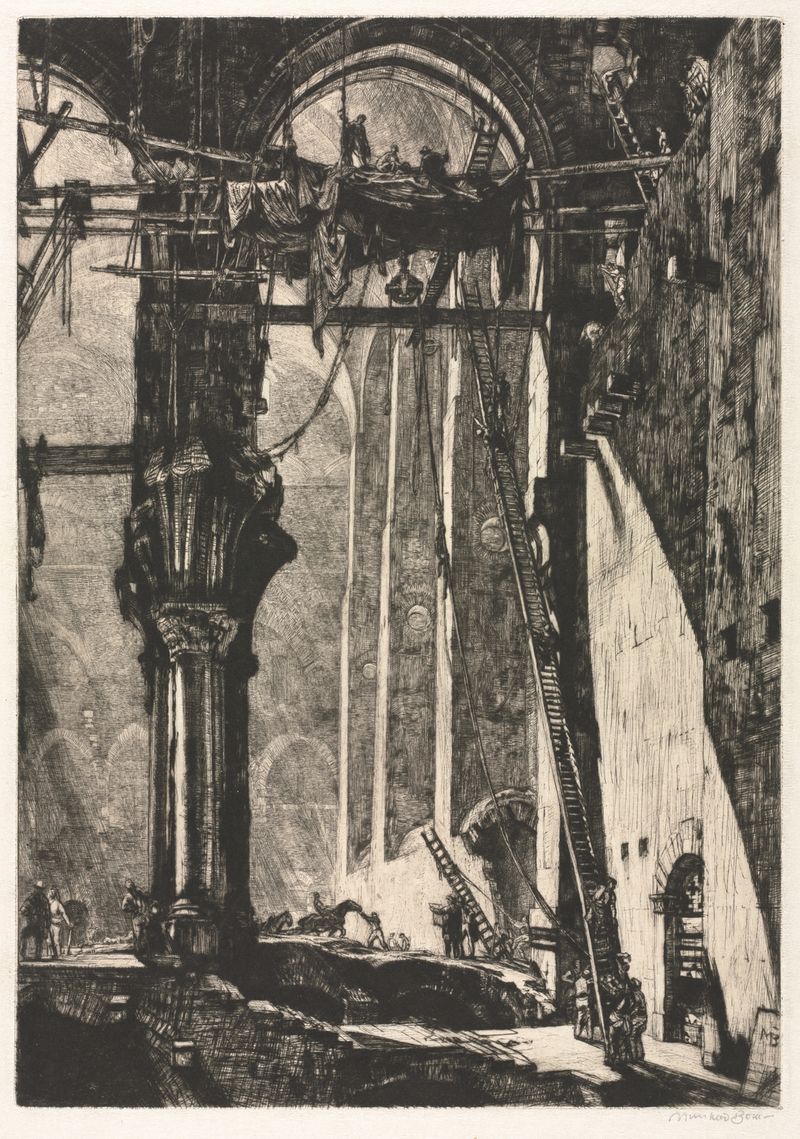
Demolition of St. James Hall, Interior
Muirhead Bone
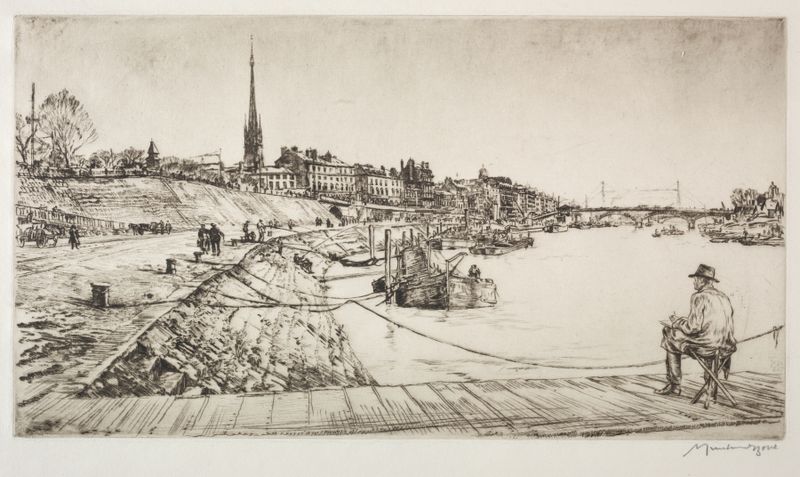
Rouen
Muirhead Bone
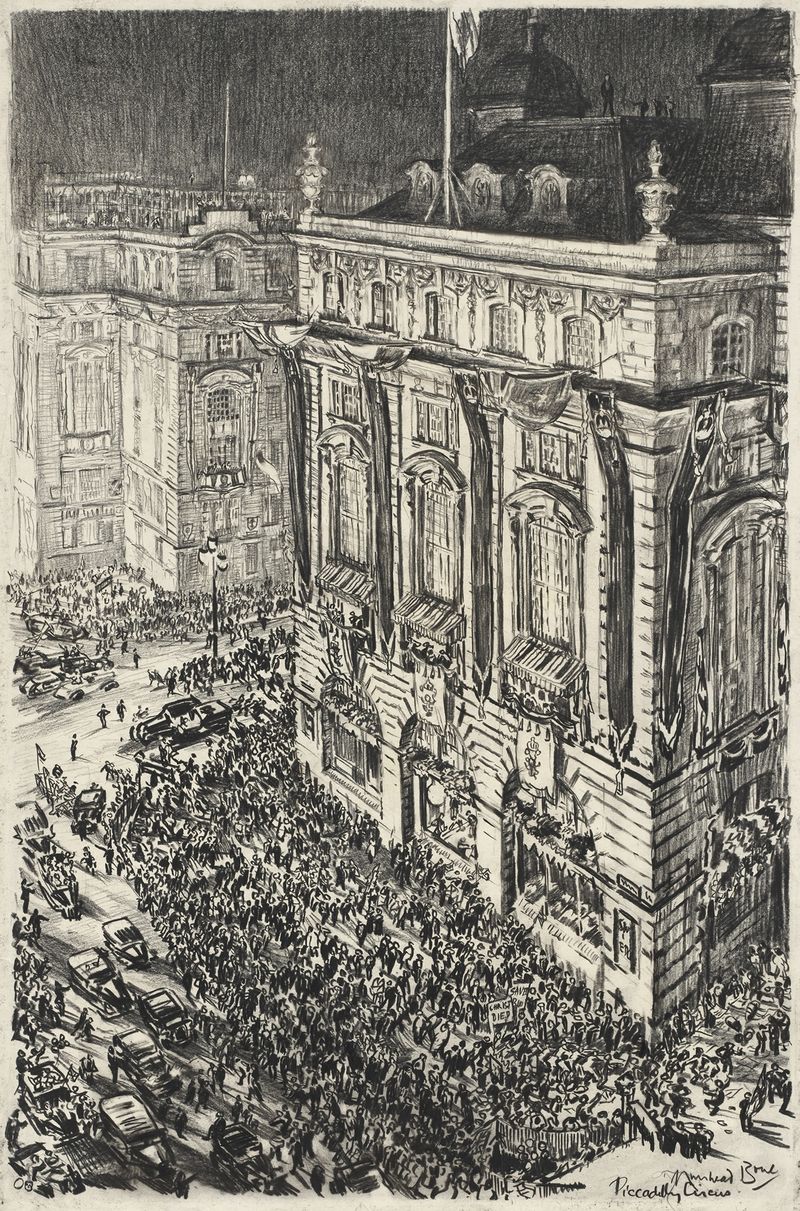
Piccadilly Circus, Eve of the Coronation of George VI
Muirhead Bone
The Solent
Muirhead Bone





