Red Deer in a Forest Glade — History & Facts
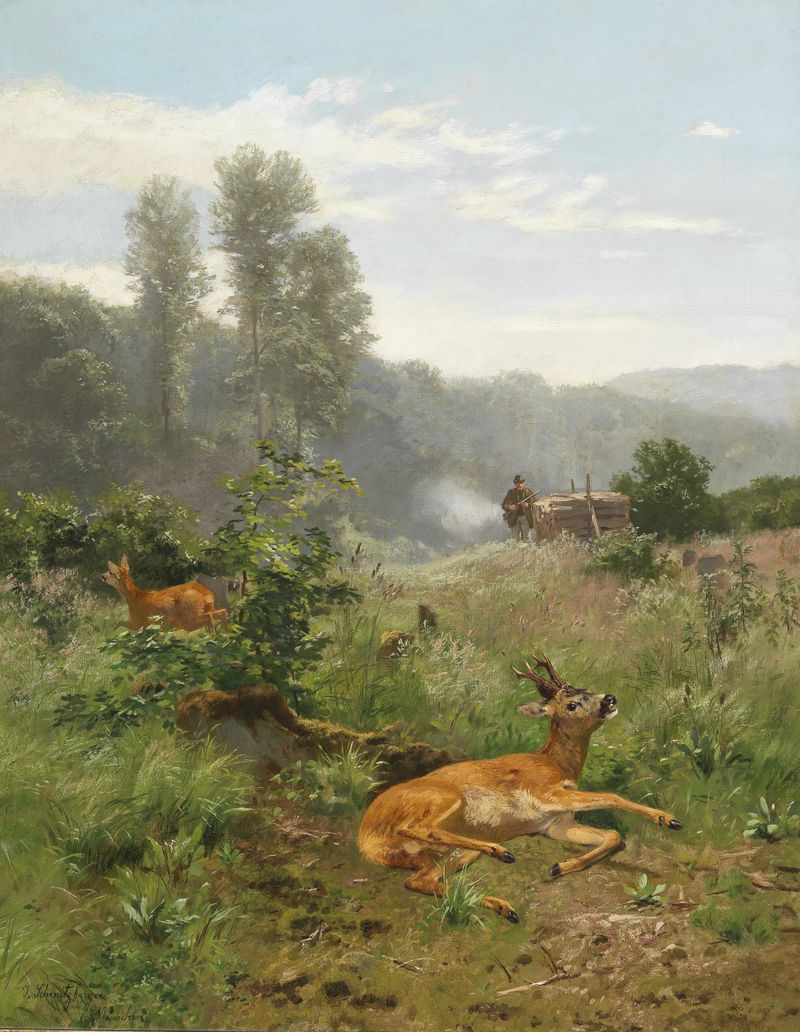
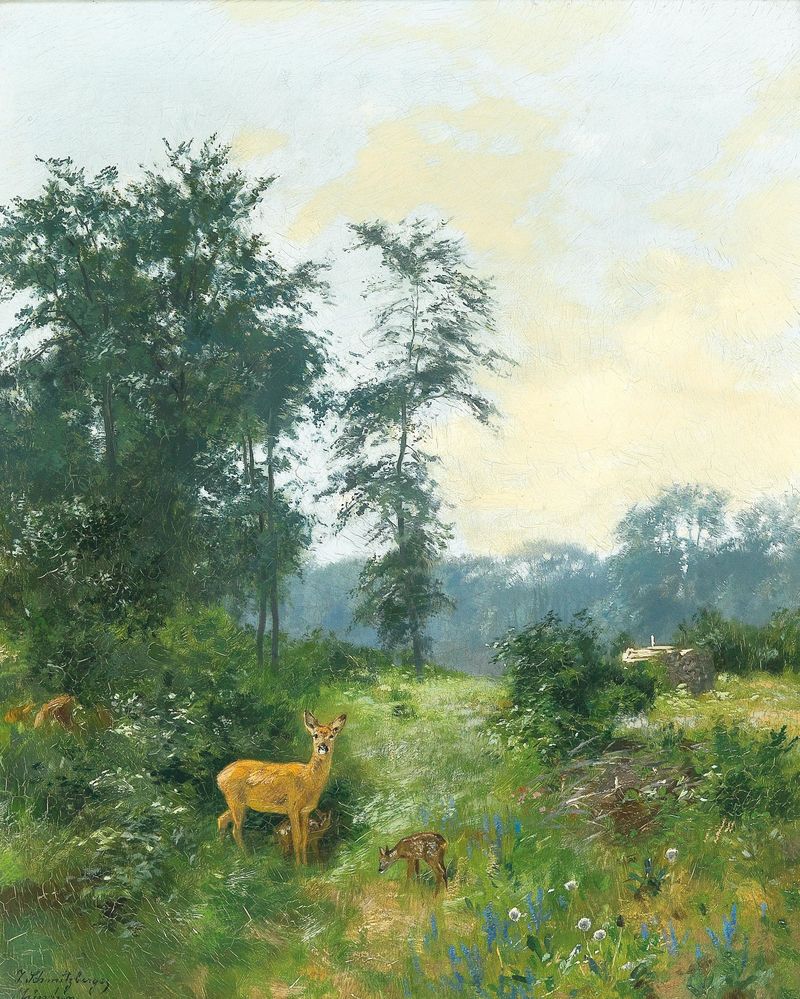
Can paint confess what words never could? In Red Deer in a Forest Glade, an intriguing dialogue unfolds between nature and the chaos of existence, inviting viewers to explore the depths of both serenity and madness. Look to the left at the majestic red deer standing poised amidst a forest glade, its form elegantly framed by the soft embrace of surrounding trees. The artist employs rich, earthy tones, with deep greens and browns dominating the palette, evoking a sense of calm that belies the tumultuous struggle of the natural world. Notice how the dappled light filters through the leaves, casting a gentle glow on the deer, which seems both a part of the environment and a sentinel observing a hidden chaos. Delve deeper into the artwork, and you uncover the tension between serenity and madness.
The delicate brushwork around the deer suggests a stillness that contrasts sharply with the wildness of the untamed forest. The subtle play of light and shadow reveals an unsettling undercurrent—there is a hint of something lurking beyond the visible, an unseen chaos that threatens to disrupt the tranquility. This duality speaks to the fragile balance of life, a reminder of nature’s beauty intertwined with its inherent madness. Josef Schmitzberger painted this piece during a time of personal reflection, although the exact date remains elusive.
He created it while wandering through the forests of his homeland, likely influenced by the rise of Romanticism in the art world, which emphasized the beauty of nature and the complexities of human emotions. This work embodies the era's spirit, capturing both tranquility and the underlying madness that permeates the world.