Rehkitz — History & Facts
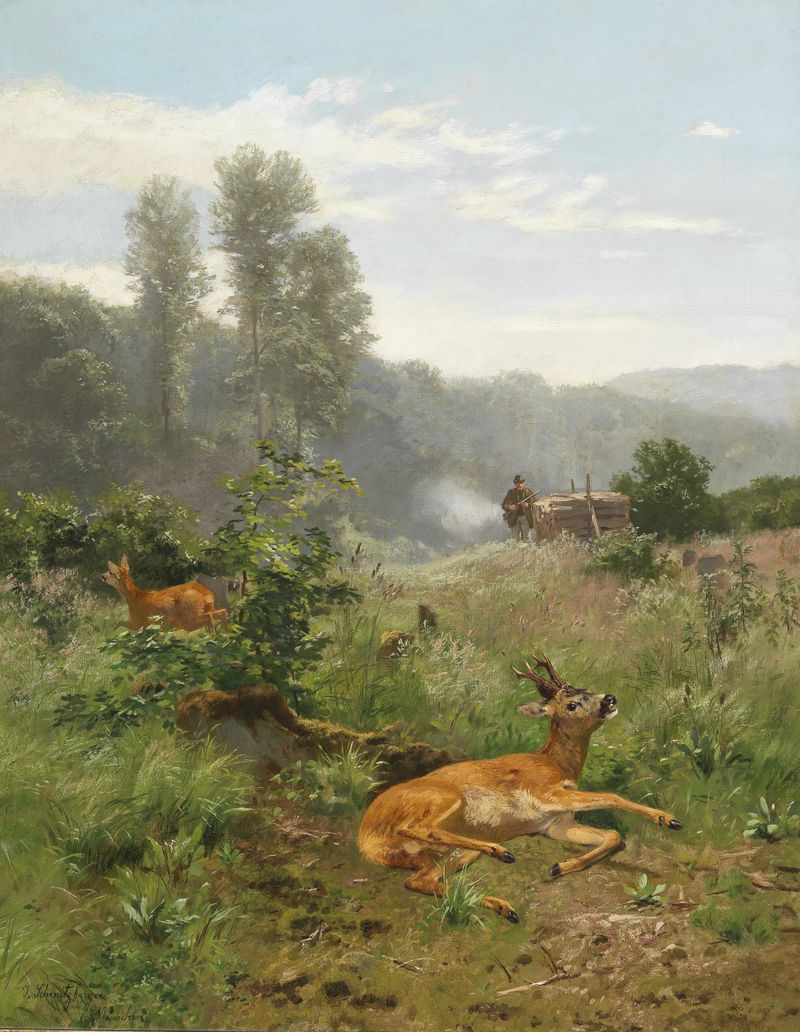
Could beauty survive in a century of chaos? Nestled amid the turmoil of modernity, Rehkitz resonates with an ache for something pure and untouched, a yearning that transcends time and turmoil. Look closely at the delicate form of the fawn, its soft fur glowing in gentle hues of amber and cream. The artist's brushwork captures the innocence of youth, while the surrounding foliage, rendered in deep greens and earth tones, serves as both refuge and contrast. Notice how light dances across the fawn’s coat, illuminating the quiet vulnerability of its presence, making it the focal point of a world that feels both serene and precarious. Yet, beneath this tender portrayal lies a deeper narrative.
The fawn embodies the fragility of life, a poignant reminder that beauty exists even in the shadow of chaos. The harsh darkness of the surrounding elements suggests lurking dangers, while the fawn’s wide, innocent eyes reflect an untainted spirit, highlighting a tension between vulnerability and resilience. Each brushstroke communicates not only visual beauty but also a narrative of survival and hope. Josef Schmitzberger painted Rehkitz in an uncertain era, likely amidst the social and political upheavals of the early 20th century.
As the world grappled with rapid changes, including the impacts of war and industrialization, the artist sought solace in nature's simplicity and purity. This piece reflects a longing for connection to a more harmonious existence, echoing the sentiments of many artists during a time when the world seemed increasingly chaotic.