Rotwildjagd — History & Facts
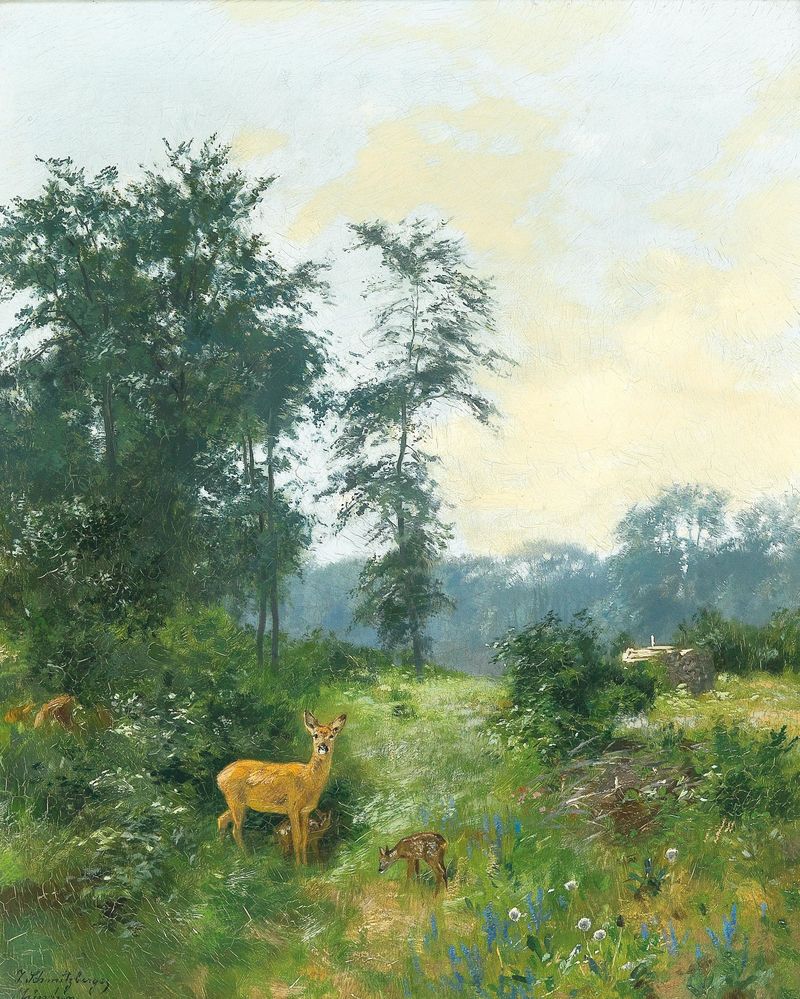
When did color learn to lie? Within the depths of an artist's palette, silence can echo louder than sound, resonating with the unspoken truths of nature and humanity alike. Focus your gaze on the rich hues that dominate the canvas, where the spectrum of crimson and earthy browns meld into a scene of harmonious tension. Notice how the light balances delicately along the edges, illuminating the intricate textures of the foliage while casting shadows that hint at secrets lying beneath the surface. Each stroke is deliberate, guiding the viewer’s eye through a landscape where action and stillness coexist, creating a portal to another world. Delve deeper, and you'll find the heart of the work rests in its contrasts.
The vibrant reds that evoke passion and urgency stand in stark opposition to the muted greens and browns, suggesting a deeper struggle between life and death, presence and absence. The juxtaposition of color and form invites contemplation, as the viewer senses a narrative unfolding, yet remains ensnared in the quietude of the moment, where the silence is palpable and profound. Created in an uncertain time, Rotwildjagd reflects the artist's exploration of nature's duality amid a world rich with societal shifts. Schmitzberger likely conceived this piece during a period when the romanticization of the wilderness was interwoven with the emerging Modernist movements.
The tension between traditional techniques and the call for innovation mirrors the struggles of the artist at that time, caught between honoring the past and embracing the future.