
Reflected Reeds — History & Facts
When did color learn to lie? In Reflected Reeds, the vibrant greens and blues ripple with an unsettling honesty, yet they dance around hidden truths, inviting the viewer into a world where nature’s beauty can mask deeper betrayals. Focus first on the shimmering water, where the reeds sway gently at the canvas’s edge, their reflections merging with the vibrant hues of the surface. Notice how Bricher employs light to create an almost ethereal quality, making the water appear alive, a liquid mirror that hints at secrets lurking just beneath. The delicate brushstrokes convey a sense of movement, while contrasting tones of dark and light suggest both clarity and obscurity—a duality that draws us in. Look closely at the juxtaposition of the vibrant reeds against the haunting stillness of the background.
This tension creates an emotional landscape where tranquility battles with underlying deception. The clarity of the reflected forms suggests an invitation to trust in the scene’s beauty, yet the slight distortions remind us that not everything is as it seems. The reeds stand as silent witnesses, embodying the theme of betrayal woven throughout nature itself. Bricher painted Reflected Reeds around 1875, during a period of profound influence from the Hudson River School, where artists sought to capture the sublime beauty of American landscapes.
By this time, he had established a reputation for his attention to light, detail, and atmospheric effects, reflecting his own personal journey as an artist amidst a growing interest in realism and impressionistic styles in the wider art community.
More Artworks by Alfred Thompson Bricher
Browse all →
New England Coast
Alfred Thompson Bricher
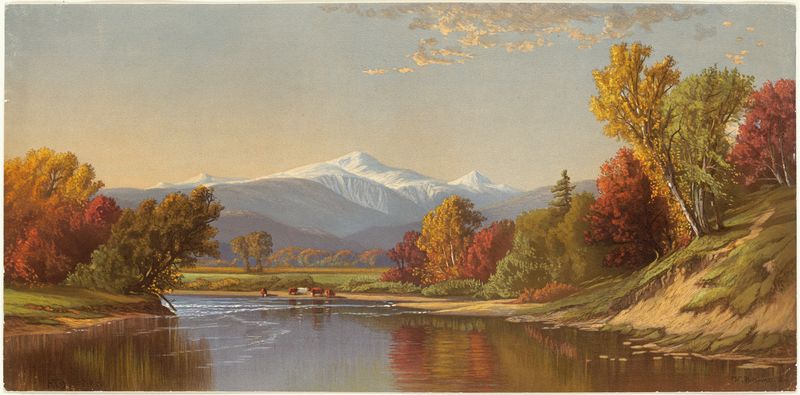
Late Autumn in the White Mountains
Alfred Thompson Bricher
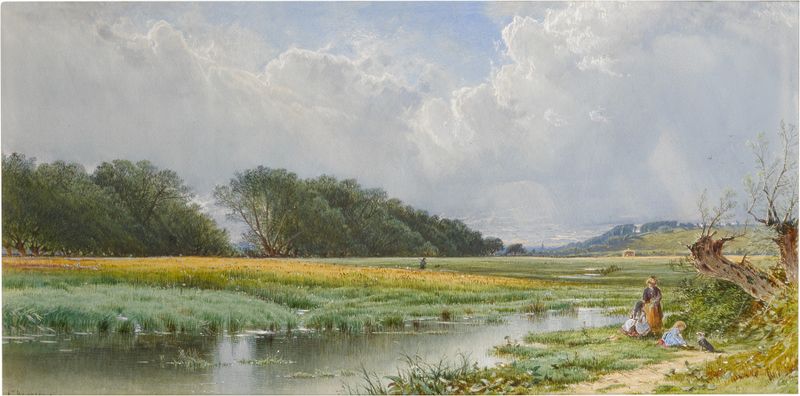
On the Meadows of Old Newburyport
Alfred Thompson Bricher

Along the Maine Coast
Alfred Thompson Bricher
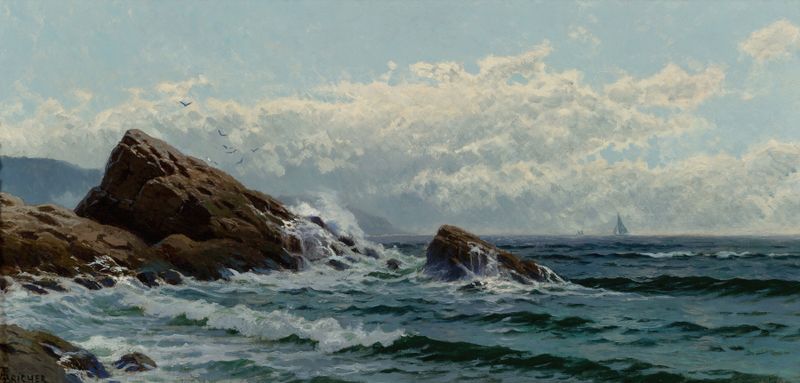
Crashing Waves
Alfred Thompson Bricher

At Water’s Edge
Alfred Thompson Bricher
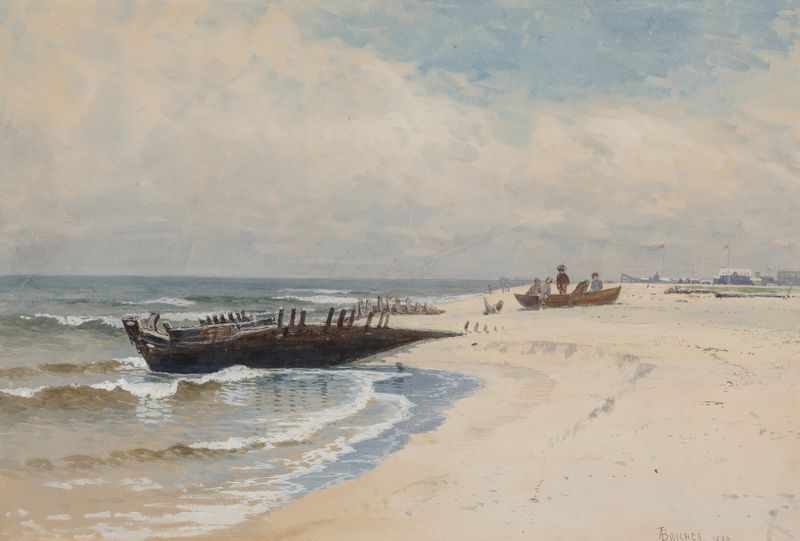
Low Tide
Alfred Thompson Bricher

Sunset on the Coast
Alfred Thompson Bricher

Castle Rock, Nahant, Massachusetts
Alfred Thompson Bricher

On the Meadows of Old Newburyport
Alfred Thompson Bricher





