
Reitertreffen — History & Facts
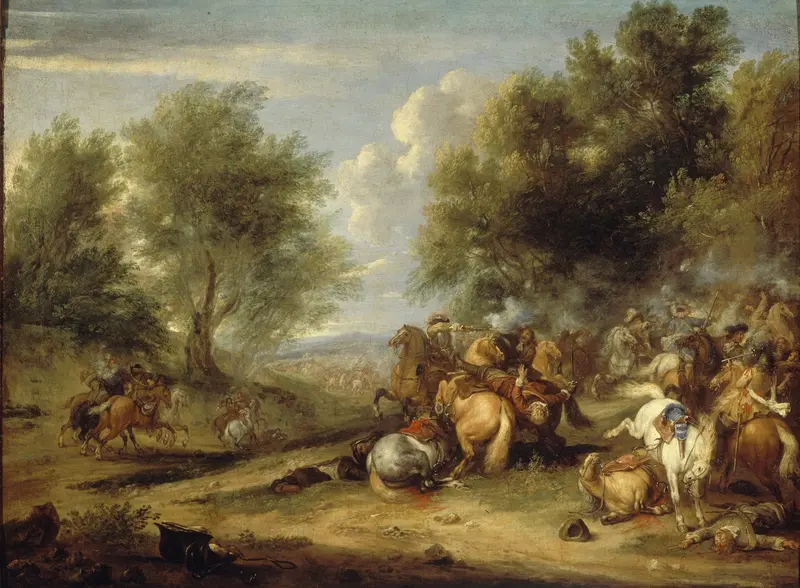
A surge of mounted men, banners snapping and muskets raised, sweeps the viewer into the chaos of battle. The eye is drawn first to the tangle of horses and riders at the painting’s center, where the energy of the charge is palpable: hooves churn the earth, sabers are raised, and a fallen soldier sprawls in the foreground, his bright sash a stark reminder of the cost of such encounters. Smoke and dust blur the lines between friend and foe, while the scattered drums and abandoned standards hint at a moment when order has given way to the raw urgency of survival.
The light, filtered through a restless sky, glances off musket barrels and the flanks of horses, guiding the gaze from the turmoil below to the relative calm of the distant trees and a solitary tower, as if the world itself pauses to witness the clash. Painted in 1654, Reitertreffen by Adam Frans van der Meulen belongs to a tradition of battle scenes that flourished in the seventeenth century, when Europe was shaped by near-constant conflict and the fortunes of armies were followed with fascination by princes and commoners alike. Such works were often commissioned to commemorate victories or to glorify the martial prowess of their patrons, but they also served as windows onto the realities of war—its confusion, its drama, its moments of both heroism and defeat. While history has kept few traces of this particular painting’s early journey, its presence today in a collection reminds us of the enduring allure of the battlefield as a subject for art.
Each detail invites another look: the flash of a blade, the tension in a horse’s neck, the silent witness of the landscape beyond.
More Artworks by Adam Frans van der Meulen
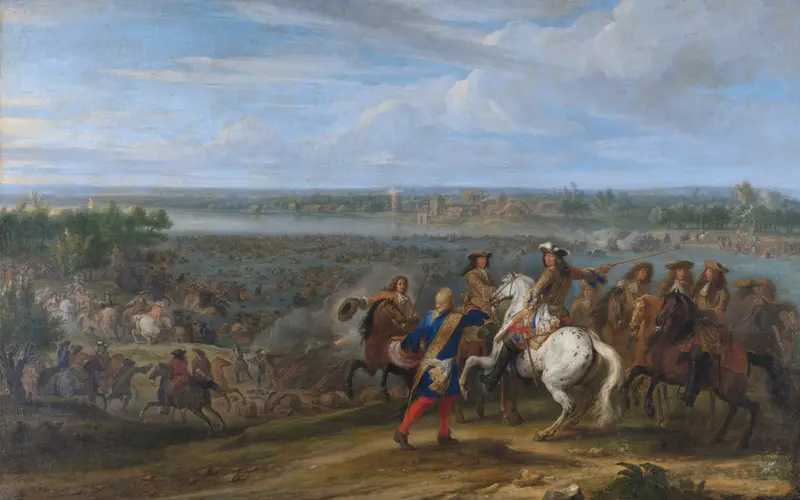
Louis XIV Crossing into the Netherlands at Lobith
Adam Frans van der Meulen
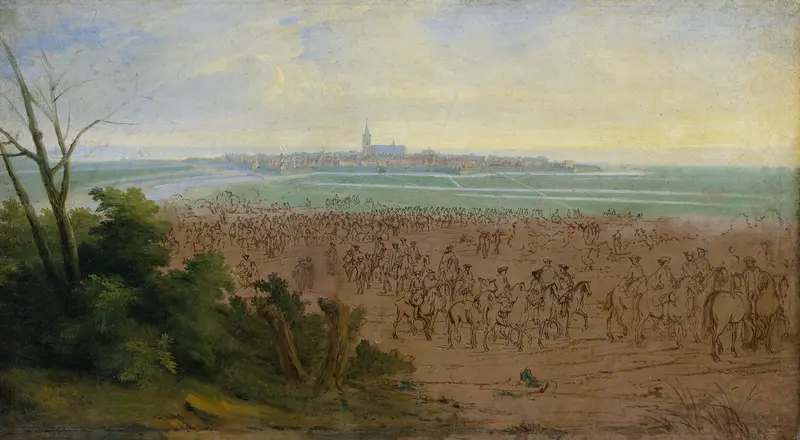
The Troops of Louis XIV before Naarden, 20 July 1672
Adam Frans van der Meulen
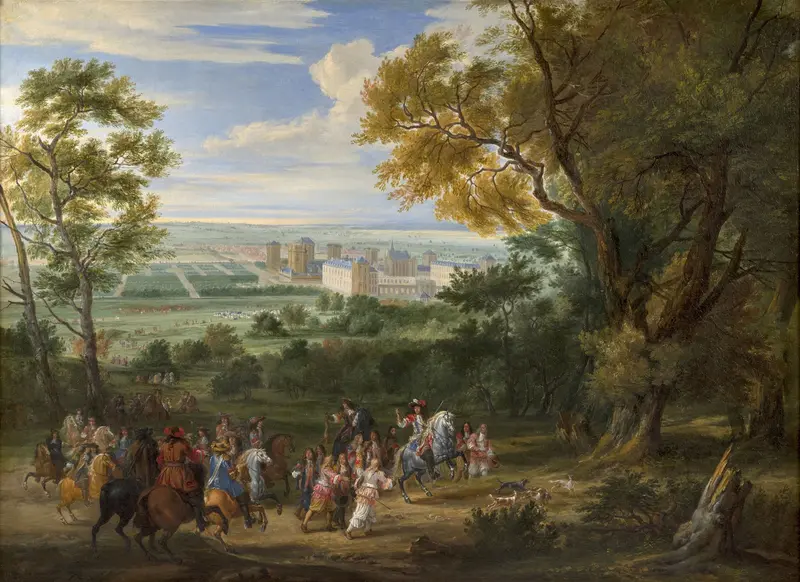
View of the château de Vincennes or The Departure of Louis XIV for the hunt
Adam Frans van der Meulen

A battle scene
Adam Frans van der Meulen
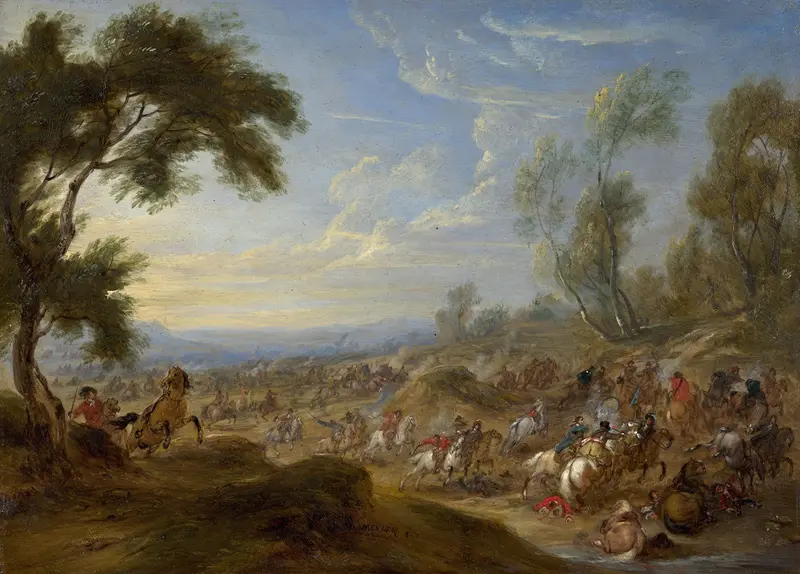
A cavalry charge
Adam Frans van der Meulen
Choc de cavalerie ou Combat de cavalerie
Adam Frans van der Meulen
Cavalry Skirmish
Adam Frans van der Meulen
Le Château Neuf de Saint-Germain-en-Laye et les jardins, vus de la rive droite de la Seine
Adam Frans van der Meulen
Choc de cavalerie ou Combat de cavalerie
Adam Frans van der Meulen
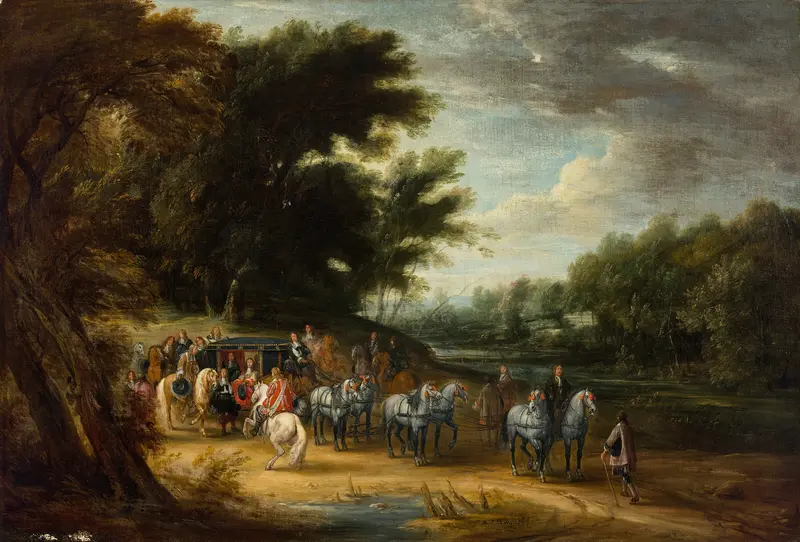
A nobleman in a state coach at rest escorted by his men and horses, with a gentleman on a white horse approaching and landscape beyond
Adam Frans van der Meulen





