
Resting at noon — History & Facts
Can paint confess what words never could? In Resting at Noon, the unspoken desire of a moment unfolds with a soft tenderness that lingers in the air, inviting viewers to reflect on their own longings. Focus on the serene figure reclining against the cool earth, bathed in the gentle embrace of midday light. Notice how the sunlight dances across the subject's relaxed form, casting soft shadows that create a harmonious balance between light and shade. The delicate brushwork captures the intricate textures of the surrounding foliage, beckoning the viewer to explore the lush greens that envelop the scene, as if nature cradles the human spirit in an intimate embrace. Hidden beneath the surface lies a profound conversation between solitude and presence.
The figure, although resting, seems to embody both peace and yearning, a paradox that invites deeper contemplation. The interplay of warmth from the sun and the coolness of the ground suggests a connection to the earth that transcends mere rest, hinting at an aspiration for closeness to nature and perhaps to one another. There is a palpable tension between the tranquility of the scene and the electric whispers of desire that echo through the leaves. Ignaz Raffalt painted Resting at Noon in 1851 during a period when Romanticism was giving way to Realism in the art world.
Living in Vienna, he grappled with the shifting ideals of art, striving to portray not just the external beauty of nature but the emotional landscapes within. This work captures the essence of personal longing amid the broader cultural transformations of his time, reflecting both the intimate and the universal in human experience.
More Artworks by Ignaz Raffalt
Browse all →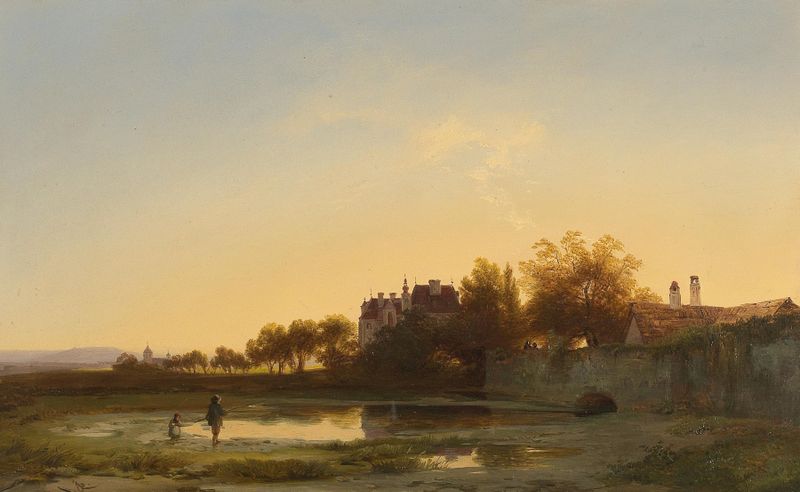
Angler in the evening light by the castle pond
Ignaz Raffalt
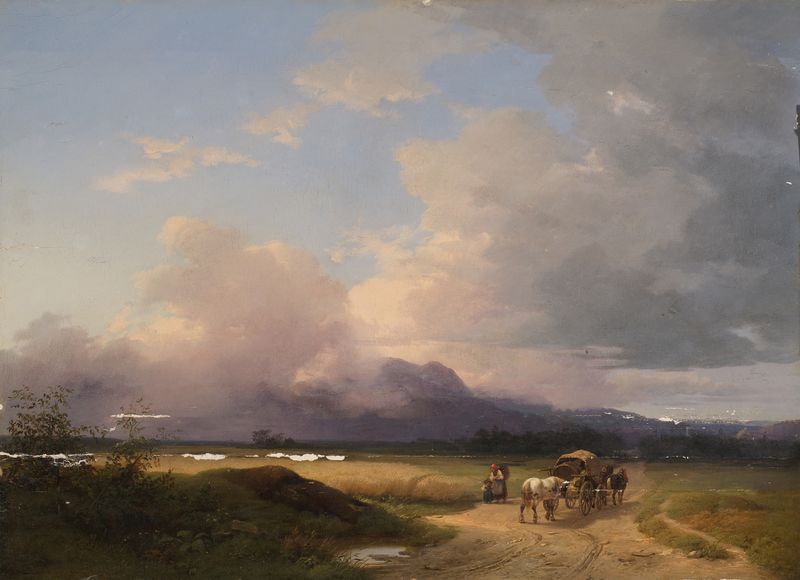
Voralpenlandschaft mit Fuhrwerk auf der Straße
Ignaz Raffalt

Hainbach near Vienna
Ignaz Raffalt

Resting in front of the Inn
Ignaz Raffalt

Stormy Landscape
Ignaz Raffalt
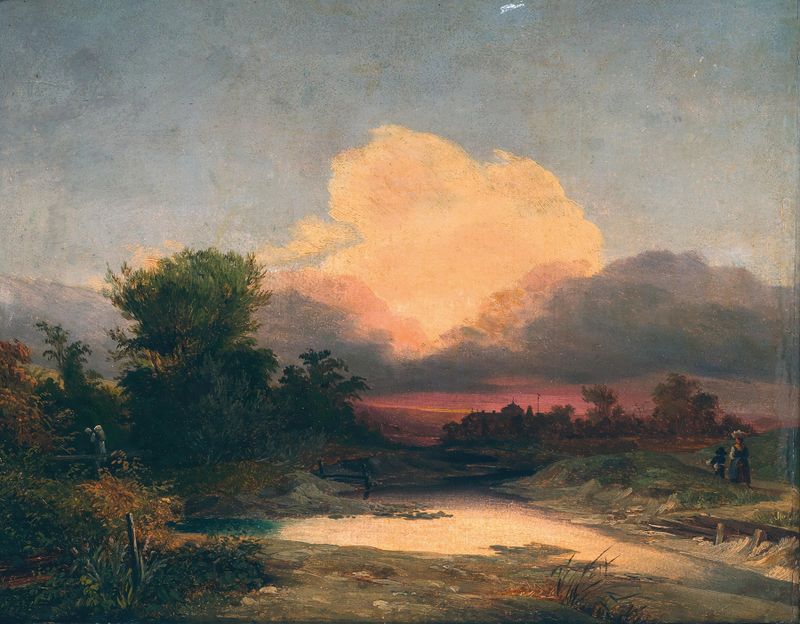
A Landscape at Sunset
Ignaz Raffalt
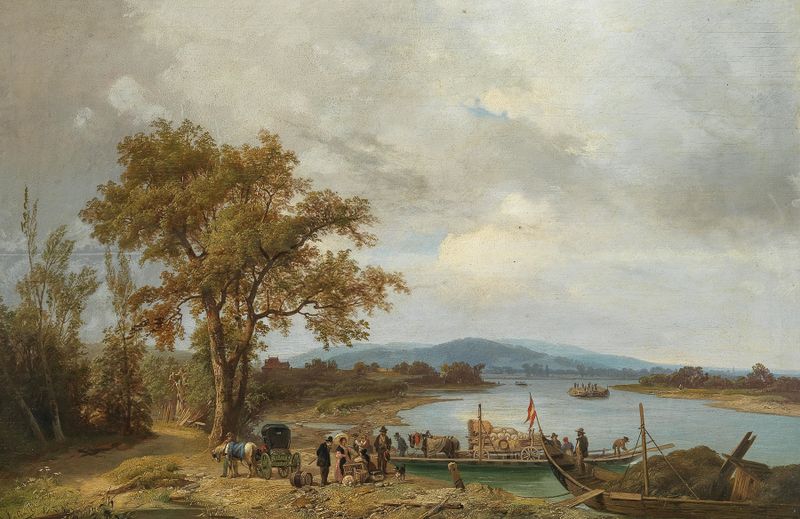
A Danube Landscape with Ferries
Ignaz Raffalt
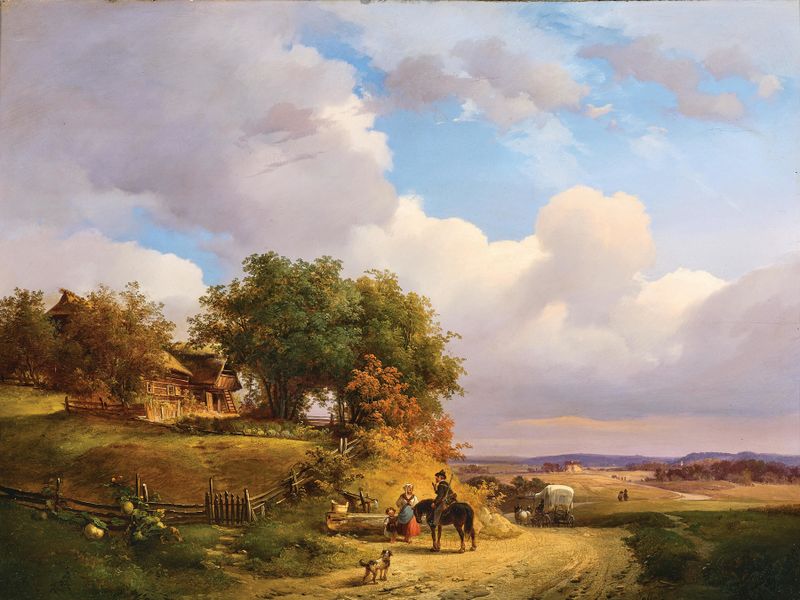
A Hunter Resting on a Country Road
Ignaz Raffalt
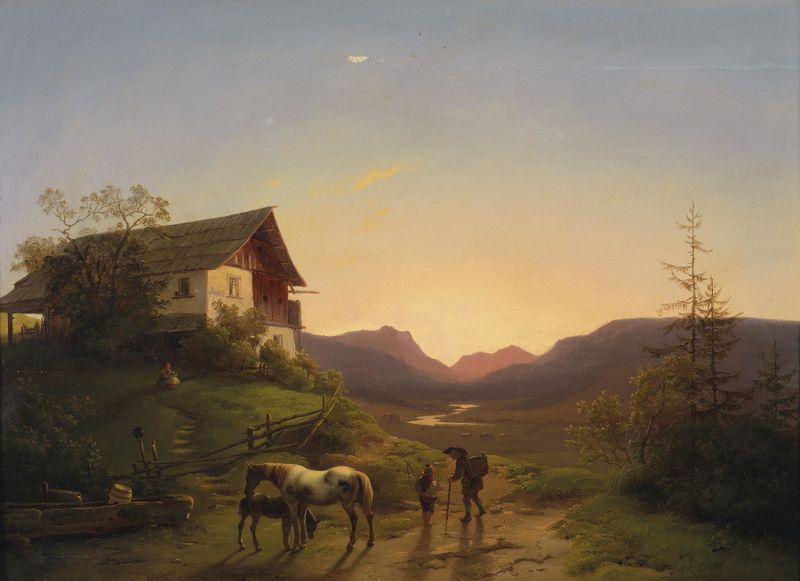
Abendstimmung
Ignaz Raffalt

Heimkehr vom Feld im Abendrot
Ignaz Raffalt





