
Resting in front of the Inn — History & Facts
Who listens when art speaks of silence? In Resting in front of the Inn, the hush of a moment suspended in time invites the viewer to contemplate the weight of grief and reflection that settles heavily in the air. Look to the left, where a solitary figure sits on the ledge of the inn, his posture relaxed yet tinged with melancholy. The warm hues of the sun setting behind him contrast with the deep shadows that envelop his surroundings, creating a poignant interplay between light and darkness. Notice how the painter employs delicate brushwork to capture the texture of the figure’s clothing and the weathered stones of the inn, drawing your eye along the contours of this intimate scene.
Each stroke invites you to linger, to absorb the quiet narrative unfolding before you. In the stillness, hidden emotions emerge—what lies beneath the serenity of the scene hints at the complexities of the human condition. The figure's contemplative gaze suggests a connection to loss, perhaps a reflection on what once was, while the inn represents a transient space, a contrast between the temporary and the eternal. The contrast of the vibrant, fading sky against the muted earth tones amplifies the sense of a day drawing to a close, resonating with the inevitability of endings and the memories that linger. In 1853, Ignaz Raffalt painted this scene during a time of personal and artistic exploration.
He was immersed in the burgeoning Romantic movement, seeking to capture emotion and the subtleties of everyday life. Living in a Europe rife with social change, his work resonates with both the beauty and the poignancy of life's fleeting moments, mirroring his own experiences and observations in an ever-evolving world.
More Artworks by Ignaz Raffalt
Browse all →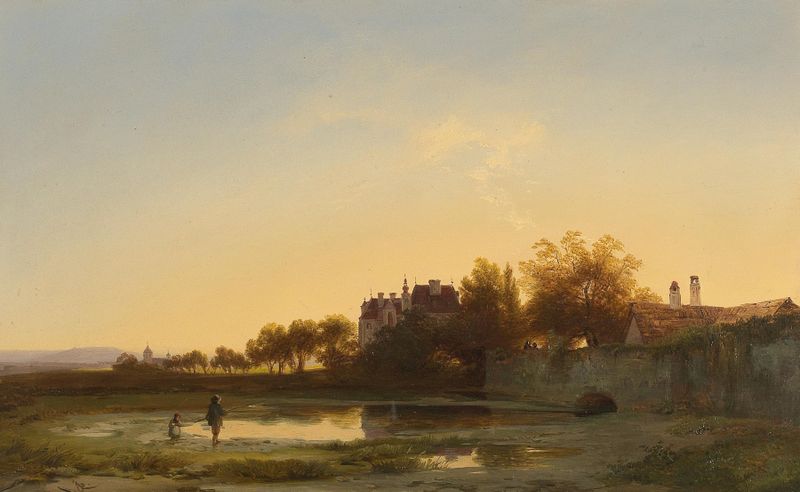
Angler in the evening light by the castle pond
Ignaz Raffalt
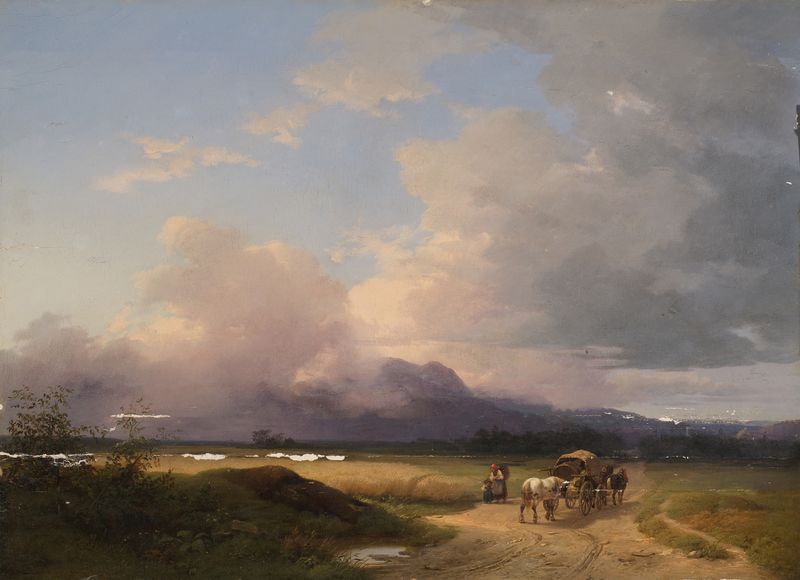
Voralpenlandschaft mit Fuhrwerk auf der Straße
Ignaz Raffalt

Hainbach near Vienna
Ignaz Raffalt

Stormy Landscape
Ignaz Raffalt
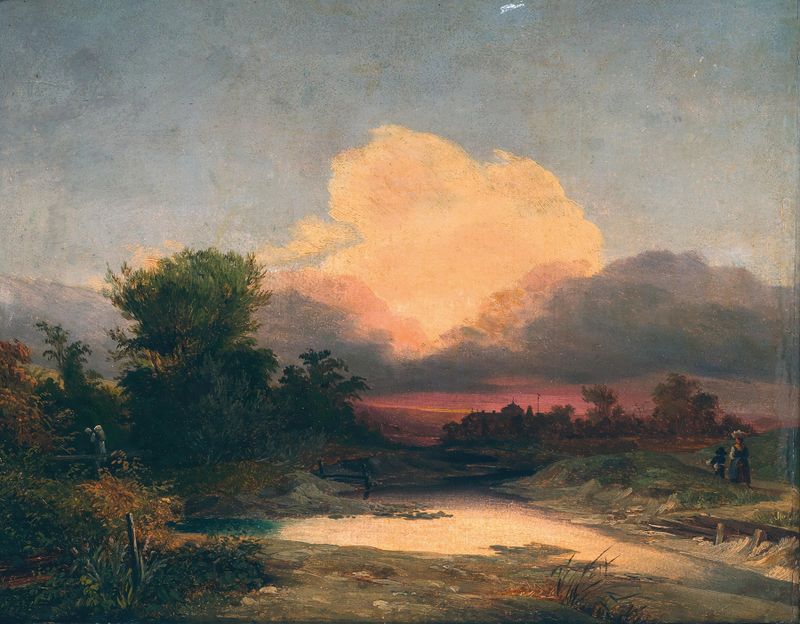
A Landscape at Sunset
Ignaz Raffalt
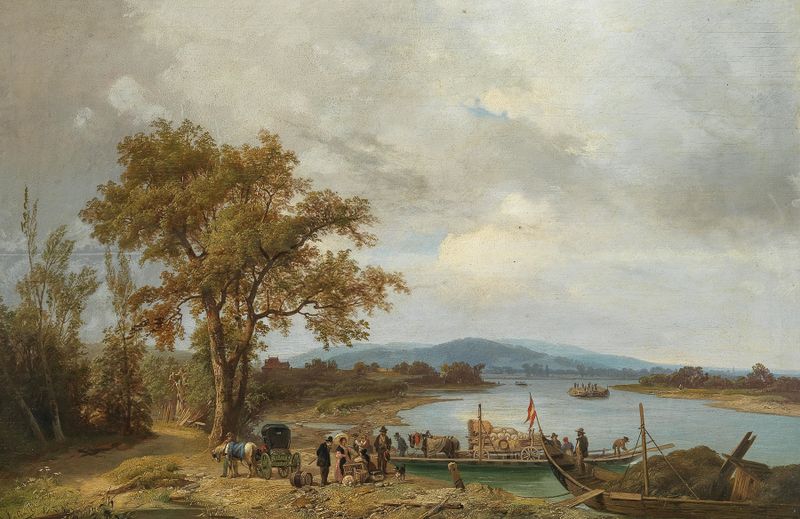
A Danube Landscape with Ferries
Ignaz Raffalt
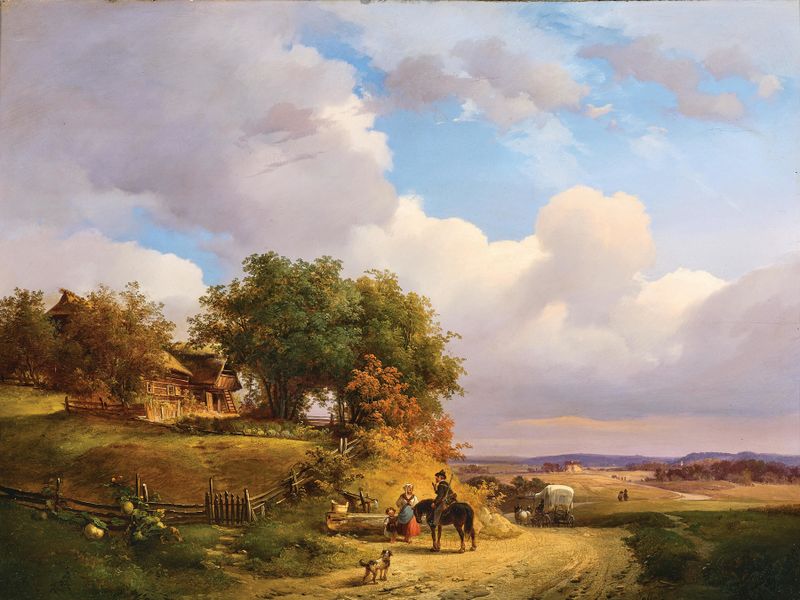
A Hunter Resting on a Country Road
Ignaz Raffalt
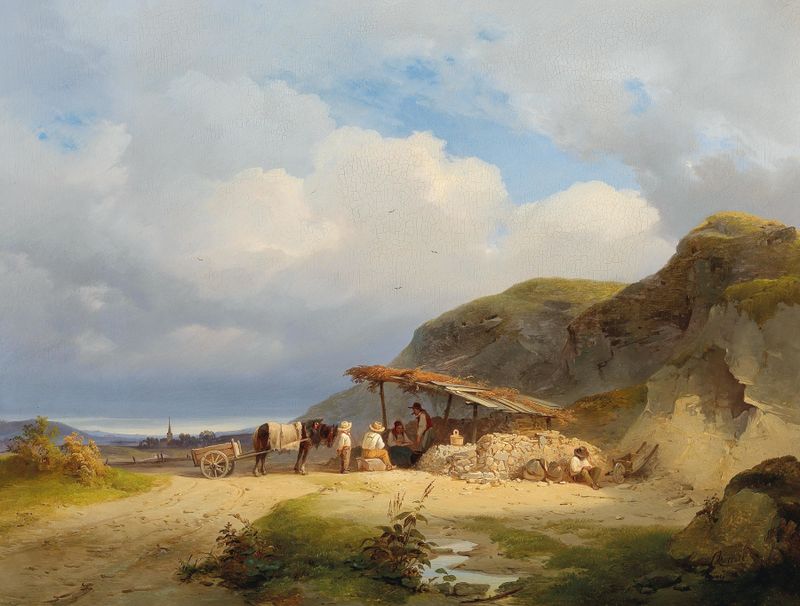
Resting at noon
Ignaz Raffalt
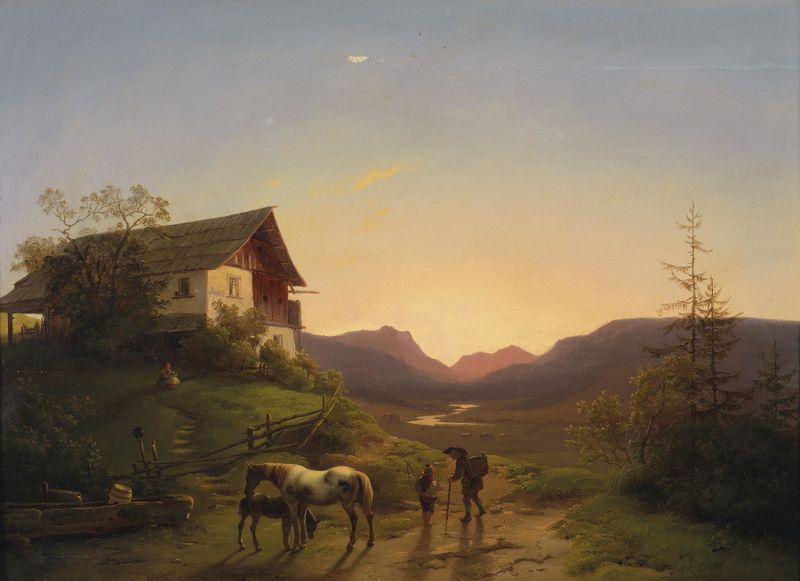
Abendstimmung
Ignaz Raffalt

Heimkehr vom Feld im Abendrot
Ignaz Raffalt





