River in Snow — History & Facts
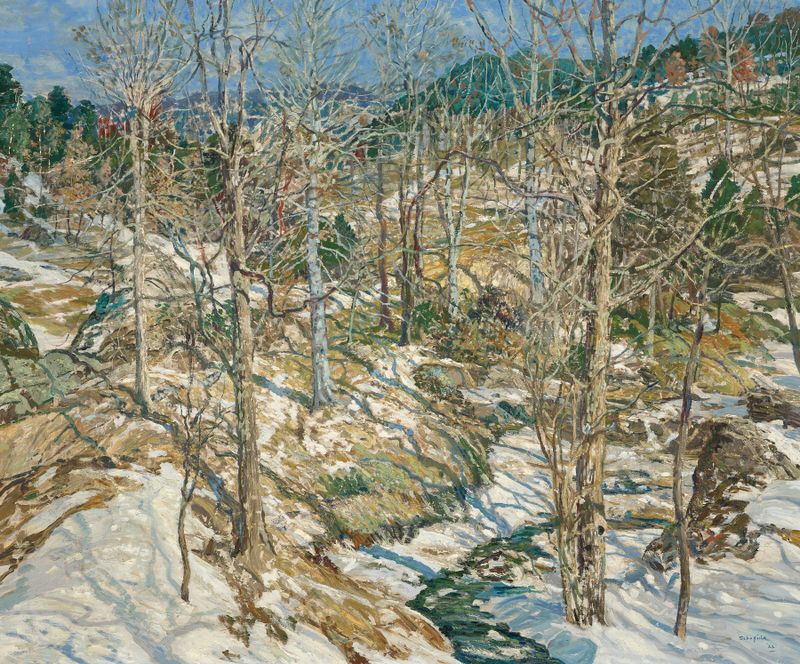
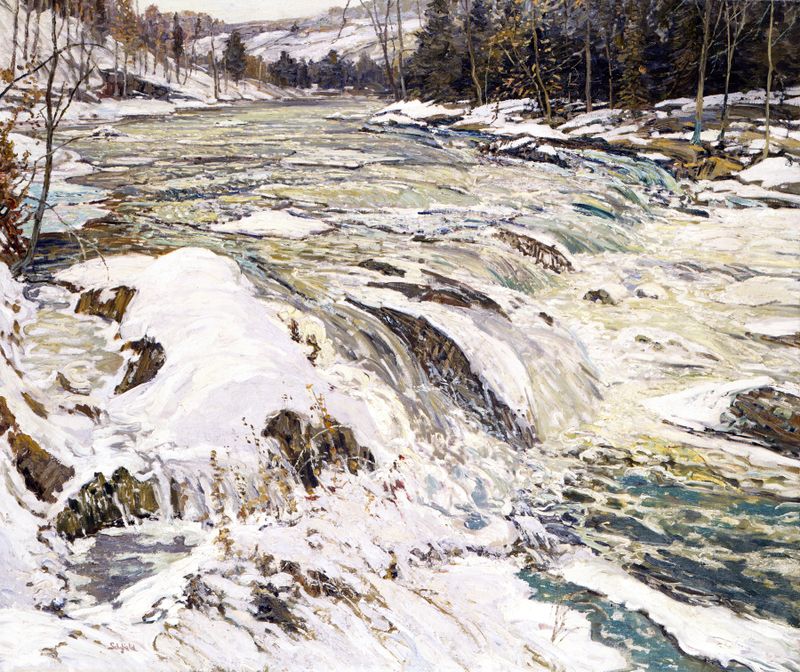
Who listens when art speaks of silence? In the stillness of a snowy landscape, a river winds its way through a muted world, whispering secrets of solitude and melancholy. Look to the center of River in Snow, where the gentle flow of water cuts through a blanket of white. Notice how the artist captures the river's reflective surface, glimmering under a soft, winter light. The palette is predominantly cool, with shades of blue and gray emphasizing the chill of the season, while silvery highlights dance along the water’s edge, creating a sense of movement amidst the frozen surroundings. Consider the contrast between the vibrant river and the starkness of the snow.
Each brush stroke evokes a lingering sense of loss, encapsulated in the quietness of the scene. The trees, stripped of their leaves, stand sentinel-like—silent witnesses to nature's unyielding cycle. This duality of life and stasis stirs feelings of introspection, prompting the viewer to reflect on their own journey through life's seasons. In 1906, Walter Elmer Schofield painted this piece during a time of artistic exploration in America, where Impressionism was gaining ground.
Living in Pennsylvania, he was influenced by both European styles and the natural beauty surrounding him. The work embodies a moment of transition, reflecting his deep connection to the American landscape while also embracing the emotional depth that nature can evoke.