The Birches (The Ravine) — History & Facts
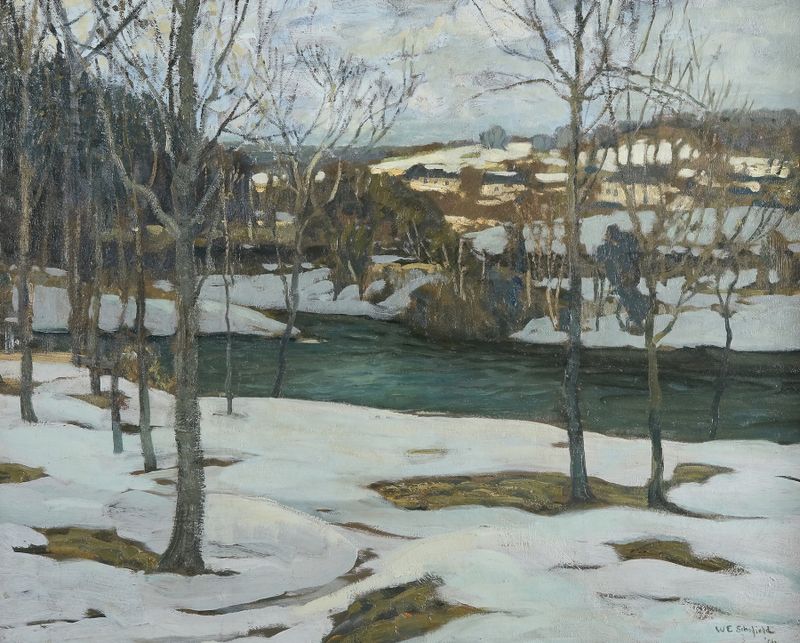
Can beauty exist without sorrow? The Birches (The Ravine) invites us to ponder this question, as it captures nature’s duality in vibrant strokes and tranquil compositions. Look to the left at the tall, slender birch trees, their white bark glowing against a backdrop of deep greens and earthy browns. The artist’s brushwork combines impressionistic touches with meticulous detail, creating a serene yet dynamic landscape. Notice how the light filters through the canopy, casting dappled shadows on the ground — a delicate play of illumination that highlights the lush undergrowth and hints at the life bustling beneath the surface. Beneath its peaceful exterior, the painting resonates with contrasts and emotional tensions.
The juxtaposition of the birch trees against shadowy depths suggests a yearning for clarity amidst the complexities of life. Each tree stands resilient, yet their slender forms symbolize vulnerability, representing a fragile balance between strength and delicacy. This duality evokes a sense of revolution in nature, reminding us that beauty often emerges from the interplay of light and darkness. In 1922, when this piece was created, Schofield was living in Pennsylvania, immersed in the American Impressionist movement that sought to capture the essence of the landscape.
The aftermath of World War I loomed in the cultural zeitgeist, emphasizing themes of renewal and resilience. It was a pivotal time for both the artist and the art world, as nature became a powerful metaphor for healing and transformation.